Aluminum gazebos offer a practical way to create comfortable, attractive outdoor living areas. Whether you want a shaded backyard retreat, a sheltered dining space, or a functional gathering place for a commercial property, an aluminum gazebo can provide a durable structure with a clean, modern appearance.
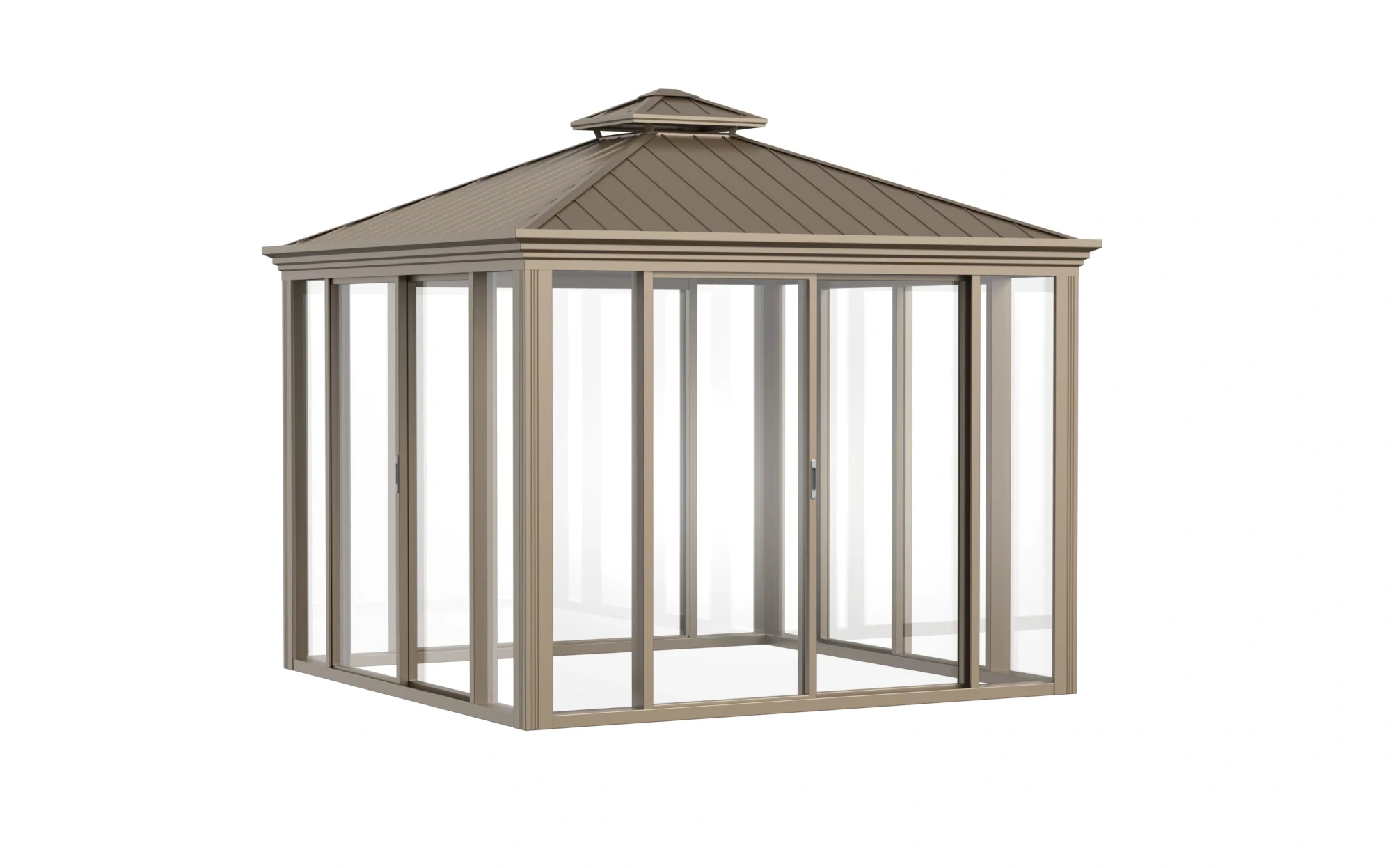
Unlike traditional wooden gazebos, aluminum models generally require less routine upkeep. Their frames are lightweight relative to many steel structures, resistant to rust, and available in designs that complement contemporary and classic landscapes. Roof choices, side screens, drainage details, and anchoring options all affect how well a gazebo performs in daily use.
This guide explores the main features and benefits of aluminum gazebos, their most useful outdoor applications, and the factors to consider before purchasing and installing one.
The intended seating layout should guide the gazebo size as well as the roof choice.
A hardtop gazebo is one option when a fixed roof and longer seasonal use are priorities.
What Is an Aluminum Gazebo?
An aluminum gazebo is a freestanding or, in some designs, wall-adjacent outdoor shelter built around an aluminum structural frame. It typically includes a fixed roof or canopy supported by posts, creating a defined area for shade, seating, entertainment, or relaxation.
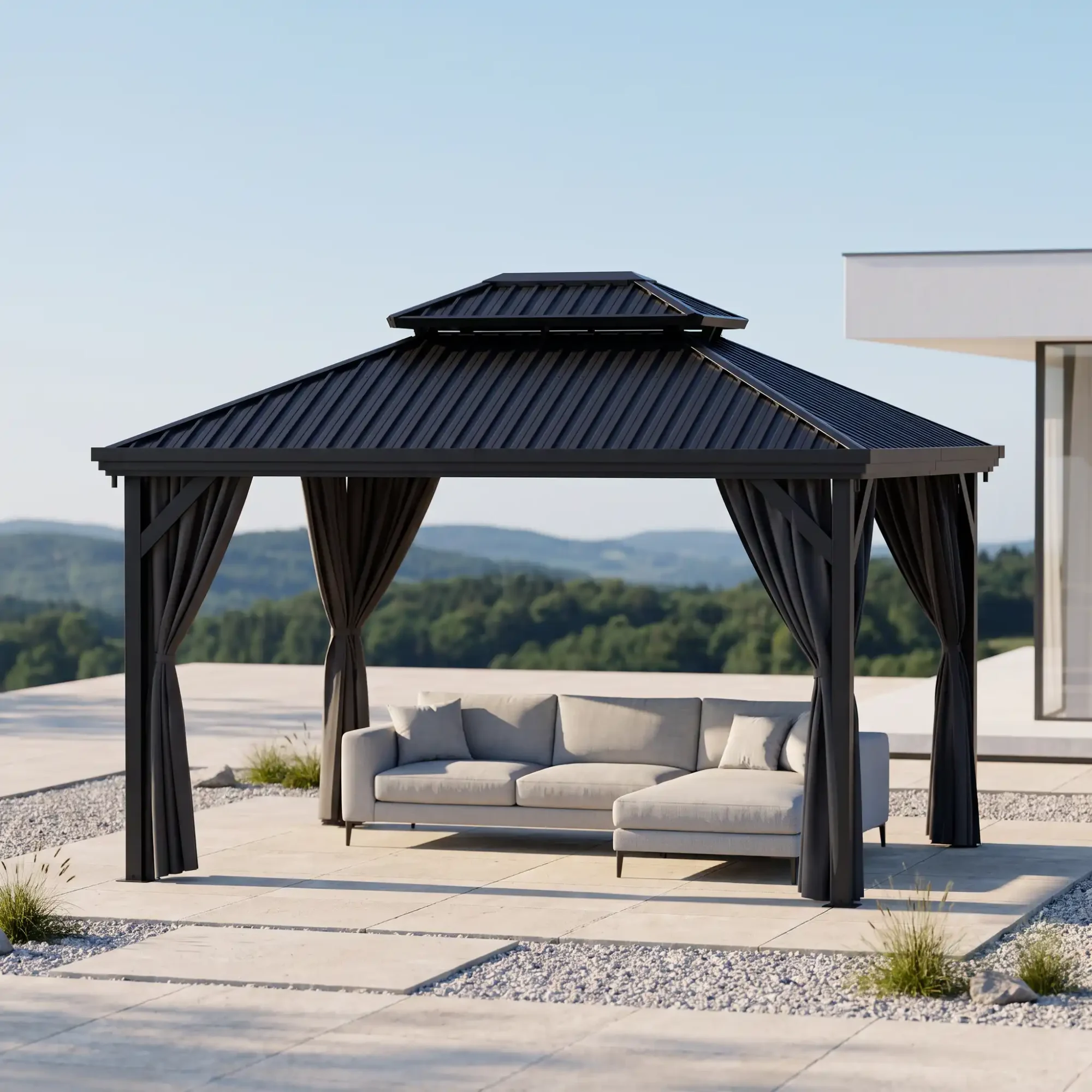
Gazebos differ from pergolas because they normally have a more complete roof covering. Pergolas often feature open slats or adjustable louvers, while gazebos are generally designed to provide overhead coverage. However, product categories sometimes overlap, so checking the actual roof design is more helpful than relying on a label alone.
Key Features of Aluminum Gazebos
1. Corrosion-Resistant Aluminum Frames
Aluminum naturally develops a protective oxide layer that helps resist corrosion. This makes it a suitable material for many outdoor environments, especially where rain and humidity are common. Manufacturers may add powder-coated or anodized finishes for appearance and additional surface protection.
Corrosion resistance does not mean a gazebo is maintenance-free. Salt deposits, damaged finishes, incompatible fasteners, and trapped moisture can still affect components over time. Buyers in coastal areas should look for finishes and hardware specifically rated for marine or high-salt exposure.
2. Lightweight Yet Practical Construction
Aluminum has a lower density than steel, which can make frame components easier to transport and handle during assembly. This advantage is particularly useful for prefabricated gazebo kits installed in residential gardens.
Structural strength, however, depends on more than material weight. Post dimensions, frame profiles, bracing, connections, engineering, and proper anchoring determine the finished gazebo’s stability. Always follow the manufacturer’s load ratings and installation instructions.
3. Multiple Roof Options
The roof influences weather protection, appearance, interior comfort, and cost. Common configurations include:
- Hardtop roofs: Rigid metal or polycarbonate panels that offer lasting overhead coverage when properly specified and installed.
- Soft-top canopies: Fabric coverings that are often lighter and less expensive but may need more frequent replacement.
- Ventilated roofs: Designs with vents intended to improve airflow and release some warm air beneath the roof.
- Insulated roof panels: Options that may help limit heat transfer and reduce the sound of rainfall compared with some uninsulated metal systems.
Check the roofing material’s UV performance, drainage arrangement, and stated resistance to wind and snow loads. Not every gazebo is designed for year-round exposure or snow accumulation.
4. Flexible Sizes, Shapes, and Finishes
Rectangular aluminum gazebos work well over outdoor dining sets and sectional seating. Square designs can create a balanced focal point in a garden, while larger custom layouts suit hospitality terraces or shared outdoor spaces.
5. Optional Comfort Accessories
Depending on the model, an outdoor aluminum gazebo may support mosquito netting, privacy curtains, side panels, outdoor lighting, or ceiling fans. Accessories can extend the practical use of the structure while improving comfort.
Verify compatibility before adding accessories. Extra weight, electrical fittings, and solid side panels can change structural or wind-loading requirements. Electrical installation should comply with local codes and use outdoor-rated components.
Major Benefits of Aluminum Gazebos
Low Maintenance Requirements
One of the strongest aluminum gazebo benefits is reduced maintenance compared with many timber structures. Aluminum does not need routine wood staining, sealing, or treatment against rot. Periodic cleaning and inspection are generally enough for the frame under normal conditions.
Owners should still remove leaves from gutters, check fasteners, clean the roof, and inspect coatings for damage. Curtains, screens, and non-aluminum parts may have their own maintenance schedules.
Long-Term Outdoor Durability
A well-designed, correctly anchored aluminum gazebo can withstand regular outdoor use for many years. Aluminum does not rot and is not attractive to termites. Quality finishes also help preserve a consistent appearance.
Service life depends on local weather, product quality, installation, and maintenance. A gazebo with inadequate wind resistance or weak anchors can fail regardless of the frame material, so verified performance specifications matter more than broad durability claims.
A Modern, Versatile Appearance
Slim profiles and clean lines allow aluminum gazebos to fit a wide range of exterior designs. A dark powder-coated frame can complement modern architecture, while a lighter finish may blend into a garden or poolside setting.
Improved Outdoor Comfort
A roof can reduce direct sun exposure and provide shelter from light rain, depending on the design. Curtains or screens may improve privacy and reduce insect intrusion, while ventilation features can make warm-weather use more pleasant.
A gazebo is not automatically a fully weatherproof room. Wind-driven rain, extreme temperatures, and severe storms may still affect comfort and safety. Roof panels and fabric accessories also vary in UV protection, so consult the product specifications.
Popular Outdoor Applications for Aluminum Gazebos
Backyard Relaxation Areas
A gazebo can become a quiet retreat for reading, conversation, or lounging. Place weather-resistant seating beneath the roof and use outdoor rugs or planters to soften the space. In smaller gardens, a compact square model creates a destination without dominating the entire yard.
Outdoor Dining and Entertaining
A rectangular aluminum gazebo is often an effective solution for a patio dining area. Overhead coverage can make family meals and gatherings more comfortable in sunny conditions. Allow enough clearance around chairs and tables for people to move safely, and keep grills or fire features outside unless the gazebo manufacturer explicitly permits them.
Poolside Lounges
Poolside aluminum gazebos can provide a shaded spot for resting between swims. Choose slip-resistant flooring and materials suitable for frequent moisture exposure. In areas with chlorinated or salty water, check the finish, fastener materials, and cleaning recommendations carefully.
Garden Focal Points
A gazebo can serve as an architectural centerpiece within a landscaped garden. Paths, planting beds, and lighting can lead visitors toward the structure. A simple aluminum frame also pairs well with climbing plants placed on independent supports, avoiding excessive plant weight on the gazebo itself.
Hotels, Restaurants, and Resorts
Commercial outdoor spaces may use aluminum gazebos for lounge zones, dining terraces, or guest seating. A consistent finish can reinforce a property’s visual identity while offering a more structured outdoor environment.
Commercial projects should pay particular attention to occupancy, accessibility, fire safety, local permitting, engineering approvals, and cleaning requirements. Products suitable for private gardens may not meet the demands of intensive public use.
Aluminum vs. Wood vs. Steel Gazebos
| Factor | Aluminum Gazebos | Wood Gazebos | Steel Gazebos |
|---|---|---|---|
| Typical frame maintenance | Relatively low | Often needs sealing or staining | Depends on coating and corrosion protection |
| Resistance to rot | Does not rot | Requires protection from moisture | Does not rot |
| Corrosion concerns | Generally corrosion-resistant | Not applicable to wood itself | Protective coatings are particularly important |
| Relative material weight | Lower than steel | Varies by timber and design | Higher than aluminum at comparable volume |
| Visual style | Clean, modern, adaptable | Natural, traditional appeal | Industrial or contemporary |
| Design considerations | Anchorage and profile engineering | Moisture, insects, movement | Rust control, coating quality, weight |
No material is ideal for every project. Wood may be preferred for a natural architectural character. Steel may be selected for certain engineered structural applications. Aluminum often appeals to buyers seeking a balance of appearance, manageable weight, and lower routine upkeep.
How to Choose the Right Aluminum Gazebo
Measure the Site and Plan the Layout
Start with the usable ground area, not just the total garden dimensions. Measure the proposed footprint and allow room for doors, walkways, furniture, and roof overhangs. Consider nearby trees, utility lines, drainage paths, and neighboring properties.
Assess Weather and Structural Ratings
Wind exposure, rainfall, and seasonal snow are critical selection factors. Review the manufacturer’s published wind and snow load ratings, including the testing assumptions and any requirements for removing snow or fabric panels.
Never assume that a heavy roof automatically indicates a stronger gazebo. Engineering details, foundation capacity, and approved anchors determine whether the installed system can meet local conditions.
Choose the Best Roof for Your Climate
A hardtop aluminum gazebo may suit owners who want more permanent overhead coverage. Polycarbonate roofing can admit some daylight, depending on the panel type, while opaque metal panels create deeper shade. In hot climates, consider ventilation and roof heat performance. In rainy regions, prioritize panel joints, slope, guttering, and drainage outlets.
Evaluate Installation Requirements
Some kits are suitable for experienced DIY installation, while larger or engineered structures may require professionals. Confirm the required number of installers, tools, foundation type, and assembly clearances before purchase.
Review Warranty and Supplier Support
Compare warranties for the frame, coating, roof panels, and accessories separately. Look for clear coverage terms, replacement-part availability, installation documentation, and responsive customer support. A detailed specification sheet is usually more informative than a long list of promotional claims.
Aluminum Gazebo Installation and Maintenance Tips
A reliable installation begins with site preparation. Confirm property boundaries, underground services, drainage, required approvals, and the manufacturer’s foundation instructions. Follow the specified assembly sequence and use only approved connectors and anchors. If the product requires engineering certification or professional installation in your area, arrange this before work starts.
After installation, maintain the gazebo with a simple seasonal routine:
- Wash the aluminum frame using a soft cloth, mild soap, and clean water; avoid abrasive cleaners unless approved by the manufacturer.
- Remove debris from roof surfaces, gutters, and drainage channels.
- Inspect bolts, brackets, anchors, and roof-panel connections for movement or damage.
- Check powder-coated surfaces for chips and follow the supplier’s repair guidance.
- Clean and store removable curtains or mosquito nets according to their care labels.
- Follow the manufacturer’s instructions for storms, high winds, and snow buildup.
Do not stand on roof panels unless the structure is expressly designed for roof access. Use appropriate equipment or qualified maintenance personnel for work at height.
Frequently Asked Questions About Aluminum Gazebos
Are aluminum gazebos waterproof?
Some aluminum gazebos have roofs designed to shed rain effectively, but waterproof performance varies. Check roof-panel seals, slope, gutter details, and the manufacturer’s weatherproofing claims. Open sides still allow wind-driven rain to enter.
Can an aluminum gazebo stay outside all year?
Many hardtop models are intended for extended outdoor installation, but year-round suitability depends on the specific model and local weather. Verify wind and snow ratings, anchoring requirements, and any seasonal removal instructions.
Do aluminum gazebos rust?
Aluminum does not develop the red iron-oxide rust associated with steel. It can still corrode under certain conditions, and steel screws or other components may rust if unsuitable materials are used. Proper finishes and compatible hardware are important.
Are aluminum gazebos better than wooden gazebos?
They are often easier to maintain and resist rot, while wooden gazebos offer a natural appearance that some homeowners prefer. The better choice depends on your design goals, climate, budget, and willingness to perform maintenance.
Do I need a permit to install an aluminum gazebo?
Permit requirements depend on local rules, structure size, placement, height, and intended use. Consult your local planning or building authority before installation rather than assuming a prefabricated kit is exempt.
How long does an aluminum gazebo last?
There is no universal lifespan. Frame quality, roof materials, weather exposure, anchoring, and upkeep all affect longevity. Compare product warranties and documented performance specifications when evaluating long-term durability.
Conclusion
Aluminum gazebos combine versatile design with corrosion-resistant frames and relatively low maintenance needs. They can enhance backyard seating areas, outdoor dining spaces, poolsides, gardens, and commercial settings while creating a more defined and comfortable outdoor environment.
The best aluminum gazebo is not simply the largest or most visually appealing model. Choose one that fits your available space, provides the roof coverage you need, and meets the appropriate structural and installation requirements for your location. With careful selection, secure anchoring, and regular maintenance, an aluminum gazebo can be a valuable long-term addition to your outdoor space.