





OEM partners, private-label brands, importers, distributors, e-commerce sellers and DIY retail chains — each with its own MOQ, tooling and lead-time terms.
Buyer case
DIY Retailers Case: Making a Large Shed Easier to Assemble
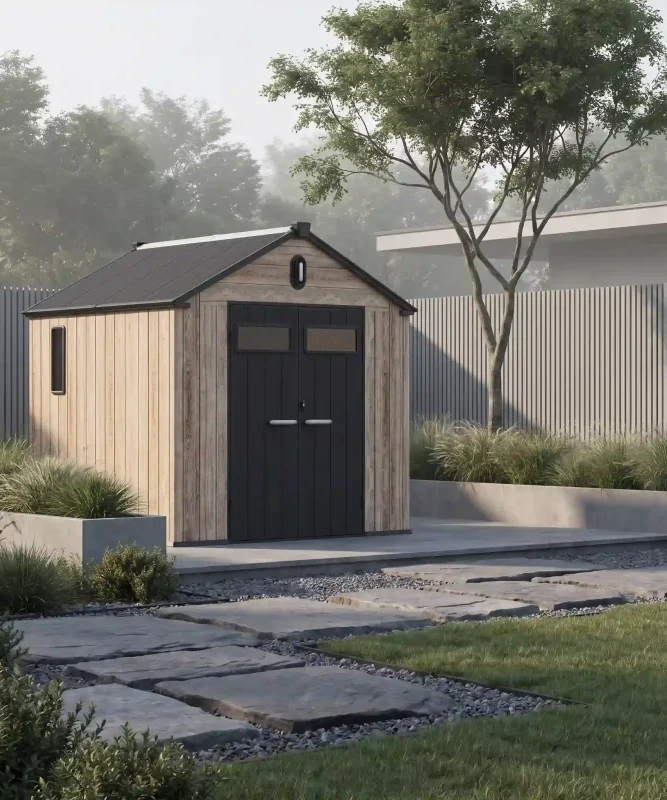
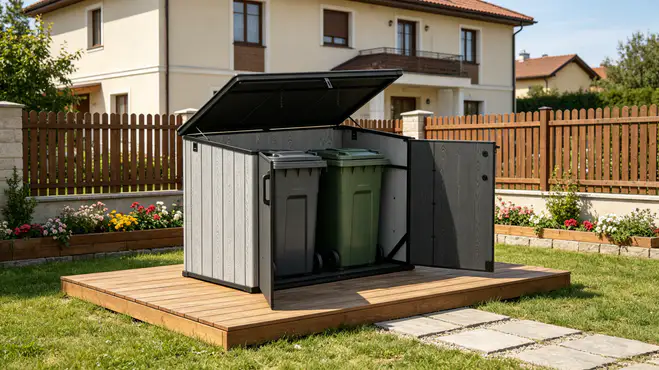
A DIY retail chain cut assembly complaints with a 1,370L DiBiBi shed that ships with pre-assembled top panels. One person, 30 to 60 minutes, full capacity kept.
Profile
A DIY retail chain selling outdoor storage products to homeowners. Its customers buy sheds to store garden tools, bikes, cushions and bulk supplies, and most of them install the product themselves. There is no delivery crew and no paid installer at the end of the sale. Whatever comes out of the box is what the customer has to deal with on a Saturday afternoon in the backyard.
That changes what the buyer looks for. Capacity and price matter, but so does the question of whether an ordinary person can put the shed together without help. For this retailer, ease of assembly sits alongside material quality and cost in the product selection process.
Situation
Large resin sheds are harder to assemble than most first-time buyers expect. A typical unit arrives as a stack of structural panels with dozens of connection points and a bag of screws in several different sizes. The customer has to identify each panel, get the order right, and hold heavy sections in place while fixing them. The roof is usually the worst part, because it has to be aligned and secured overhead, often by someone working alone.
At that point the job stops feeling like assembling a piece of flat-pack furniture and starts feeling like building a small structure. Customers who expected a Lego-style experience find themselves two hours in, on a ladder, with panels that will not line up.
The retailer had already seen what that does to the business. Complicated installation produced a steady stream of problems:
- Negative reviews focused on assembly rather than on the product itself
- After-sales tickets asking for help mid-build
- Incorrect assembly, where panels were fitted in the wrong order and the shed had to be partly taken apart
- Damaged components caused during assembly, which then required replacement parts
Every one of those costs money twice. First in support time, then in the review score that follows the listing around for the rest of its life.
So the buyer came with a clear requirement. They wanted a shed with useful storage capacity that did not demand building skills to put together. Shrinking the product was not an option, because customers were buying for volume. The difficulty had to come out of the installation, not out of the shed.
DiBiBi Solution
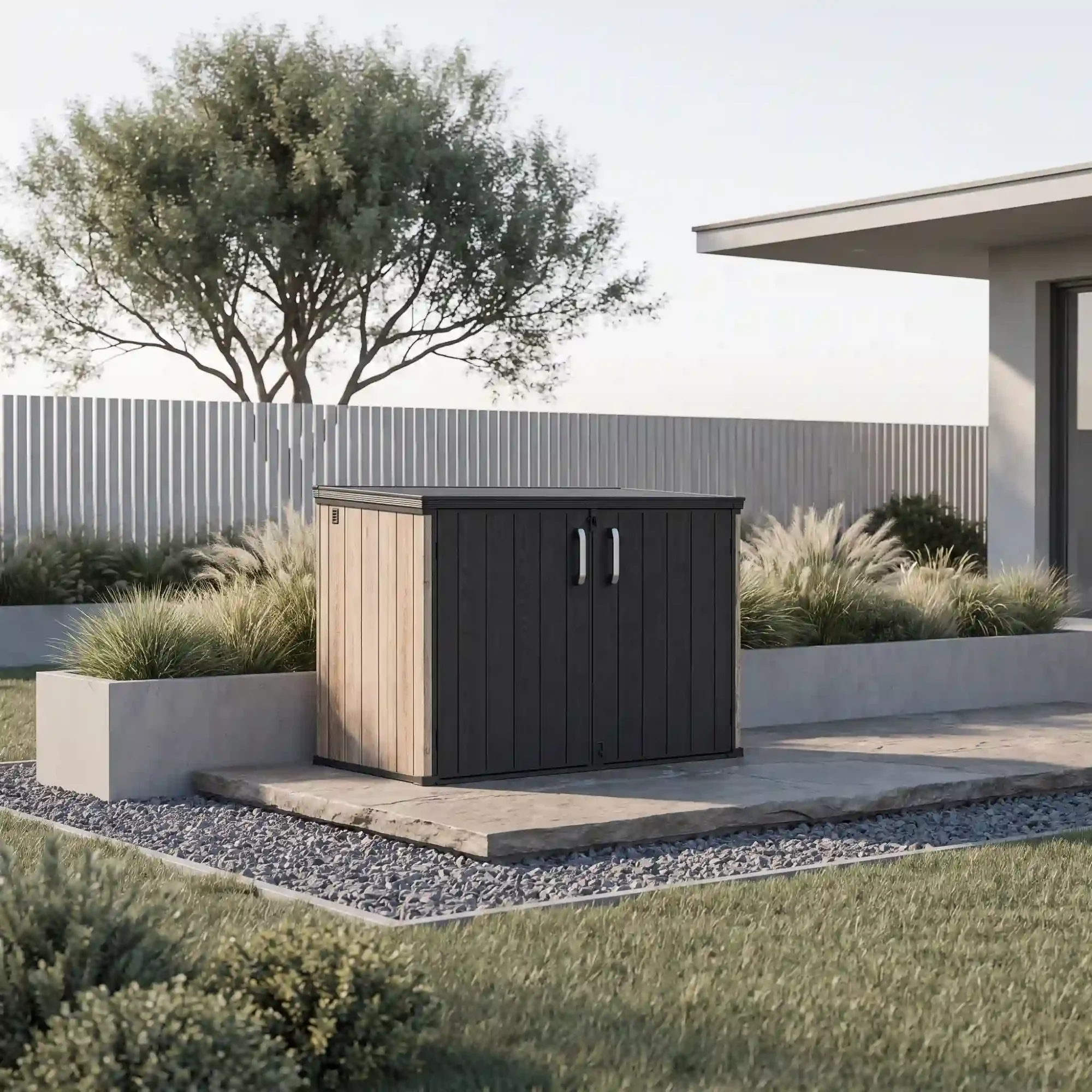
DiBiBi recommended a 1,370L cabinet-style storage shed and reduced the installation difficulty at the point where it actually causes trouble.
Pre-assembled top panels
The three-door shed ships with its top panels already assembled at the factory. This removes the steps that cause the most problems for a single installer: lifting separate roof sections, aligning them overhead, and fixing them while holding them in position. The customer opens the box and the hardest sub-assembly is already done. Fewer steps means fewer chances to fit something the wrong way round, and fewer chances to drop or flex a panel until it cracks.
Clear installation guidance
Pre-assembly on its own is not enough if the remaining instructions are a single sheet of unlabelled diagrams. DiBiBi supplied a detailed step-by-step manual covering the rest of the build, with each part identified and each fixing point shown. An installation video runs through the same sequence, so a customer who is unsure at a particular step can watch it instead of guessing.
The two work together. The pre-assembly cuts the number of steps, and the manual and video make the remaining steps unambiguous.
The result is measurable in the only unit customers care about. The 1,200L shed can be assembled by one person in roughly 30 to 60 minutes. No second person, no specialist tools, n
Customer Benefits
Key Benefits
- One-person assembly in approximately 30 to 60 minutes
- Pre-assembled top panels remove the most difficult installation steps
- Lower risk of assembly mistakes and damaged components
- Step-by-step manual plus installation video for the remaining steps
- A more accessible experience for first-time DIY buyers
- Positive customer feedback that names ease of assembly
- Reduced after-sales workload and fewer assembly-driven negative reviews
- Full 1,370L capacity retained, with no trade-off against storage volume
After the retailer introduced the product, customer feedback changed in the direction the buyer was hoping for. Reviews began mentioning ease of assembly specifically, rather than treating installation as the thing to warn other buyers about. Assembly moved from being a complaint topic to being a selling point.
The buyer also reported less pressure on the after-sales team. Fewer customers called partway through a build. Fewer asked for replacement parts for components broken during installation. Fewer sheds needed to be taken apart and redone. Support capacity that had been going into installation troubleshooting was freed up for other work.
There is a commercial point underneath this. Assembly complaints do not stay contained in the support inbox. They land in public reviews, they lower the listing’s rating, and they discourage the next buyer who is deciding between two similar sheds. Reducing assembly difficulty protects the listing as much as it protects the customer.
Just as important is what did not change. The shed still holds 1,370L. The retailer did not have to trade storage capacity for simplicity, which is the usual compromise when a buyer chooses an easier product. Customers still get the satisfaction of building it themselves, without the part of the job that turns satisfaction into frustration.
“This shed allows our customers to enjoy the satisfaction of DIY assembly without making the process unnecessarily difficult. Cooperating with DiBiBi helps me a lot.”