When planning an outdoor living space, one question often comes up: gazebo vs. pergola—which is better for your backyard? Both structures can make a patio or garden more attractive and comfortable, but they serve different purposes. A gazebo typically offers a solid roof and a more sheltered gathering place, while a pergola usually features an open or adjustable overhead design that creates partial shade and a sense of definition.
The right choice depends on how you want to use your outdoor area, your local climate, your budget, and the look you want to achieve. In this guide, we explain the difference between a gazebo and a pergola, compare their costs and maintenance needs, and help you choose a structure that fits your space.
What Is a Gazebo?
A gazebo is a freestanding outdoor structure with a roof supported by posts or columns. Traditional gazebos are often round, hexagonal, or octagonal, although square and rectangular designs are also common. Many have open sides, decorative railings, screens, or optional curtains.
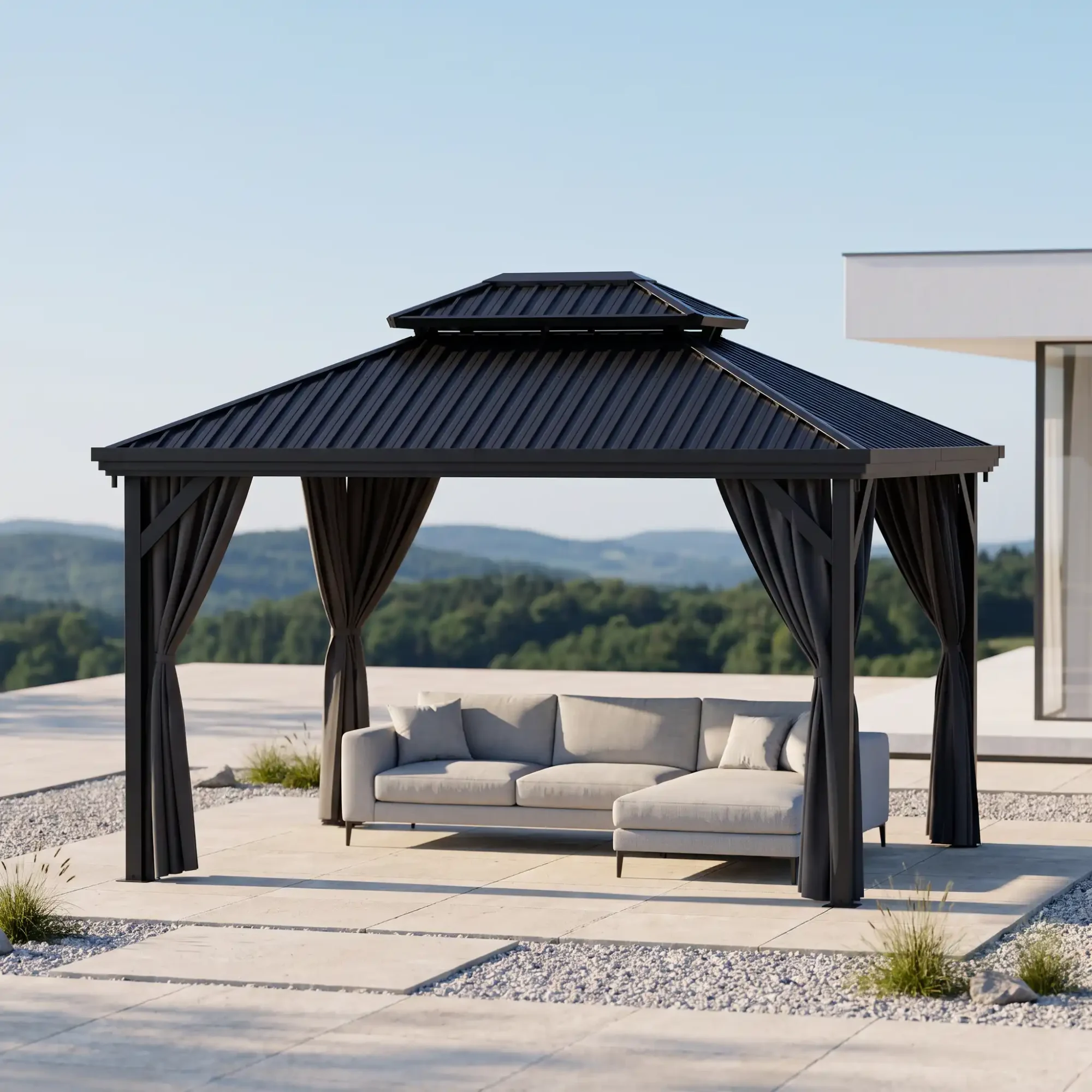
The defining feature is the continuous roof, which generally provides more reliable overhead protection from direct sun and rain than a traditional open-top pergola. Gazebos are often placed in gardens, lawns, or beside pools as dedicated spots for relaxing or entertaining.
Advantages of a Gazebo
- Greater weather protection: A solid roof helps shelter guests and furniture from sun and rain.
- Defined outdoor room: The enclosed-looking shape creates a natural focal point and gathering area.
- Optional privacy: Screens, curtains, and side panels can reduce insects, glare, and unwanted views.
- Flexible uses: A gazebo can house a dining table, lounge seating, or a quiet reading nook.
Potential Drawbacks
A gazebo may require a larger footprint, more substantial foundations, and a higher budget than a basic pergola. Its solid roof can also make the space beneath it feel darker, and the structure may visually dominate a small yard.
What Is a Pergola?
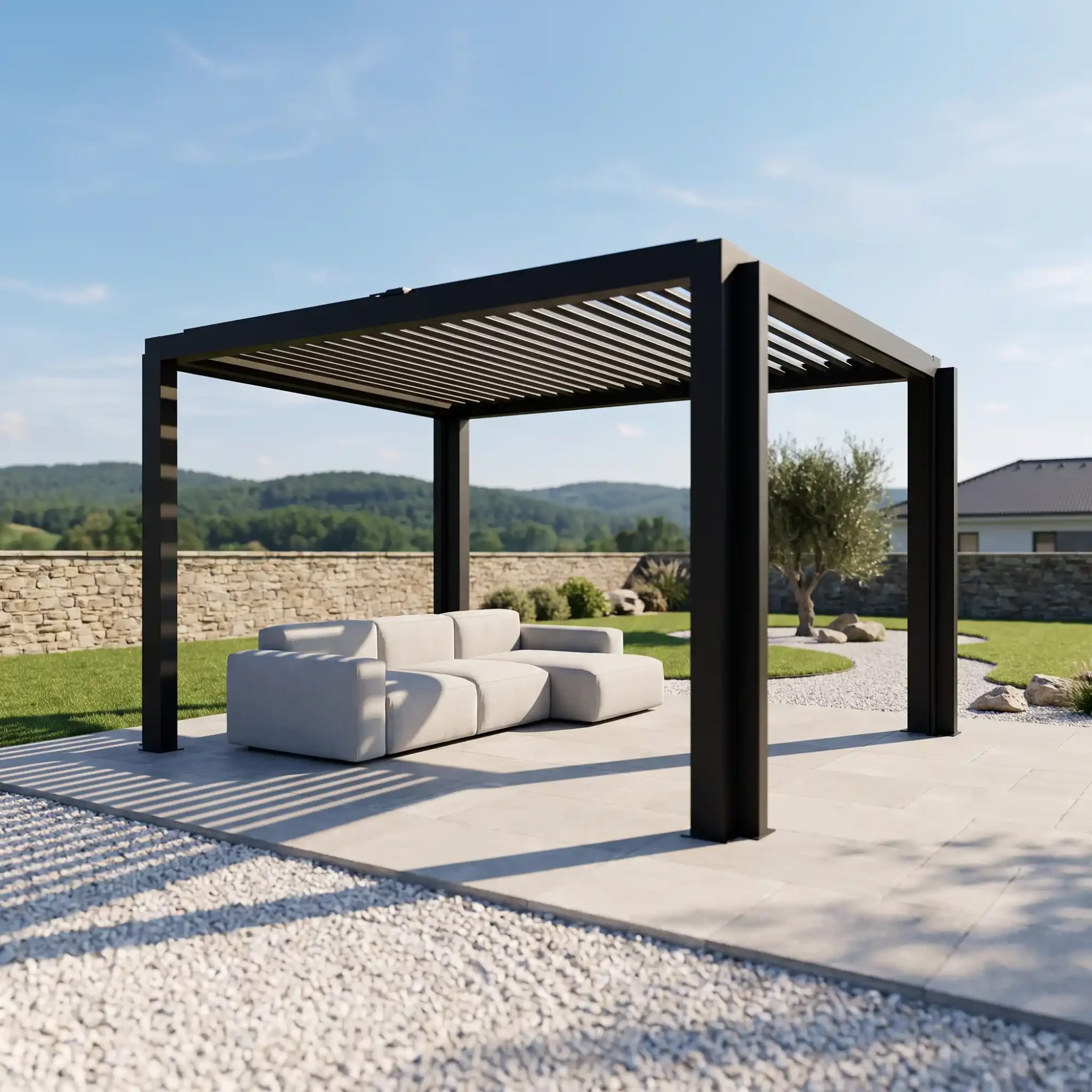
A pergola is an outdoor framework made from vertical posts and overhead beams, rafters, or slats. Traditional pergolas have an open roof that filters sunlight rather than blocking it completely. They can stand alone or attach to a house, often extending the living area onto a patio or deck.
Modern pergolas are available with retractable canopies, shade fabrics, and adjustable louvers. Some louvered designs can close to help shed rain, making them more versatile than a basic open-roof pergola. Performance varies by model and installation, so an adjustable roof should not automatically be treated as fully weatherproof.
Advantages of a Pergola
- Airy, open feel: The framework defines a space without fully separating it from the garden.
- Design flexibility: Pergolas suit modern, rustic, traditional, and minimalist homes.
- Customizable shade: Add vines, fabric, a canopy, or louvers to control sunlight.
- Patio integration: An attached pergola can visually connect indoor and outdoor living areas.
Potential Drawbacks
A standard pergola offers limited rain protection and may not provide enough shade during the hottest part of the day. Climbing plants and fabric covers can add upkeep, while high-end motorized louvered systems can cost considerably more than a simple pergola.
Gazebo vs. Pergola: Quick Comparison
| Feature | Gazebo | Pergola |
|---|---|---|
| Typical roof | Solid, continuous roof | Open slats or beams; optional canopy or louvers |
| Rain protection | Usually better overhead coverage | Limited unless equipped with a suitable closed roof |
| Shade | More consistent overhead shade | Partial or adjustable shade |
| Structure | Usually freestanding | Freestanding or attached to a building |
| Appearance | Pavilion-like, defined focal point | Open, architectural extension of the landscape |
| Privacy options | Screens, curtains, and panels | Curtains, screens, slats, or plants |
| Installation | Often more involved | Simple kits can be easier; complex systems vary |
| Budget | Often higher than a basic pergola | Wide range, from basic kits to premium louvered models |
| Best suited for | Sheltered seating and outdoor dining | Patio definition, filtered shade, and flexible styling |
Note: These are typical differences, not fixed rules. Materials, dimensions, roof systems, and local conditions can change the comparison.
7 Key Differences Between a Gazebo and a Pergola
1. Roof Design and Weather Protection
Roof design is the most important distinction in the gazebo vs. pergola debate. A gazebo generally has a solid roof that provides shade and keeps ordinary rainfall off the area directly beneath it. However, wind-driven rain may still enter through open sides, and snow or wind resistance depends on the product’s engineering.
A traditional pergola has spaced rafters that allow sunlight and rainfall through. This can be pleasant in mild weather, especially if you enjoy natural light. For more control, you can install a retractable canopy or choose a louvered pergola with a manufacturer-rated water-management system.
Choose a gazebo if dependable overhead shelter is your main priority. Choose a pergola if you prefer openness or adjustable sunlight.
2. Shade and Temperature Comfort
A gazebo typically creates a larger area of uninterrupted overhead shade, making it a practical choice for afternoon relaxation or outdoor meals. The exact shaded area changes with the sun’s angle, and an unventilated roof may trap heat depending on the design.
A pergola creates patterned shade that shifts throughout the day. The amount of coverage depends on slat spacing, orientation, roof height, and whether you add fabric or plants. An adjustable louvered pergola lets you change the amount of direct sunlight, which is useful in seasons with variable temperatures.
If your patio receives intense midday sun, compare actual shade coverage rather than relying on the structure’s name alone.
3. Design and Visual Impact
Gazebos often act as standalone garden destinations. Their rooflines and symmetrical shapes can complement landscaped lawns, flower beds, and traditional outdoor settings. A contemporary rectangular gazebo can also work well beside a pool or in a modern backyard.
Pergolas have a lighter visual profile. Their open beams frame an outdoor dining or seating area without blocking as much of the sky. Because pergolas can attach to a home, they are especially useful for creating a transition from a kitchen or living room to an exterior patio.
For a distinct garden centerpiece, consider a gazebo. For a streamlined architectural feature, a pergola may feel more natural.
4. Cost and Long-Term Value
Pergola vs. gazebo cost depends much more on size, material, roofing technology, site preparation, and labor than on the label alone. A basic freestanding pergola kit can be an economical way to add structure to a patio. A substantial gazebo with a permanent roof and foundation will often require a larger investment.
However, premium aluminum pergolas with motorized louvers, integrated lighting, and drainage systems may cost more than a modest gazebo. Delivery, assembly, footings, electrical work, and permits can also influence the final price.
Instead of comparing only advertised kit prices, request an installed-cost estimate that includes the foundation, accessories, labor, and any required approvals. Think about the value you will gain from the features you actually use rather than assuming one option always offers better resale value.
5. Installation and Space Requirements
A simple pergola may use four posts and an open frame, while an attached design needs appropriate structural connections to the house. Even lightweight structures must be securely anchored for local wind conditions.
A gazebo often involves a complete roof assembly and may need additional framing, anchoring, or a prepared base. Permanent models are best planned with enough clearance for access, drainage, and nearby trees or buildings.
Before purchasing either structure, measure your usable area, check setbacks and utility locations, and confirm any permit or building-control requirements with your local authority. Rules differ by jurisdiction, dimensions, placement, and whether the structure is attached to a home.
6. Materials and Maintenance
Both structures are available in wood, aluminum, steel, and other materials, each with different care requirements.
Wood offers a warm, natural appearance but may need periodic cleaning, sealing, staining, or repainting. Aluminum is lightweight and generally corrosion-resistant, making it appealing for homeowners who want relatively low maintenance. Steel can provide strong framing but needs an appropriate protective finish, especially in wet or coastal environments. Vinyl and composite options also exist, depending on the product category.
With a gazebo, inspect the roofing and gutters or drainage features where present. With a pergola, check overhead connections, canopies, vines, and moving louver mechanisms. For either option, follow the manufacturer’s cleaning and inspection guidance.
7. Privacy and Custom Features
A gazebo’s roof and posts make it easy to create a cozy, room-like setting with insect screens, curtains, or partial walls. This can be valuable if you want to dine outside without constant exposure to bugs or neighboring views.
Pergolas are highly adaptable, too. Add vertical slats for privacy, climbing plants for greenery, or outdoor-rated lighting for evening use. Retractable shades and louvers provide additional control, although accessories need to be compatible with the structure and local weather conditions.
If privacy and insect protection are central to your plans, assess the available enclosure options before choosing either structure.
Which Is Better for Your Backyard?
There is no universal winner. The best outdoor structure depends on what you expect it to do every week.
Choose a Gazebo If You Want…
- A sheltered spot for outdoor dining, lounging, or hosting guests.
- More consistent protection from light to moderate rain overhead.
- A freestanding focal point in a lawn or garden.
- Space for screens or curtains that create a more enclosed atmosphere.
A gazebo is particularly attractive when you have enough room to position it as a separate destination rather than squeezing it against the house.
Choose a Pergola If You Want…
- An open, contemporary appearance that complements your patio.
- Partial shade while still enjoying daylight and breezes.
- A structure that can attach to your home or define a deck.
- The freedom to add plants, shade fabric, or adjustable louvers later, if compatible.
A pergola may be a better fit when your priority is improving the feel of an existing patio rather than creating a fully sheltered outdoor room.
Gazebo or Pergola for Specific Outdoor Spaces?
For a Small Backyard
A compact pergola often feels less visually heavy because its roof is open. A narrow attached design can also preserve lawn space. That said, a small square gazebo can work well if you have a clear corner and need stronger shade. Consider the actual footprint, not just the product category.
For an Outdoor Dining Area
A gazebo makes sense if you want to keep a table set up during changeable weather. Choose sufficient roof overhang and allow room to pull chairs out comfortably. A pergola can be equally attractive for dining in sunny climates, particularly with a well-designed adjustable canopy.
How to Choose: Five Questions to Ask
Before deciding between a pergola or gazebo for your patio, answer these practical questions:
- How much rain protection do you need? If you plan to sit outside during showers, prioritize a solid, well-drained roof rather than a basic open pergola.
- How much sun should come through? Choose a pergola for filtered light or a model with adjustable louvers; choose a gazebo for more continuous shade.
- Where will it sit? A freestanding garden spot may suit a gazebo, while an area directly outside the house may suit an attached pergola.
- What is your total installed budget? Include ground preparation, anchoring, assembly, optional screens, and ongoing care.
- What can your site support? Check dimensions, wind and snow-load ratings, drainage, local regulations, and manufacturer requirements.
When possible, mark out the proposed footprint using tape or stakes. This simple step makes it easier to judge circulation space, furniture placement, and sightlines from the house.
Frequently Asked Questions
Is a gazebo better than a pergola?
A gazebo is generally better if you prioritize overhead rain protection and a distinct sheltered gathering space. A pergola is often better if you want an airy structure, filtered light, or an extension of an existing patio. The better option depends on your intended use.
Does a pergola provide enough shade?
A traditional pergola provides partial shade, but coverage changes with the sun’s position and the spacing of its roof beams. A canopy, shade cloth, plants, or adjustable louvers can increase coverage. Check the specific design’s shade performance before buying.
Can a pergola keep out the rain?
An open-roof pergola cannot reliably keep out rain. Some covered or louvered pergolas can shed water when closed, but weather resistance depends on roof design, drainage, installation, and manufacturer specifications. Wind-driven rain may still enter from the sides.
Is a gazebo more expensive than a pergola?
A permanent roofed gazebo is often more expensive than a basic pergola, but this is not always true. Large custom gazebos and premium motorized pergolas both can be substantial investments. Compare quotes for similarly sized, fully installed structures.
Final Verdict: Gazebo vs. Pergola
The main difference between a gazebo and a pergola is the roof: a gazebo usually offers a continuous overhead covering, while a traditional pergola provides an open framework that filters sunlight. This difference influences how each structure handles weather, how it looks, and how you use the space beneath it.
Choose a gazebo if your priority is a sheltered, freestanding retreat for meals and relaxation. Choose a pergola if you want an open and adaptable outdoor feature that defines a patio or connects it to your home. If you want the appearance of a pergola with more weather control, compare covered and louvered models—but review their actual performance specifications carefully.
Ultimately, the right choice is the one that suits your climate, available space, design preferences, and total installed budget. Start with how you want to live outdoors, then select the structure that supports that experience.