A gazebo can turn an ordinary backyard into a comfortable place to dine, relax, or entertain. But how much does a gazebo cost once you include the structure, installation, and groundwork? The answer depends on whether you choose a simple ready-to-assemble kit or a permanent, custom-built outdoor feature.
For a useful starting point, HomeGuide’s 2026 pricing data places a gazebo kit with installation at approximately $4,300–$10,000, while a custom-built gazebo commonly costs $8,600–$14,400 for a 12-by-12-foot design. Smaller or simpler structures can cost less, while large luxury projects can run well beyond these ranges. Another 2026 consumer-project dataset from Angi reports an average completed gazebo project of about $4,766, illustrating how widely project scopes differ.
This guide compares gazebo prices by material, size, and construction method, then explains the hidden costs that can affect your final quote. All figures are approximate U.S. dollar planning ranges, not guaranteed contractor estimates.
Average Gazebo Cost in 2026
The biggest distinction is between a kit and a bespoke structure. A gazebo kit supplies pre-cut components and standardized instructions. Custom construction requires more design, fabrication, and on-site labor.
| Gazebo option | Indicative cost | What to know |
|---|---|---|
| Basic portable or pop-up gazebo | A few hundred dollars and up | Temporary shelter; not equivalent to a permanent structure |
| Small installed gazebo kit, 8 × 8 ft | $1,900–$4,500 | Good for compact yards |
| Installed gazebo kit, 10 × 10 ft | $3,000–$7,000 | Popular small seating footprint |
| Installed gazebo kit, 12 × 12 ft | $4,300–$10,000 | Common family-size option |
| Custom-built gazebo, 12 × 12 ft | $8,600–$14,400 | More control over layout and finish |
| Large custom gazebo, 20 × 20 ft | $24,000–$40,000 | Major permanent outdoor structure |
Source: HomeGuide’s February 2026 gazebo cost guide. Installed ranges include materials and assembly labor; site work, special foundations, utility upgrades, and permits may cost extra. Temporary shelter prices are illustrative rather than drawn from the same installed-cost dataset.
A low advertised kit price may exclude delivery, anchoring, a foundation, or assembly. Compare total installed gazebo cost, not just the product listing.
Gazebo Cost by Material
Material affects purchase price, maintenance, appearance, and service life. Before choosing, consider your climate, desired style, and willingness to maintain the structure.
Wood Gazebos
Typical material-based project range: $4,000–$7,000. Wood offers a classic garden appearance and can be stained or painted to complement a home. Pressure-treated pine is often economical, while cedar, redwood, and premium hardwoods tend to command higher prices.
Wood is attractive for traditional octagonal gazebos and rustic outdoor spaces. However, it needs periodic inspection, cleaning, and protective finishing. Moisture, insects, and prolonged sun exposure can increase upkeep. The long-term cost is therefore more than the original construction bill.
Metal Gazebos
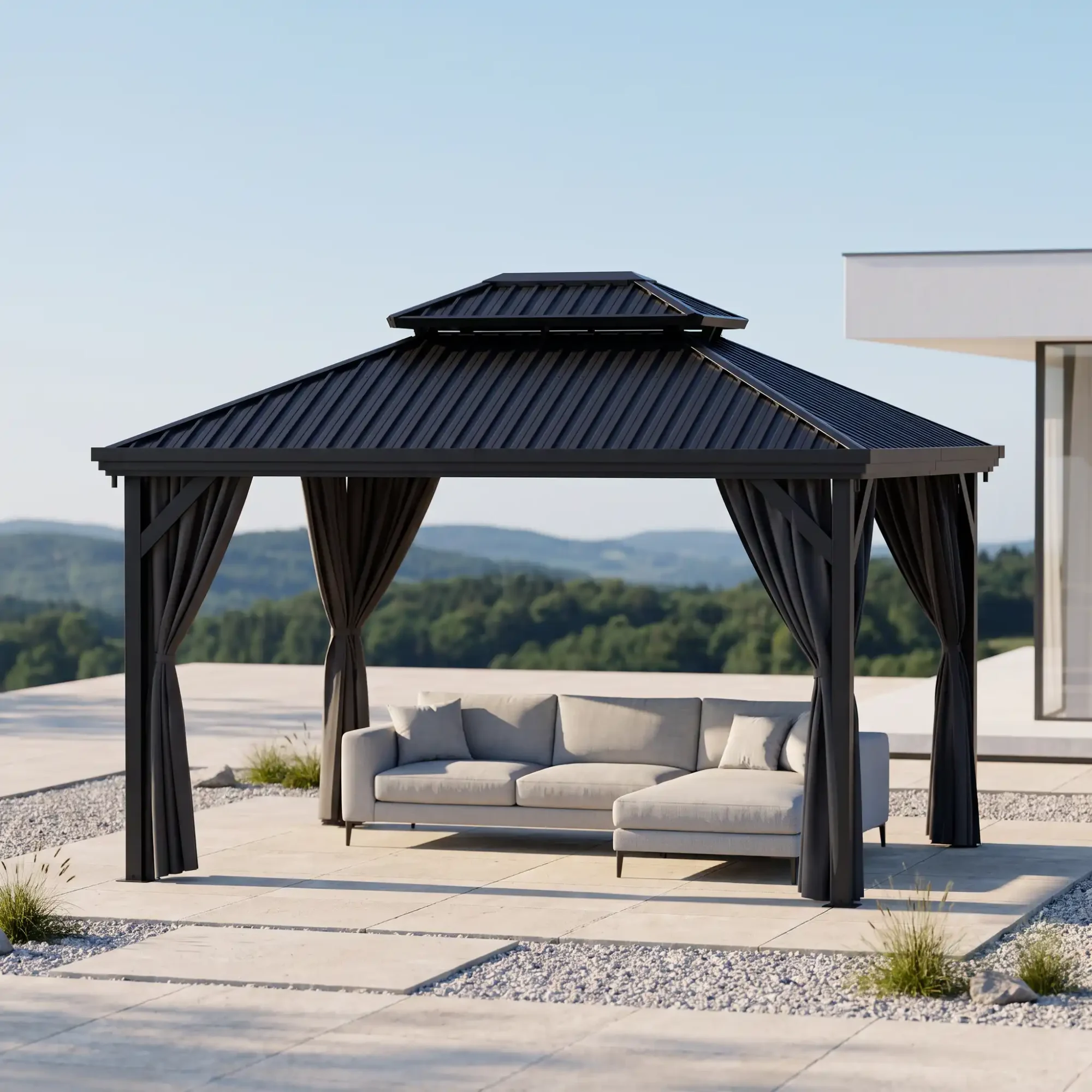
Typical material-based project range: $3,000–$8,500. Aluminum and steel are common choices for contemporary hardtop gazebos. Aluminum generally resists rust well and is relatively light; steel can provide a strong frame but depends on protective coatings and proper maintenance to resist corrosion.
Metal structures suit streamlined designs and often require less refinishing than wood. Price differences reflect frame thickness, roof panels, coatings, engineering, and wind or snow-load ratings. A lightweight seasonal canopy and a permanent metal-roof gazebo should not be treated as equivalent products.
Vinyl Gazebos
Typical material-based project range: $2,000–$3,500. Vinyl is appealing to homeowners who want a clean, painted-wood look without frequent staining. It resists insects and does not rust, although dirt, mildew, fading, and component quality still matter.
Some vinyl gazebos use structural wood or other reinforcement beneath the outer finish. Ask suppliers what the load-bearing frame is made from rather than assuming the entire structure is vinyl.
Brick and Masonry Gazebos
Typical material-based project range: $4,000–$7,500. Brick or masonry can create a substantial, architectural appearance, but its weight and foundation requirements can complicate installation. Labor availability and the exact design can also make custom masonry projects considerably more expensive.
The ranges above describe broad material-related estimates published by Angi and HomeAdvisor in 2026. They are not material-only unit prices and should not be added to the installed-cost table as separate charges.
Gazebo Cost by Size
A larger gazebo requires more roof coverage, framing, and often a larger foundation. Yet price does not always rise at a uniform rate: roof complexity, access, and standard kit dimensions can change the calculation.
| Gazebo size | Floor area | Installed kit estimate | Custom-built estimate |
|---|---|---|---|
| 8 × 8 ft | 64 sq ft | $1,900–$4,500 | $3,800–$6,400 |
| 10 × 10 ft | 100 sq ft | $3,000–$7,000 | $6,000–$10,000 |
| 12 × 12 ft | 144 sq ft | $4,300–$10,000 | $8,600–$14,400 |
| 14 × 14 ft | 196 sq ft | $5,900–$13,700 | $11,800–$19,600 |
| 16 × 16 ft | 256 sq ft | $7,700–$18,000 | $15,400–$25,600 |
| 20 × 20 ft | 400 sq ft | $12,000–$28,000 | $24,000–$40,000 |
Source: HomeGuide, 2026; figures are national planning estimates for materials and installation labor, not a local bid.
Which Gazebo Size Should You Choose?
An 8 × 8-foot gazebo can accommodate a compact seating arrangement or a quiet reading area. A 10 × 10-foot gazebo works for a small conversation set, though space becomes tight when furniture and walking clearance are included. A 12 × 12-foot gazebo gives many households more flexibility for a table or lounge seating. Larger models can support dining and entertaining zones, provided circulation space remains available.
Measure the actual furniture, not just the advertised gazebo footprint. Roof overhangs, post positions, pathways, property setbacks, and drainage can also influence the usable dimensions.
Prefabricated vs. Custom-Built Gazebo Costs
A prefabricated gazebo kit is usually the more budget-friendly path. Standardized components reduce fabrication time, and manufacturers may offer matching screens, curtains, or panels. The trade-offs are limited dimensions, fewer design modifications, and variable performance specifications.
A custom-built gazebo allows you to match an existing deck, accommodate an unusual site, specify roof materials, or incorporate built-in seating and electrical infrastructure. That flexibility raises design and labor expenses. According to HomeGuide, custom gazebo construction often falls around $60–$100 per square foot, compared with approximately $30–$70 per square foot installed for a pre-cut kit. These averages are most useful for broad comparisons, not precise quotes.
If you are comparing the two, request line-item proposals showing the foundation, materials, roofing, delivery, assembly, and finishing. A seemingly cheaper kit can lose some of its advantage if significant ground preparation is required.
What Factors Affect the Total Gazebo Price?
1. Roof Style and Shape
Simple square or rectangular designs are often easier to fabricate and install than elaborate hexagonal or octagonal structures. Multiple roof slopes, decorative details, cupolas, and premium finishes add work. Roof choice also matters: fabric covers are generally less substantial than permanent metal or shingle roofing, but product quality and engineering make direct comparisons difficult.
2. Foundation and Site Preparation
The ground must support the structure and drain appropriately. Depending on the gazebo and local conditions, suitable solutions might include concrete footings, a slab, approved deck connections, or another engineered anchoring system. Sloping terrain, tree roots, poor soil, and difficult equipment access can raise costs.
Do not assume a kit can safely sit on an existing patio. Verify that the surface and anchors meet the manufacturer’s requirements and local rules. Angi notes that extensive land preparation can add substantially to a project budget.
3. Professional Installation Labor
Labor varies by region, site conditions, structure weight, and build complexity. A straightforward kit on a prepared base is usually faster to assemble than a large custom gazebo with a complex roof. Contractors may also charge for delivery coordination, equipment, hauling debris, or travel.
When evaluating gazebo installation cost, check whether the quote includes anchoring and roof assembly. Those are essential elements of a durable installation, not merely cosmetic extras.
4. Permits and Structural Requirements
Permit requirements vary by municipality, placement, size, height, and whether the structure is permanent or connected to utilities. Wind exposure, local snow loads, and building codes may require particular framing or anchoring. Homeowners’ association rules can introduce additional approvals.
Contact your local building department before buying. A gazebo marketed as “heavy-duty” is not automatically approved for your site’s wind or snow conditions.
5. Screens, Lighting, and Other Upgrades
Mosquito screens, privacy curtains, ceiling fans, lighting, outlets, gutters, and outdoor furniture can improve usability but increase the final investment. Electrical work may require a licensed professional and additional permits. Integrated kitchens or fireplaces require even more careful planning for fire safety and ventilation.
Make a distinction between essential features and upgrades you could add later. This helps control initial spending without compromising structural safety.
DIY Gazebo Installation vs. Hiring a Professional
DIY installation can reduce assembly labor expenses when you have the right tools, helpers, and experience. Small, clearly documented kits are the best candidates. Read the manufacturer’s instructions before purchase, including assembly time, equipment needs, anchoring instructions, and warranty conditions.
However, heavier hardtop gazebos and custom structures often warrant professional assembly. Roofing panels, tall posts, lifting tasks, and structural anchoring create real hazards if handled incorrectly. A contractor can also help address foundations, utility connections, and code compliance.
For budgeting, consider the true DIY cost: kit price, delivery, base preparation, anchors, tools, waste disposal, and any hired specialist work. Saving on labor only makes sense if the finished structure is safe and meets applicable requirements.
Example: Budgeting for a 12 × 12-Foot Gazebo
Suppose you want a permanent 12 × 12-foot gazebo for summer dining. A reasonable first benchmark is the $4,300–$10,000 installed kit range reported by HomeGuide. That benchmark does not mean every 12 × 12-foot kit quote will include the foundation or optional features.
Build your comparison around four questions:
- Structure: Is the roof fabric, steel, aluminum, or another material, and what loads is it rated to withstand?
- Groundwork: Can the existing surface support the gazebo, or is a new foundation needed?
- Installation: Are delivery, assembly, anchoring, cleanup, and taxes included?
- Extras: Are screens, lighting, and electrical work necessary now?
Request at least three comparable written estimates and include a contingency for unexpected ground conditions. A quote with a higher total may provide better value if it includes an appropriate foundation, documented structural specifications, and stronger warranty support.
How to Save Money on a Gazebo Without Sacrificing Quality
The most effective cost-saving strategy is to simplify the project, not to compromise its strength. Choose a standard size that fits your furniture, favor straightforward roof geometry, and compare multiple suppliers using the same specifications.
If your site already has a suitable, structurally verified base, you may avoid some new groundwork. Buying a kit with all required hardware and clear instructions also reduces the risk of missing components or installation delays. Where practical, complete landscaping and decorative upgrades after the structure is safely installed.
Avoid choosing solely by the lowest advertised price. Confirm roof performance, coating quality, warranty exclusions, replacement-part availability, and installation requirements. These factors help determine the gazebo’s long-term value.
Is a Gazebo Worth the Cost?
A well-chosen gazebo creates sheltered outdoor living space and may improve the appeal and functionality of a backyard. It can make dining, reading, and socializing more comfortable while helping organize an outdoor layout.
Whether it is financially worthwhile depends on how frequently you will use it, the local climate, ongoing maintenance, and the total project budget. A gazebo should be viewed primarily as a lifestyle improvement rather than an investment with a guaranteed resale return.
For many households, a mid-size kit strikes a practical balance between price and usability. Homeowners seeking coordinated architecture, special dimensions, or a permanent outdoor entertaining area may find custom construction more suitable.
Frequently Asked Questions About Gazebo Costs
How much does a 10 × 10 gazebo cost?
HomeGuide’s 2026 figures put an installed 10 × 10-foot gazebo kit at approximately $3,000–$7,000, with custom construction around $6,000–$10,000. Foundation and site-related charges may be additional.
How much does a 12 × 12 gazebo cost?
A 12 × 12-foot kit typically costs $4,300–$10,000 installed, while a custom-built model is estimated at $8,600–$14,400, according to HomeGuide. Your local quote will depend on materials and site requirements.
Is a wood or metal gazebo cheaper?
Neither is always cheaper. Broad 2026 material-related estimates overlap: wood around $4,000–$7,000 and metal around $3,000–$8,500. The specific frame, roof, finish, size, and installation scope matter more than the material label alone.
How much does gazebo installation cost separately?
There is no universal standalone labor rate. Installation depends on the structure’s weight and complexity, local labor prices, the number of workers required, and whether the contractor must prepare or anchor the base. Ask installers to separate assembly labor from materials and site work.
Does a gazebo need a concrete foundation?
Not always. Some gazebos use approved footings, engineered deck connections, or other manufacturer-specified supports. The correct foundation depends on the structure, ground conditions, wind and snow loads, and local codes. Always follow the installation requirements.
Are hardtop gazebos more expensive than soft-top gazebos?
Hardtop models frequently cost more because their roofs and supporting frames are generally heavier and more substantial. However, performance and price vary greatly by manufacturer. Compare equivalent dimensions, structural ratings, and installation requirements before making a decision.
Can a gazebo increase property value?
A well-maintained gazebo may add buyer appeal and usable outdoor space, but a specific return on investment is not guaranteed. Match the project to neighborhood expectations and your own lifestyle needs.
Final Thoughts: How Much Should You Budget for a Gazebo?
The cost to build a gazebo depends most on size, material, design complexity, and site readiness. As a practical 2026 U.S. benchmark, installed kits often fall in the $4,300–$10,000 range for a 12 × 12-foot model, while comparable custom structures commonly run $8,600–$14,400. A smaller kit may cost considerably less, and a large premium installation can be much more expensive.
Start by selecting the size you actually need, then compare materials and total installed quotes. Include the foundation, permits, anchoring, maintenance, and optional features in your decision. A carefully planned gazebo can deliver years of useful outdoor space without unnecessary expense.
Sources and Pricing Notes
- HomeGuide — How Much Does a Gazebo Cost? (February 2026)
- Angi — How Much Does a Gazebo Cost? (September 2026)
- HomeAdvisor — How Much Does It Cost to Build a Gazebo? (June 2026)
Editorial note: Published national estimates use different samples and project definitions. Kit-installed, custom-built, and material-related figures should not be combined or interpreted as exact bids. Obtain local estimates before purchasing or beginning construction.