A beautiful patio is more useful when it adapts to the weather instead of forcing you to adapt your plans. Motorized pergolas bring that flexibility to outdoor living. With an adjustable roof and convenient controls, they help homeowners move from bright sunshine to comfortable shade—and, with suitable roof and drainage designs, gain protection during ordinary rainfall.
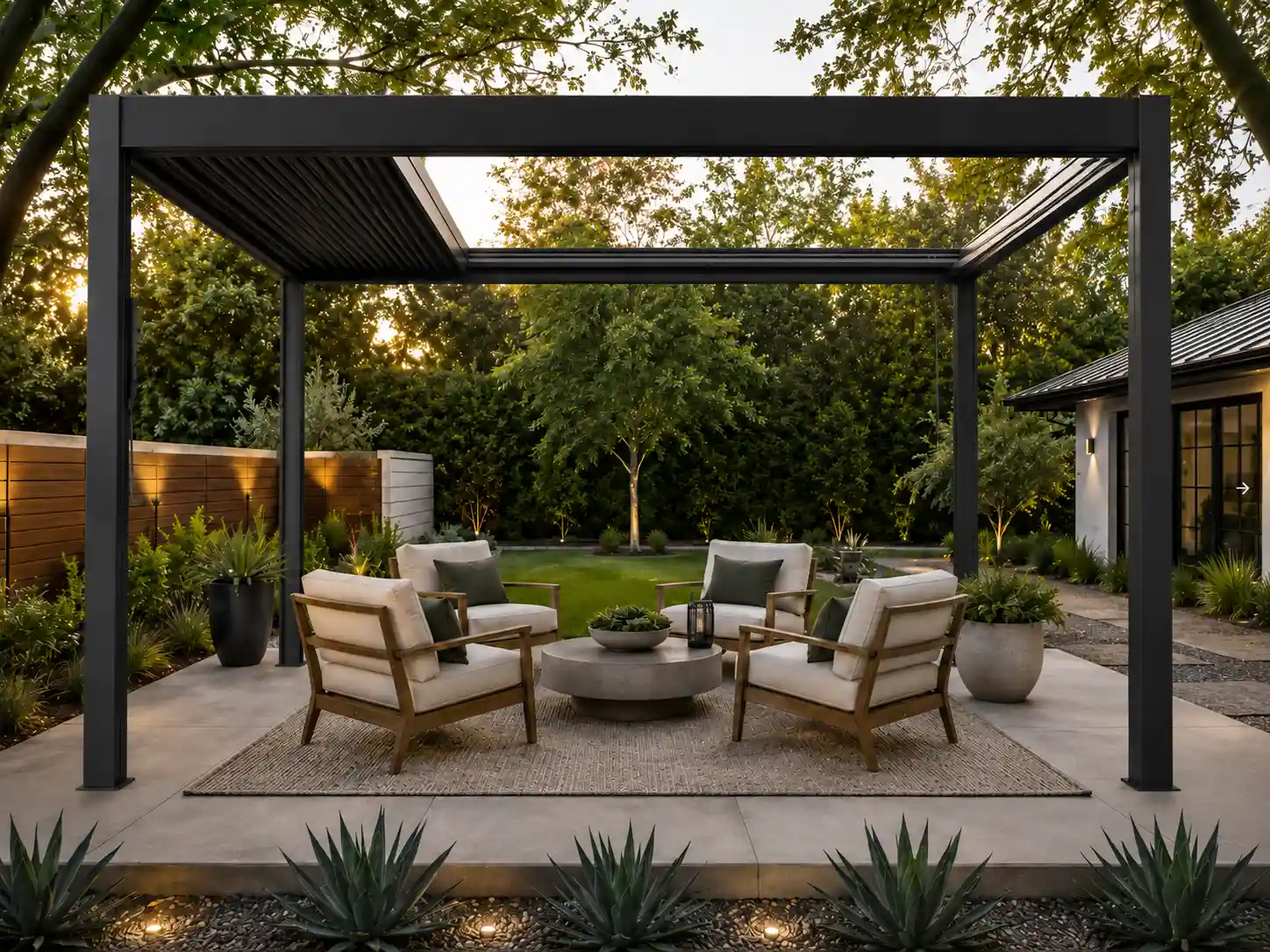
Unlike a traditional pergola with a fixed or open roof, a motorized pergola uses an electric drive system to adjust roof louvers or retractable covering material. Depending on the model, you can operate it with a handheld remote, wall switch, smartphone app, or compatible smart home system. Optional sensors can respond to changing outdoor conditions automatically.
This guide explains how motorized pergolas work, their most useful features, key benefits, available smart control options, and what to consider before buying.
What Is a Motorized Pergola?
A motorized pergola is an outdoor shade structure with a roof that moves using an electric motor. The two common designs are:
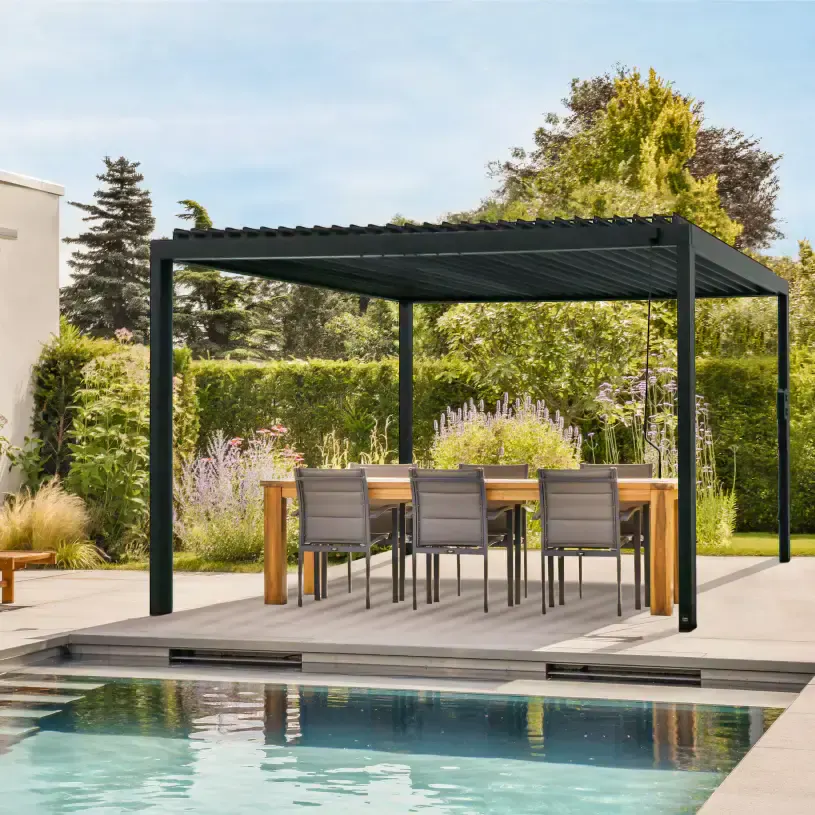
- Motorized louvered pergolas: Rotating roof slats tilt to control sunlight, airflow, and shade. Many designs close into an overlapping roof intended to shed rain through integrated drainage channels.
- Motorized retractable pergolas: A powered fabric canopy or retractable roof slides or folds open and closed to provide shade when needed and an open-sky experience when retracted.
Both designs can be freestanding in a garden or attached to an existing building, subject to structural and planning requirements. The right choice depends on climate, desired appearance, budget, and whether adjustable ventilation or a fully retractable roof matters more to you.
How Do Motorized Pergolas Work?
An electric motor moves the louvers or retractable canopy when the receiver gets an instruction from a switch, remote, or supported automation system.
Electrical requirements vary, and app-enabled models may need an additional hub. A qualified installer should verify power and weatherproof electrical connections.
Movement and weather responses vary by manufacturer. For example, automatic closure in rain is not universal, and a closed roof should not automatically be assumed waterproof, snow-safe, or suitable for extreme winds.
Key Features of Modern Motorized Pergolas
1. Adjustable Louvers for Precise Sunlight Control
A motorized louvered pergola allows you to choose how much sunlight reaches your seating or dining area. Angle the louvers to reduce glare, open them to enjoy fresh air, or close them for maximum shade. This flexibility makes one patio useful for breakfast, afternoon work, and evening entertaining.
Check the available tilt range and intermediate positions.
2. Durable Frames and Weather-Resistant Finishes
Many premium motorized pergolas use powder-coated aluminum because it is relatively lightweight, corrosion-resistant, and easy to maintain. Steel, wood, and hybrid structures are also available. The appropriate material depends on appearance, local conditions, structural loads, and maintenance expectations.
Ask suppliers about frame thickness, finish quality, fasteners, corrosion protection, and the specific wind and snow ratings of the complete installed system—not just the material itself.
3. Integrated Water Management
On some louvered roofs, closed blades channel rainwater into perimeter gutters and down through designated posts. A properly installed drainage system can make the covered area more usable during showers.
However, performance depends on roof design, rainfall intensity, installation slope, seals, and maintenance. Drainage systems should be kept clear of leaves and debris, and heavy rain or wind-driven rain may still enter from the sides.
4. Optional Lighting and Side Screens
Integrated LED strips, dimmable lighting, retractable privacy screens, and exterior shades can turn a pergola into a versatile outdoor room. Some configurations also accommodate approved heaters or fans.
Before purchasing accessories, verify electrical capacity, control compatibility, mounting requirements, and clearances. Heaters in particular should be installed according to their manufacturer’s safety instructions.
5. Automatic Weather Sensors
Depending on the manufacturer and configuration, rain, sun, wind, or temperature sensors can trigger programmed responses. A rain sensor might close compatible louvers when moisture is detected. A sun sensor may adjust shading to limit glare or heat exposure.
Wind and snow behavior requires special attention: different roof types have different safe positions, and retractable fabrics may need to be withdrawn in strong winds. Never assume that one sensor setting is appropriate for every pergola. Follow the exact product’s weather-operation guidance.
Major Benefits of Motorized Pergolas
Improved Comfort Across Changing Conditions
The biggest benefit is control. Instead of choosing between permanent shade and an uncovered patio, you can change the roof position as conditions shift. This is especially helpful in regions where sunny and cloudy weather alternate throughout the day.
More Opportunities to Use Outdoor Space
An adaptable roof can extend the practical use of a deck, terrace, or garden seating area. Add appropriate lights and screens, and the space may work for family meals, quiet reading, remote work, or hosting guests across more hours of the day.
A motorized pergola is not a substitute for an insulated indoor room, though. Outdoor temperatures, rain direction, wind, and seasonal weather still limit comfort.
Convenience and Accessibility
Pressing a button is easier than operating a manual crank or adjusting a large fabric cover by hand. Remote controls and wall switches can be especially useful for people who prefer simple operation or have limited reach or mobility.
For reliable access, consider whether the system offers a manual override, emergency procedure, or local control when internet service is unavailable.
Smart Control Options for Motorized Pergolas
Choosing a smart pergola is not just about the roof. It is also about how naturally the control system fits your routine.
Handheld Remote Controls
A remote is often the simplest option. It can open, close, or adjust a compatible pergola without relying on a phone. Some multi-channel remotes also operate exterior screens or lighting. Check the control range, battery type, and whether the remote provides intermediate-position settings.
Smartphone App Control
An app-enabled system may let you change louver positions, activate accessories, and run preset scenes from your phone. Remote access from outside the home usually requires the appropriate hub, network connection, and app setup.
For instance, Somfy describes compatible pergola configurations that can be managed through its TaHoma ecosystem, including roof slats, screens, and lighting. Compatibility depends on the exact motor, receiver, and regional product lineup—not simply the pergola’s branding.
Voice Assistant Integration
Some pergola automation systems support compatible voice assistants, such as Amazon Alexa or Google Assistant, typically through a supported smart home hub. You might use a command to activate a prepared shade or evening scene instead of reaching for a remote.
Before buying, verify which voice commands are supported in your market and whether voice control works for roof movement, accessories, or both.
Scheduled Automation and Preset Scenes
Smart controls can simplify everyday routines. A morning scene might open the roof for natural light, while an afternoon scene tilts the louvers for shade. An evening scene could coordinate approved lighting and privacy screens.
Schedules are convenient, but weather safety rules should take priority over timed instructions. The system should respond according to its documented protection logic, not a generic automation copied from another model.
Sensor-Driven Operation
Weather-responsive automation is one of the most useful upgrades. Compatible sensors can reduce the need for constant manual adjustment and help respond to unexpected changes while you are away.
Ask the supplier whether sensor operation is local or internet-dependent, how quickly it reacts, whether alerts are available, and what happens during a power outage or sensor failure. An automatic system still needs periodic inspection and responsible operation.
Motorized vs. Manual Pergolas: Which Is Better?
| Consideration | Motorized pergola | Manual pergola |
|---|---|---|
| Roof adjustment | Button, switch, app, or compatible automation | Hand-operated crank or mechanism |
| Everyday convenience | High, especially for frequent adjustments | Good for occasional adjustments |
| Smart home integration | Available on selected systems | Usually unavailable without retrofitting |
| Upfront cost | Generally higher | Generally lower |
| Maintenance | Mechanical and electrical components | Primarily mechanical components |
| Power requirement | Usually requires electricity | Usually does not |
A manual pergola may be sufficient if you adjust the roof only occasionally and want a simpler setup. Motorization makes more sense when convenience, accessibility, regular adjustment, or smart-home integration is a priority.
How Much Does a Motorized Pergola Cost?
Motorized pergola cost varies widely because there is no single standard size or specification. A small, basic kit can be substantially less expensive than a large, custom-engineered system with integrated drainage, lighting, screens, sensors, and professional installation.
When comparing quotes, ask for an itemized breakdown of the structure, motor and controls, foundation work, electrical installation, permits where applicable, delivery, accessories, and labor. Clarify whether the quoted price includes taxes and any site-specific structural work.
Rather than selecting solely by the lowest upfront price, compare warranty coverage, replacement-part availability, installer support, published structural ratings, and expected maintenance needs. These factors can have a significant effect on long-term ownership costs.
How to Choose the Right Motorized Pergola
Measure the Area and Define Its Purpose
Begin with the usable footprint, surrounding doors and windows, furniture arrangement, and the location of drainage outlets. Consider whether you need shade for dining, a lounge, a hot tub, or a multipurpose patio.
Match the Roof to Your Climate
Louvered roofs offer precise daylight and airflow control. Retractable systems may be preferable when opening the roof entirely is important. If you experience heavy snow, strong winds, coastal exposure, or frequent storms, request site-appropriate engineering and clear operating limits.
Check Control-System Compatibility
Decide whether basic remote operation is enough or whether you want app control, voice commands, weather sensors, and multiple automation scenes. Have the supplier confirm the exact devices and protocols supported. “Smart-ready” does not always mean the hub or sensors are included.
Review Installation and Local Requirements
Depending on location, pergolas may require planning permission, building permits, setbacks, structural calculations, or approval from a homeowners’ association. Attached structures also need careful attention to waterproofing and building connections.
Professional installation is advisable for large structures and electrical work. Ask who is responsible for site preparation, power supply, commissioning, and demonstrating safe operation.
Maintenance Tips for Long-Term Performance
Motorized pergolas are designed for convenience, but they are not maintenance-free. Follow the specific manufacturer instructions and establish a simple inspection routine:
- Remove leaves, dirt, and other debris from roof channels, gutters, and drain outlets.
- Wash powder-coated surfaces with approved mild cleaning products and avoid abrasive tools.
- Check exposed fasteners, seals, and moving parts for damage or unusual wear.
- Test remotes and sensors according to the product manual, especially before storm seasons.
- Keep tracks and moving components free of obstructions; never force a jammed roof.
- Arrange qualified servicing if movement becomes noisy, uneven, or unreliable.
During severe weather, follow the manufacturer’s required roof position and shutdown procedures. Do not operate a roof under accumulated snow or ice unless the product documentation expressly permits it.
Frequently Asked Questions About Motorized Pergolas
Are motorized pergolas waterproof?
Some louvered models are designed to resist ordinary rain when fully closed and correctly installed. However, weather resistance varies, and wind-driven rain can enter from the sides. Always check the manufacturer’s water-management specifications rather than assuming the structure is completely waterproof.
Can I control a motorized pergola with my phone?
Yes, if the motor and control system support a compatible app or automation hub. App access, remote operation, and third-party integrations depend on the exact hardware and network configuration.
Do motorized pergolas work without Wi-Fi?
Many systems can still operate using a compatible handheld remote or wired wall switch without Wi-Fi. App-based remote access and some advanced automation functions may require an active network connection. Confirm offline functionality before purchase.
Do motorized pergolas need professional installation?
Professional installation is recommended for most full-size systems, especially those needing electrical connections, structural anchoring, drainage integration, or building attachment. A qualified installer can also configure control limits and safety settings.
How long does a motorized pergola last?
Service life depends on the materials, motor quality, environmental exposure, frequency of use, and maintenance. Look for documented warranties, corrosion protection, service support, and replacement-part availability rather than relying on a universal lifespan claim.
Is a motorized pergola worth it?
It can be a worthwhile investment if you use your patio frequently and value convenient shading, flexible roof positions, and optional automation. A manual system may offer better value when your needs are simple and budget is the main consideration.
Final Thoughts
Motorized pergolas combine adjustable outdoor shade with the convenience of powered operation. Their strongest advantages are practical: adaptable sunlight control, easy operation, useful accessory options, and the potential to automate daily routines with compatible smart controls.
The best choice is not necessarily the pergola with the longest feature list. Look for a structurally suitable design, dependable motor, clear weather limitations, appropriate drainage, and a control system you will actually use. Compare detailed quotations and request a demonstration of the roof, sensors, and smart features before making a decision. With the right specification and installation, a motorized pergola can make outdoor living more comfortable, flexible, and enjoyable.
Sources and Further Reading
- Somfy: Electric Pergolas and Smart Control Options
- Somfy: Pergola io Louver Control
- Somfy: Motorized Pergola Systems
- Somfy: Choosing a Pergola
Editorial note: Product compatibility, operating limits, and permit requirements vary by manufacturer and jurisdiction. Verify current specifications with the supplier and local authorities.