
OEM partners, private-label brands, importers, distributors, e-commerce sellers and DIY retail chains — each with its own MOQ, tooling and lead-time terms.
Buyer case
Private Label Solution: From Generic Sourcing to a Profitable First Launch
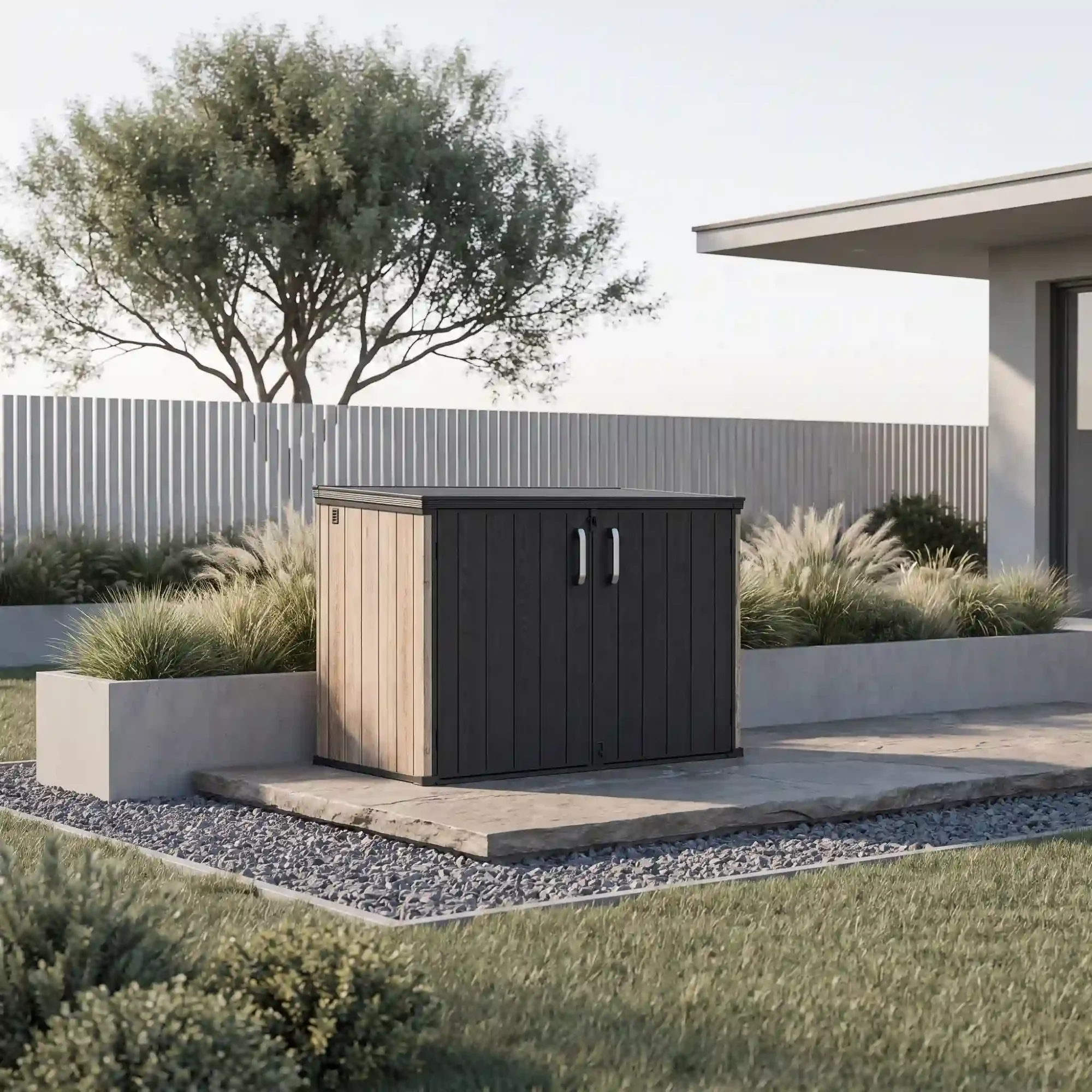
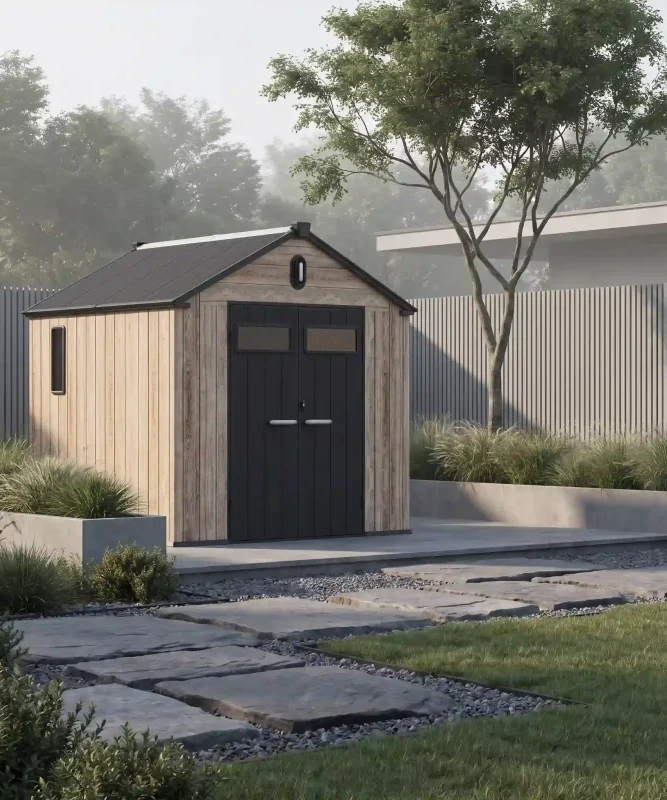
A sourcing agent wanted a private label shed that did not look like every other resin shed on the market. DiBiBi developed a 3D woodgrain surface and a custom walnut tone, and the customer's first sales batch turned a profit.
Profile
An independent sourcing agent was building a personal outdoor products brand. Competing with the outdoor sheds already listed everywhere was not an option. The customer wanted a private label shed distinctive enough to give the new brand its own identity.
Situation
The customer had already explored several customized resin shed concepts. The samples kept coming back disappointing.
The products worked. They just looked generic, and the thin resin panels made them feel cheap. The finishes were flat and plastic-like, with no depth or warmth, so nothing set the brand apart visually. Launching another generic design would have added no advantage over the outdoor storage products already on the market.
The customer did not need a supplier who could change a color or add a logo. They needed a development partner who understood how material, texture, color and structural performance work together in a product that still sells.
DiBiBi Solution
DiBiBi used its in-house resin processing and application expertise to build a distinct visual identity for the shed.
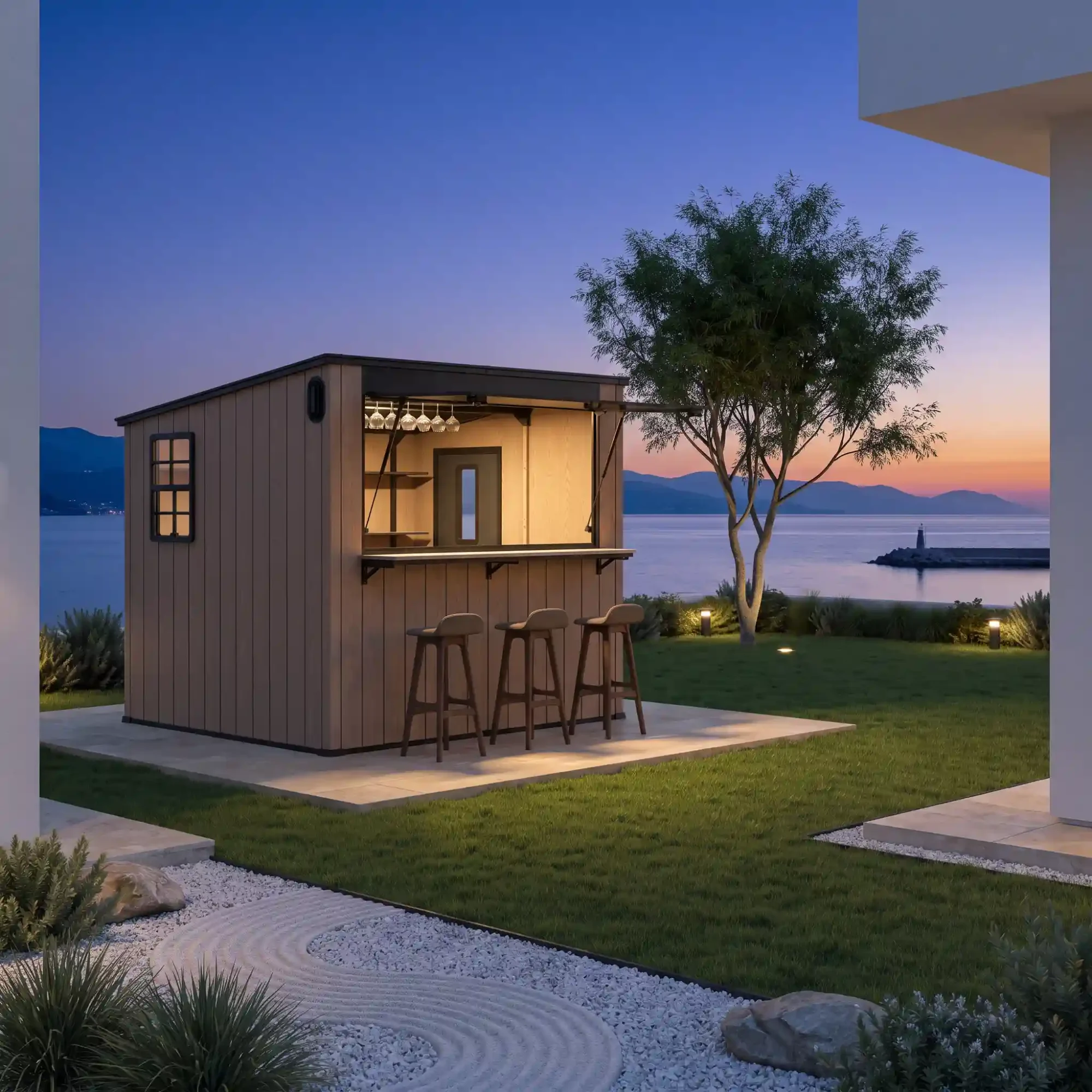
The team created a 3D simulated woodgrain surface to add depth and a more natural appearance. Instead of printing a pattern onto a flat panel, the grain is built into the surface itself, so it catches light the way real timber does and holds that look from a distance and up close.
Color was not picked off a swatch book. DiBiBi worked through it together with the brand owner, and the decision came down to where the shed would actually stand. The target market is a cold, windy region with long grey winters. Pale and cool tones disappear against that light. A warm walnut tone reads as solid and natural in it, and it is the color buyers there already associate with a garden building that belongs in the yard rather than one that was dropped into it. DiBiBi formulated that walnut specifically for this design, replacing the cold plastic look common to entry level resin sheds.
That same climate turned the conversation from appearance to structure. Wind was expected. The question the retailer raised was snow. A shed that looks right in the listing photo is worthless if the roof gives way in February, and the retailer wanted to know what the design could actually carry before committing to it.
DiBiBi answered with test data rather than reassurance. The team supplied its wind and snow testing report for the structure, showing an average snow load of 100 kg/m². With the number on the table, the retailer could size up the design against local winter conditions . The structure was developed to meet that weather resistance requirement, so the new design stayed practical for outdoor use in the market it was built for.
Sample development to final approval took 25-30 workdays. Once appearance, color and product performance were confirmed, the customer approved the design for production under their own brand.
Customer Benefits
The finished lean-to shed stood apart on two fronts: its wood inspired appearance and its everyday usability.
After launch, the customer reported positive feedback on both. Detailed sales figures remain confidential, but the customer confirmed that the first sales batch generated a profit.
The larger outcome is a credible starting point for a private label business. Instead of entering the market with another generic resin shed, the brand launched with a differentiated product built around its own positioning.
For DiBiBi, the project shows how in-house product development can take an emerging brand from an idea to a first launch that makes money.