A gazebo can turn an ordinary backyard into a comfortable place for outdoor dining, entertaining, or relaxing in the shade. But how much does a gazebo cost? The answer depends on whether you want a temporary canopy, an easy-to-assemble kit, or a permanent, custom-built structure.
In the United States, a professionally installed gazebo commonly costs $1,580 to $7,952, with an average reported project price of about $4,766. Larger kits and custom builds can cost considerably more. A basic pop-up shelter, meanwhile, may cost only a few hundred dollars. These figures describe different product categories, so it is important to compare equivalent structures rather than relying on a single average.
This 2026 gazebo pricing guide breaks down costs by material, size, installation method, and important extras so you can set a realistic budget.
Average Gazebo Cost in 2026
Your total price will depend on the type of gazebo you purchase and the work required to put it in place. The following ranges are useful planning estimates, not guaranteed contractor quotes.
| Gazebo type | Estimated cost (USD) | Best suited for |
|---|---|---|
| Basic pop-up or fabric canopy | $150–$600 | Occasional parties and temporary shade |
| Entry-level DIY gazebo or kit | $1,000–$3,500 | Budget-conscious homeowners |
| Typical professionally installed gazebo | $1,580–$7,952 | Standard backyard projects |
| Larger permanent prefab gazebo, installed | $5,000–$14,500 | Regular outdoor living |
| Custom-built permanent gazebo | $8,600–$25,000+ | Personalized design and premium finishes |
Important: These categories overlap and are not strictly comparable. Installation, foundations, shipping, and electrical work may or may not be included in individual quotes. National cost reporting from Angi and HomeAdvisor places a typical installed project near $4,766, while HomeGuide reports higher pricing for larger kits and custom builds.
For a permanent gazebo, it is sensible to reserve an additional 10%–20% contingency for unexpected site work or upgrades.
Gazebo Cost by Material
Material choice affects not only the purchase price but also durability, maintenance, appearance, and long-term ownership costs.
Wood Gazebos
Estimated cost: $4,000–$7,000 for many standard projects, with premium custom designs costing more.
Wood is popular because it creates a traditional, natural appearance. Pressure-treated pine is generally more economical, while cedar and redwood are valued for their appearance and natural resistance to decay. Intricate railings, decorative trim, and specialty roofing increase the price.
Wood needs regular care. Depending on the climate and finish, you may need to clean, stain, or seal it periodically. Factor those recurring expenses into the total cost rather than comparing purchase prices alone.
Best for: Traditional gardens, rustic landscapes, and homeowners who prefer natural materials.
Metal Gazebos
Estimated cost: $3,000–$8,500 for many permanent metal gazebo projects.
Metal gazebos commonly use aluminum or steel. Aluminum is relatively lightweight and resists rust, making it attractive for lower-maintenance installations. Steel can provide a strong, substantial framework, but its protective coating and corrosion resistance matter, particularly in coastal or humid environments.
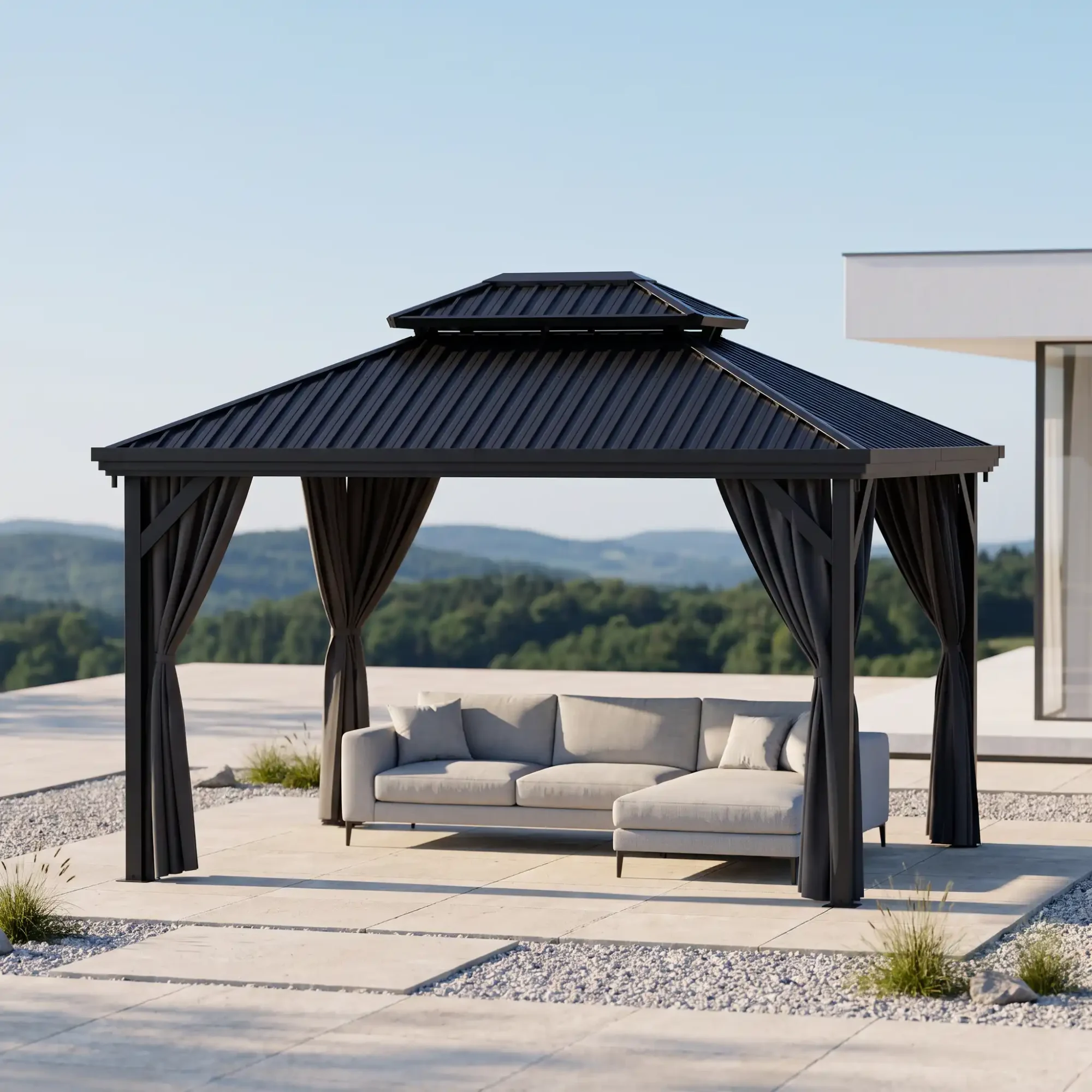
A metal gazebo may feature a fabric canopy, polycarbonate panels, or a hardtop roof. Because roofing systems vary considerably, compare roof materials and structural ratings before deciding which product offers better value.
Best for: Modern patios, contemporary homes, and buyers seeking reduced routine maintenance.
Vinyl Gazebos
Estimated cost: $2,000–$3,500 for some standard vinyl projects, although larger premium kits can cost substantially more.
Vinyl is popular for its clean appearance and minimal finishing requirements. It generally does not require the staining associated with wood, and routine cleaning is relatively straightforward. Some vinyl gazebos use internal wood or metal structural components, so specifications matter more than the exterior finish alone.
Vinyl may have fewer design options than custom timber construction. Look for UV-resistant materials and appropriate structural support, especially in areas with harsh summers or heavy snow.
Best for: Homeowners who value a classic appearance without frequent repainting or staining.
Brick, Stone, and Composite Options
Estimated cost: Highly project-dependent; obtain a custom quote.
Brick or stone columns can create an elegant, long-lasting structure, but their weight may require substantial footings and specialized labor. Composite materials can offer a wood-like look with different maintenance needs, depending on the product.
These materials often make the most sense in custom projects where the gazebo is intended to match an existing patio, outdoor kitchen, or landscape design.
Gazebo Cost by Size
Size is one of the clearest predictors of price. Larger gazebos use more posts, framing, roofing, and foundation materials, and they often require additional labor.
The table below compares installed prefabricated kit estimates with custom-built estimates for common square sizes. It is intended for permanent structures rather than temporary canopy tents.
| Gazebo size | Area | Installed kit estimate | Custom-built estimate |
|---|---|---|---|
| 8 × 8 ft | 64 sq. ft. | $1,900–$4,500 | $3,800–$6,400 |
| 10 × 10 ft | 100 sq. ft. | $3,000–$7,000 | $6,000–$10,000 |
| 12 × 12 ft | 144 sq. ft. | $4,300–$10,000 | $8,600–$14,400 |
| 14 × 14 ft | 196 sq. ft. | $5,900–$13,700 | $11,800–$19,600 |
| 16 × 16 ft | 256 sq. ft. | $7,700–$18,000 | $15,400–$25,600 |
| 20 × 20 ft | 400 sq. ft. | $12,000–$28,000 | $24,000–$40,000 |
Source: HomeGuide’s February 2026 size-based estimates. Prices include the gazebo and installation, but an individual property’s groundwork or optional features may change the quote.
Small Gazebos: 8 × 8 or 10 × 10 Feet
A compact gazebo works well for a bistro table, a couple of lounge chairs, or a small shaded reading area. It is often the best option for homeowners with limited yard space. Because smaller structures generally require less framing and roofing, they can be a practical starting point for a modest budget.
Medium Gazebos: 12 × 12 or 14 × 14 Feet
A 12 × 12 gazebo is a versatile choice for outdoor dining and family gatherings. It provides more usable space for furniture without dominating many residential backyards. Check furniture measurements and walking clearances before ordering; the footprint alone does not guarantee a comfortable dining layout.
Large Gazebos: 16 × 16 Feet and Above
Larger gazebos can accommodate distinct seating and dining zones, making them suitable for frequent entertaining. However, they may trigger additional structural, drainage, or permitting requirements. Roof span, post placement, and weather loads become particularly important at this scale.
Prefabricated Gazebo vs. Custom-Built Gazebo
A prefabricated gazebo kit arrives with major components manufactured to predetermined dimensions. Kits usually reduce design work and can shorten on-site assembly. They are often the most cost-effective route to a permanent gazebo when standard sizes and finishes meet your needs.
A custom-built gazebo is designed for a specific property and can incorporate unusual dimensions, architectural detailing, premium timber, integrated seating, or specialized roofing. The additional design and construction flexibility typically increases the price.
As a useful benchmark, HomeGuide estimates an installed 12 × 12-foot gazebo kit at $4,300–$10,000, compared with $8,600–$14,400 for a custom-built equivalent. A custom structure may be worthwhile if matching your home or accommodating a difficult site is a priority.
What Factors Affect Gazebo Installation Cost?
The product price is only one part of the project. Several site and design decisions can substantially change your final invoice.
1. Foundation and Site Preparation
A permanent gazebo needs a suitable supporting surface and secure anchoring. Depending on its design and local conditions, this might involve concrete footings, a slab, pavers, or a properly engineered deck connection.
Uneven ground, poor drainage, tree roots, and difficult access increase labor requirements. Angi’s 2026 guidance suggests allowing roughly $1,200–$4,300 for land preparation where significant work is needed. Simple, level sites may cost much less.
Do not assume an existing deck is structurally adequate: have its capacity and attachment details checked before installing a heavy hardtop gazebo.
2. Roof Design and Material
Fabric roofs are commonly cheaper initially but may require replacement sooner. Polycarbonate panels can provide a lightweight covered option, while metal hardtops are often selected for a more permanent design.
Roof complexity also matters. A basic pitched roof typically requires less custom fabrication than an ornate multi-sided roof with decorative details. Make sure the roof is rated for local wind and snow conditions.
3. Shape and Architectural Detail
Square and rectangular gazebos generally use straightforward framing and standardized components. Hexagonal and octagonal models can require more complicated roof joints, cutting, and finishing. Curved profiles, built-in railings, cupolas, and custom trim add further expense.
If minimizing cost is the priority, a simple, standard footprint is usually easier to price and install.
4. Labor, Delivery, and Location
Professional installation charges vary with regional wages, assembly complexity, equipment requirements, and site accessibility. Rural delivery distances, narrow gates, and steep yards may add handling costs.
Ask whether labor includes unloading, assembly, anchoring, cleanup, and disposal of packaging. A low advertised installation price may cover only basic assembly on a prepared surface.
5. Permits and Local Building Requirements
Permanent structures may require building permits, zoning setbacks, HOA approval, or inspections. Requirements depend on the jurisdiction, size, foundation, and whether utilities are installed. Some uncomplicated permits may be inexpensive, but engineered plans or inspections can increase the total.
Contact your local building department before purchasing a large permanent gazebo. Confirm setbacks and any applicable wind or snow-load requirements.
6. Optional Features
Screens, curtains, lighting, ceiling fans, electrical outlets, built-in benches, and decorative flooring make a gazebo more functional, but each adds material and installation costs.
Electrical work should be performed by a qualified professional using outdoor-rated equipment. Plan wiring early, particularly if a concrete foundation will be poured.
DIY Gazebo Installation vs. Hiring a Professional
DIY assembly can reduce labor expenses, especially for small, manufacturer-designed kits. It works best when the ground is level, the instructions are clear, and the homeowner has the tools and help needed to lift roof components safely.
However, DIY does not eliminate the cost of the foundation, delivery, permits, tools, or anchoring. Incorrect installation can also compromise weather resistance or void a manufacturer’s warranty.
Hiring a professional is generally preferable for heavy hardtop roofs, large structures, engineered foundations, or complicated sites. When comparing proposals, ask for a written scope that identifies materials, foundation work, labor, disposal, permits, and warranty coverage.
How to Save Money on a Gazebo
A few purchasing decisions can make a significant difference without sacrificing the structure’s usefulness:
- Choose a standard size. Common dimensions typically offer more kit choices and less custom fabrication.
- Compare total installed costs. Include shipping, foundations, labor, and accessories rather than judging the kit price alone.
- Select a practical roof. Match its weather performance to local conditions instead of paying for decorative complexity.
- Use an accessible location. A level area with good drainage can reduce site preparation and handling costs.
- Delay nonessential upgrades. Add furniture, curtains, and decorative lighting later if the initial budget is tight.
- Get multiple itemized quotes. Comparing at least three proposals can reveal differences in materials, anchoring methods, and exclusions.
Do not reduce costs by skipping structural anchors, proper footings, or code-required approvals. These elements protect both the structure and the people using it.
Example: Budgeting for a 12 × 12 Gazebo
Suppose you want a permanent 12 × 12-foot gazebo for a backyard seating area. An installed kit might fall in the $4,300–$10,000 range before unusual site conditions or premium extras.
A simple budgeting approach is to select a target price within that range, ask the installer what groundwork is included, and add a contingency. For example, a hypothetical $7,000 project allowance plus a 15% reserve ($1,050) produces an $8,050 planning budget. This is an illustration, not a market quote or a breakdown of actual contractor charges.
Before committing, request a complete proposal that specifies the model, roof type, mounting surface, anchoring, delivery, assembly, and any optional electrical work.
Frequently Asked Questions About Gazebo Costs
How much does a 10 × 10 gazebo cost?
An installed permanent 10 × 10-foot gazebo kit typically costs around $3,000–$7,000, while a custom-built version may cost $6,000–$10,000. Temporary canopy models are considerably cheaper and should not be compared directly with permanent structures.
How much does a 12 × 12 gazebo cost?
For a 12 × 12-foot gazebo, expect approximately $4,300–$10,000 for an installed kit or $8,600–$14,400 for custom construction, depending on materials, site conditions, and finishes.
Is it cheaper to build or buy a gazebo?
A standard prefabricated kit is generally cheaper than commissioning a custom build because it reduces design and fabrication work. DIY assembly may save labor, but foundation and safety requirements still apply.
What is the cheapest gazebo material?
For temporary shelter, a fabric canopy on a basic metal frame is usually the lowest-cost option. For permanent structures, basic vinyl, economical wood, and entry-level metal kits can be competitively priced. Compare the complete specifications rather than assuming one material is always cheapest.
Does a gazebo add value to a home?
A well-designed gazebo can improve the appeal and usability of outdoor space, but a specific return on investment is not guaranteed. Its value depends on build quality, neighborhood expectations, overall landscape design, and buyer preferences.
How long does a gazebo last?
Lifespan varies greatly with materials, installation quality, weather exposure, and maintenance. Temporary canopies may require replacement much sooner than properly maintained permanent wood, vinyl, or metal structures. Follow the manufacturer’s maintenance and inspection guidance.
Do I need a concrete slab for a gazebo?
Not always. Some gazebos can be supported by engineered footings, suitable paver systems, or approved deck structures. The correct solution depends on the gazebo’s weight, anchoring instructions, soil, weather loads, and local code.
Final Thoughts: What Should You Budget for a Gazebo?
So, how much does a gazebo cost? A simple temporary canopy can cost only a few hundred dollars, while a standard professionally installed gazebo often falls between $1,580 and $7,952. Larger permanent kits and custom gazebos can reach five figures, particularly when the project involves substantial foundations or premium materials.
Start with the space you need, choose a material suited to your climate and maintenance preferences, and request quotes that cover the complete installed price. The right gazebo is not necessarily the cheapest model—it is the structure that provides safe, useful outdoor space at a cost you can maintain over time.
Sources and Pricing Methodology
Prices are approximate U.S. national benchmarks reviewed in October 2026, not live retailer offers or local contractor estimates. Ranges vary because different publishers measure different project types, and some include installation while others focus on the structure itself.
- HomeGuide — How Much Does a Gazebo Cost? (February 10, 2026): size-based installed kit and custom-build pricing.
- Angi — How Much Does a Gazebo Cost? (September 24, 2026): project averages, materials, and site-related cost factors.
- HomeAdvisor — How Much Does a Gazebo Cost in 2026?: national average and common overall price range.
Editorial note: All prices are expressed in USD. Verify current product specifications, local regulations, and written installation quotes before purchasing.