A gazebo can turn an ordinary patio or backyard into a comfortable place to dine, unwind, and entertain. But before you compare roof materials or frame colors, you need to answer one important question: What size gazebo do I need?
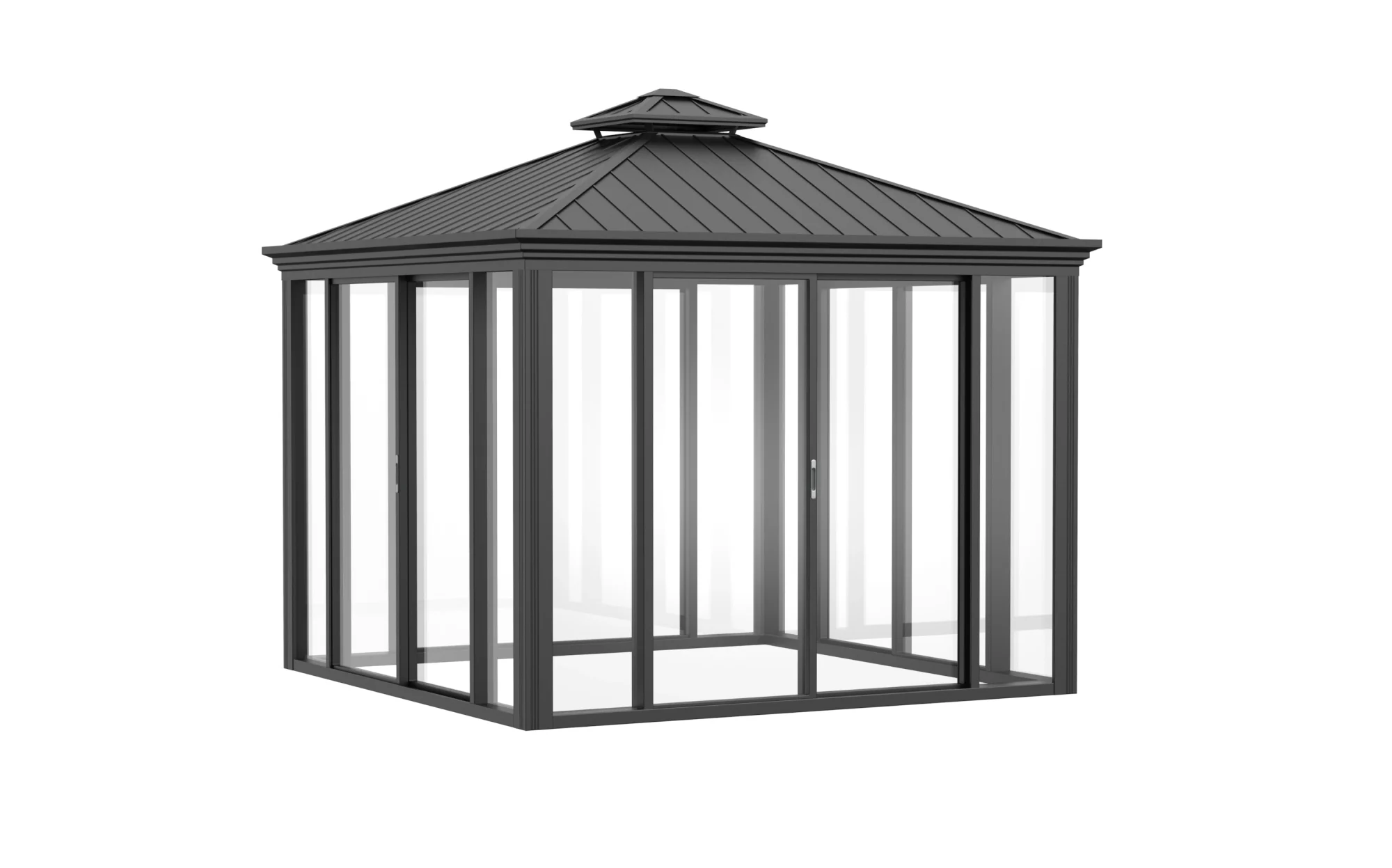
Choosing the right gazebo size is about more than fitting a structure into an empty corner. Your gazebo should accommodate furniture, allow people to move comfortably, suit the proportions of your yard, and leave enough room for safe installation and maintenance. A gazebo that is too small can feel crowded. One that is too large may dominate your landscape and limit how you use the remaining outdoor space.
This practical gazebo size guide explains how to measure your area, compare common dimensions, and select a gazebo that works for your lifestyle and outdoor layout.
Increasing the footprint also changes the gazebo cost through material, foundation, and installation requirements.
A hardtop or soft-top roof changes how a gazebo feels and performs, even at the same footprint.
1. Start by Measuring Your Outdoor Space
The first step in learning how to choose the right gazebo size is to identify the usable area—not simply the total size of your backyard.
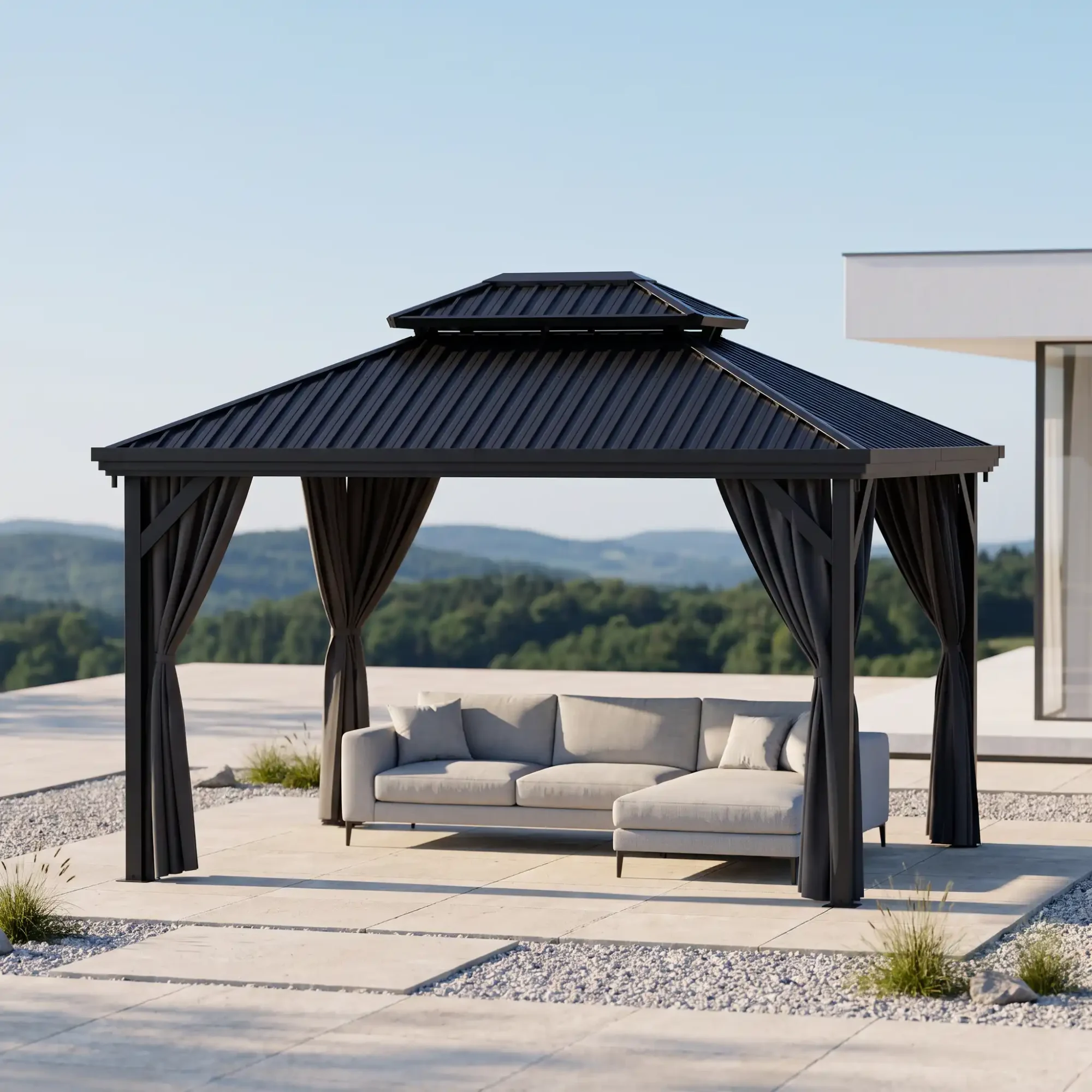
Measure the length and width of the patio, deck, or lawn section where you want to install the gazebo. Use a tape measure and record the dimensions in feet or meters. Next, identify anything that reduces the available space, including garden beds, trees, stairs, fences, drainage covers, and outdoor equipment.
Consider these four measurements:
- Installation footprint: The area occupied by the gazebo’s posts or base plates.
- Roof footprint: The overall roof dimensions, including any overhang beyond the posts.
- Usable interior space: The clear area between posts where furniture and people actually fit.
- Surrounding clearance: The space needed for access, setup, maintenance, and any required setbacks.
As a preliminary planning allowance, consider leaving approximately 2–3 feet of accessible space where practical. This is not a universal building-code requirement; actual clearances depend on the product, site conditions, and local regulations.
Also measure upward. Branches, roof eaves, power lines, and other overhead obstacles can interfere with a gazebo roof or assembly. Check the manufacturer’s total roof height rather than relying only on the listed eave height.
Quick tip: Outline the proposed gazebo with stakes, string, or painter’s tape. Stand inside the outline to see whether the size feels balanced in your yard.
2. Compare Common Gazebo Sizes
Gazebos come in many square and rectangular dimensions. The following table provides a starting point for comparing popular options. Furniture capacity is approximate and depends on post spacing, furniture dimensions, and circulation space.
| Gazebo size | Approx. coverage | Best suited for |
|---|---|---|
| 8 × 8 ft | 64 sq ft | Bistro seating, a reading nook, or a compact patio |
| 10 × 10 ft | 100 sq ft | Small conversation sets or limited four-person seating |
| 10 × 12 ft | 120 sq ft | A compact dining area or sofa-and-chair arrangement |
| 12 × 12 ft | 144 sq ft | More comfortable outdoor dining or lounge seating |
| 12 × 14 ft | 168 sq ft | A dining set with improved movement space |
| 12 × 16 ft | 192 sq ft | Larger gatherings or a combined dining and lounge layout |
| 12 × 20 ft | 240 sq ft | Spacious outdoor living zones on larger properties |
These sizes are commonly used as nominal product labels. Always confirm whether a manufacturer’s measurements refer to the roof, the distance between posts, or the outside edges of the base. A 10 × 12-foot roof does not necessarily provide a full 10 × 12 feet of unobstructed floor space.
Small gazebos: 8 × 8 and 10 × 10 feet
An 8 × 8-foot gazebo is ideal when your goal is to create a shaded spot without sacrificing much lawn or patio space. A pair of chairs and a small table may be sufficient for morning coffee or afternoon reading.
A 10 × 10-foot gazebo provides extra versatility. It can work well for a small seating group, but a dining table with pulled-out chairs may feel tight. For compact yards, prioritize furniture with a small footprint and avoid oversized sectional sofas.
Medium gazebos: 10 × 12 and 12 × 12 feet
Medium-sized models often provide a useful balance between coverage and flexibility. A 10 × 12 gazebo gives you more length for a rectangular dining table or loveseat setup. A 12 × 12 gazebo creates a broader, more symmetrical seating area that can support a variety of layouts.
Both options can suit family patios, provided the usable interior dimensions accommodate the specific furniture you own.
Large gazebos: 12 × 14, 12 × 16, and beyond
If your outdoor space regularly hosts gatherings, a larger gazebo may be worth the investment. A 12 × 16-foot model can make it easier to distinguish a dining zone from a lounge area. A 12 × 20-foot structure offers additional flexibility but also needs a larger installation surface, more substantial anchoring, and careful attention to visual scale.
Do not choose the largest gazebo simply because it fits on paper. Preserve open space for pathways, gardening, play, and other activities.
3. Choose the Size Based on How You Will Use It
The best gazebo dimensions depend on what happens underneath the roof. Start with your main activity, then plan the furniture and circulation space around it.
For outdoor dining
Measure your dining table and add space around the edges for chairs to slide out. Approximately 3 feet behind occupied chairs is a helpful planning target, although more room may be needed for a main walkway.
For example, a rectangular table measuring 3 × 6 feet may need roughly 9 × 12 feet of clear space when you allow 3 feet on every side. Because posts reduce usable dimensions, a nominal 10 × 12-foot gazebo could be restrictive. A larger model may provide a more comfortable layout.
For a relaxing lounge area
A conversation set typically includes a sofa or loveseat, two chairs, and a coffee table. Measure each piece, including the space needed to walk between them. A 10 × 12-foot gazebo may suit compact furniture, while a 12 × 12-foot or larger structure can accommodate a more generous arrangement.
For entertaining guests
Guest count is a useful starting point, but it should not be your only sizing method. Ten people standing briefly need a different layout from ten people seated for dinner. For parties, account for food stations, coolers, serving tables, and circulation paths—not just seating.
For a hot tub
If you plan to cover a hot tub, measure the tub’s full exterior dimensions and check the clearance required to open its cover, access equipment, and perform maintenance. Consider moisture management, ventilation, electrical safety, and whether the gazebo manufacturer approves the intended installation. Choose the structure only after verifying the hot tub’s requirements.
4. Plan Around Furniture, Not Just Square Footage
One of the most common gazebo sizing mistakes is comparing a furniture set’s dimensions directly with the gazebo’s advertised roof size.
Instead, create a simple furniture layout. Draw the gazebo’s clear interior dimensions to scale and add each chair, table, sofa, planter, or storage item. Leave room for doors, curtains, screens, and pathways.
Try this quick planning process:
- Measure every item that will sit beneath the gazebo.
- Draw the furniture at the same scale as the gazebo interior.
- Add chair pull-back space and natural walking routes.
- Mark posts, braces, and other fixed frame elements.
- Check whether the layout still works when people are seated.
If the furniture technically fits but people cannot walk around it, consider a larger gazebo, a different furniture arrangement, or smaller furnishings.
Remember that a rectangular gazebo may work better than a square one for a long dining table. A square gazebo may feel more cohesive around a central coffee table and a conversation set.
5. Match the Gazebo to Your Yard’s Shape and Proportions
Your outdoor gazebo should feel like a deliberate part of the landscape rather than an oversized addition.
In a narrow backyard, a rectangular gazebo can follow the property’s natural lines. On a square patio, a symmetrical gazebo may create a more balanced appearance. If you have a spacious garden, positioning the structure away from the house can establish a separate destination for relaxing or entertaining.
Look at the gazebo from important viewpoints, including your kitchen window, back door, and main seating area. Consider whether it blocks sunlight, interrupts views, or makes a walkway feel cramped.
A smaller structure can be more effective when it preserves useful lawn and planting space. Conversely, an undersized gazebo can look disconnected from a large patio and fail to provide the coverage you need.
Design tip: Use the roofline and post spacing to complement nearby architectural features. Proportion often matters more than raw square footage.
6. Check Installation Space, Ground Conditions, and Safety
A gazebo should not be installed simply because its frame fits within the measured area.
Start by assessing the surface. Patios and decks require suitable structural support and manufacturer-approved fixings. Lawn installations may need prepared footings or another approved foundation, depending on the gazebo design. Sloped or uneven ground may require leveling before installation.
Confirm that the gazebo can be transported to its intended location. Gates, side passages, steps, and tight turns can complicate delivery and assembly—especially with large hardtop panels.
Wind exposure is another key consideration. Larger roof areas can experience substantial wind loads, and anchoring specifications vary by product and site. Follow the manufacturer’s instructions for foundations, fasteners, anchoring, and weather limits. Never assume that a few generic weights or stakes are suitable for every model.
Finally, research local permit, zoning, setback, and homeowners’ association requirements before ordering. Rules vary by location and by whether the gazebo is temporary, attached, or permanent. There is no single permit threshold that applies everywhere.
7. Common Gazebo Sizing Mistakes to Avoid
Even an attractive gazebo can disappoint if the measurements are wrong. Watch for these mistakes before making a purchase:
- Ignoring post spacing: Nominal roof dimensions may overstate the clear interior area.
- Forgetting chair clearance: Tables can fit while diners have no room to stand up.
- Measuring only the ground: Roof overhangs and overhead obstacles also matter.
- Blocking access routes: Leave functional paths to gates, doors, and garden features.
- Overlooking installation requirements: Foundations, assembly space, and anchoring need advance planning.
- Buying for rare occasions: Choose for normal daily use, then consider how to accommodate occasional extra guests.
- Skipping local checks: Property restrictions and permit rules can change what is allowed.
A careful layout test before purchase can prevent costly adjustments later.
Frequently Asked Questions About Gazebo Sizes
What is the most popular gazebo size?
A 10 × 10-foot gazebo is a common compact option, while 10 × 12-foot and 12 × 12-foot models are popular planning choices for larger seating arrangements. The best size depends on your available space and furniture rather than popularity alone.
Is a 10 × 10 gazebo big enough for six people?
It depends on the seating arrangement. Six people may be able to gather beneath a 10 × 10-foot canopy, but a six-person dining setup can feel cramped once chair movement and posts are considered. Verify the clear interior dimensions and the exact table size before buying.
Should I choose a 10 × 12 or 12 × 12 gazebo?
Choose a 10 × 12-foot gazebo when your patio is relatively narrow or your furniture layout is rectangular. A 12 × 12-foot gazebo provides additional width and may be more flexible for lounge seating. Compare actual post spacing before deciding.
How much space should I leave around a gazebo?
As a practical starting point, plan for approximately 2–3 feet of access space where feasible, then adjust for maintenance, assembly, roof overhangs, and local rules. Follow the manufacturer’s specific minimum clearances and any legally required setbacks.
Can a gazebo be too big for a backyard?
Yes. Even when a large gazebo physically fits, it may overwhelm the landscape, block sunlight, interrupt pathways, or leave too little open space. Test the proposed footprint in your yard before committing to a size.
Are gazebo dimensions measured from the roof or the posts?
There is no universal convention across all models. Some products emphasize nominal roof size, while technical drawings show post-to-post or base dimensions separately. Review the manufacturer’s dimensioned drawings for the exact gazebo you intend to purchase.
Conclusion: Choose a Gazebo That Fits Your Space and Lifestyle
Understanding how to choose the right gazebo size starts with accurate measurements and a clear plan for how you will use the space. Compare common dimensions, measure your furniture, account for usable interior clearance, and evaluate the structure in relation to your yard.
Whether you prefer a compact 8 × 8-foot shelter or a spacious 12 × 16-foot outdoor living area, the best gazebo is one that feels comfortable, looks proportional, and can be installed safely. Prioritize practical fit over advertised square footage, and your gazebo can become a more useful part of your outdoor space for years to come.
Further Reading and Planning References
- Gala Tent: Gazebo Size Guide — practical measuring and layout considerations.
- Premier Assembly: Gazebo Layout Planning — useful distinctions between nominal dimensions and installation space.
- Portsmouth City Council: Gazebo Anchoring Guidance — an example of why manufacturer-specific anchoring and wind guidance matter; the page addresses public pavement licensing rather than general residential permits.