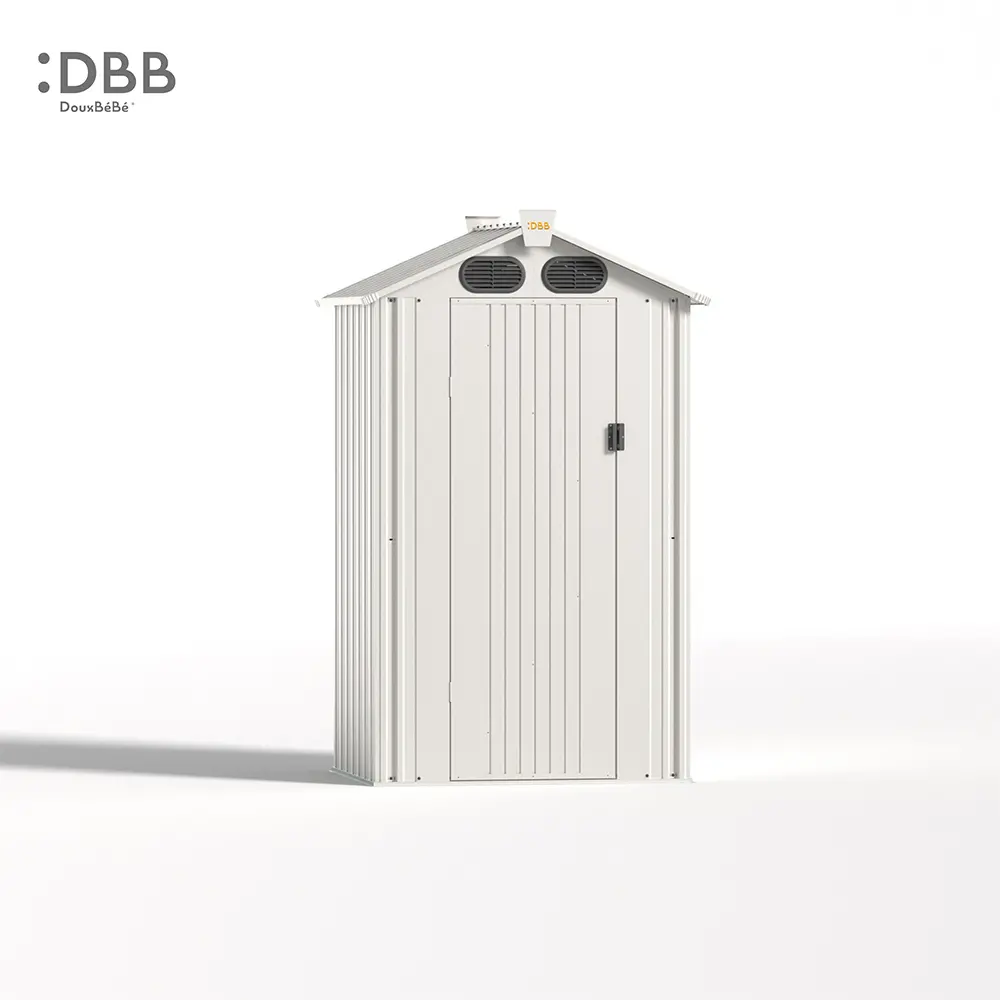
Custom outdoor structures cost varies significantly from one project to another. A pergola, gazebo, pavilion, canopy, or commercial shade structure may look straightforward in a product photo, but its quotation reflects much more than the visible frame. Dimensions, engineering requirements, materials, surface treatments, accessories, packaging, freight, and purchasing volume all influence the final price.
For importers, distributors, contractors, and procurement teams, understanding these cost drivers makes it easier to compare supplier quotations, set realistic budgets, and avoid unexpected expenses after an order is placed. The objective is not simply to find the lowest factory price. It is to purchase a structure that meets its intended performance requirements at a competitive total landed cost.
This guide breaks down the seven major factors affecting custom outdoor structure pricing and explains how to request a clear, comparable quotation from manufacturers.
The requirements can differ between commercial and residential projects, affecting both specifications and price.
1. Structure Size and Dimensions
Size is often the first factor a manufacturer evaluates. Larger structures generally require more raw material, longer profiles, additional bracing, and sometimes stronger connections or foundations. However, the relationship between dimensions and cost is not always linear.
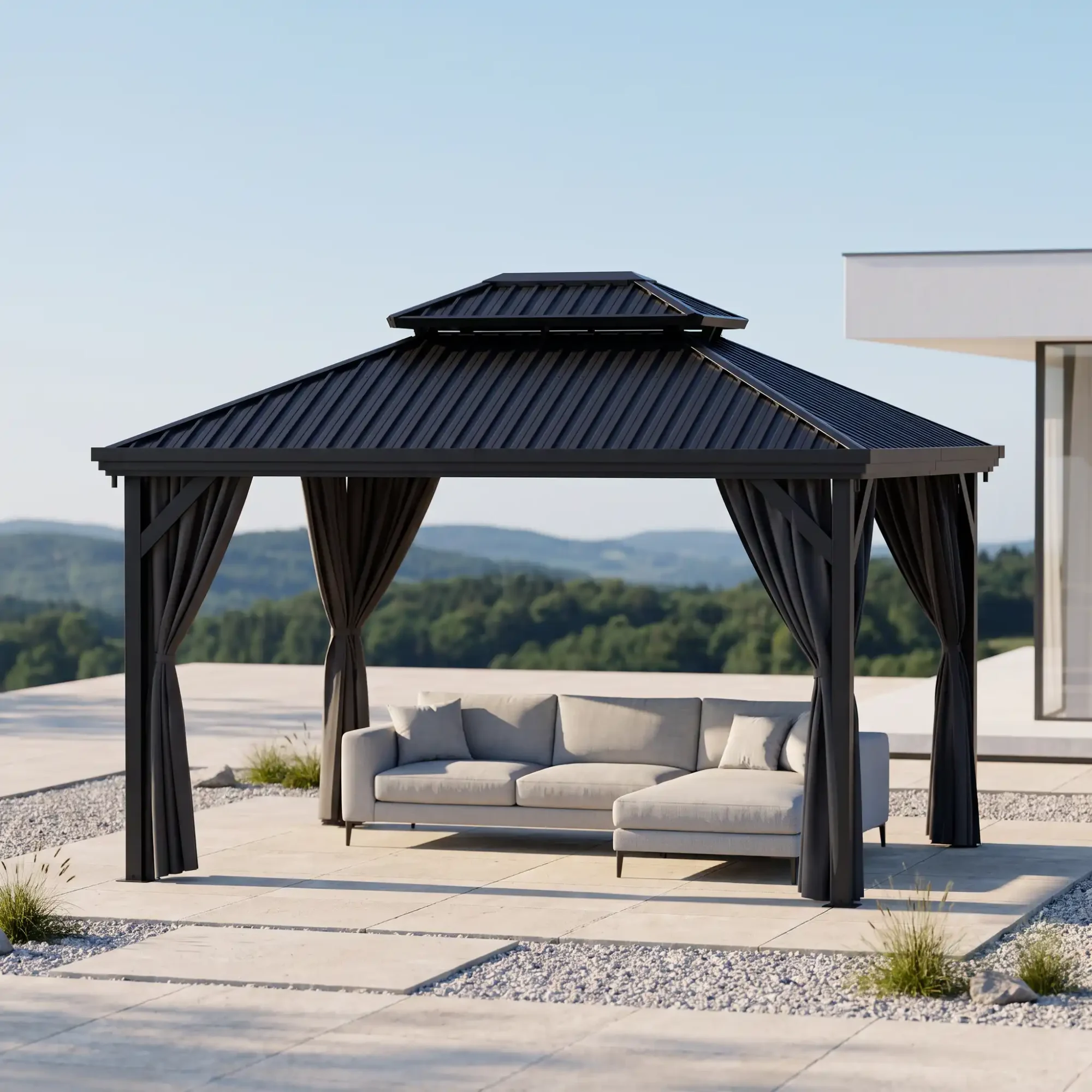
A wider pergola span, for example, may require thicker aluminum extrusions or heavier steel beams to maintain structural performance. A taller structure may need extra reinforcement or different anchoring arrangements. Custom dimensions can also create more offcuts when standard-length profiles must be cut to unusual sizes.
When specifying dimensions, consider:
- Length and width: These affect roof coverage, beam lengths, and the number of posts.
- Overall height: Increased height can change stability and handling requirements.
- Clear span: Fewer intermediate posts may require more substantial beams.
- Roof configuration: Flat, pitched, louvered, and curved roofs have different components and fabrication requirements.
- Design loads: Site-specific wind, snow, and other applicable loads can change the engineering and material specification.
Two structures with the same footprint can therefore have different prices. A standard-size model using an established production design is often more economical than an unusually wide, column-free version.
Buyer tip: Provide dimensioned drawings and project-site information rather than requesting a price based on floor area alone. Ask the supplier to identify any size changes that would allow more efficient production or shipping.
2. Material Selection and Structural Specifications
Material choice directly influences raw material expenditure, fabrication processes, product weight, durability, and ongoing maintenance. Common options for custom outdoor structures include aluminum, carbon steel, stainless steel, timber, and combinations of these materials.
Aluminum structures
Aluminum is widely used for modern pergolas and shade structures because it is relatively lightweight and naturally corrosion-resistant. Extruded profiles can support consistent designs, integrated drainage, and concealed connections. Pricing depends on alloy, profile geometry, wall thickness, material usage, and fabrication complexity. An aluminum structure is not automatically cheaper or more expensive than steel; the engineering specification matters.
Steel structures
Steel can be suitable for larger spans and heavy-duty commercial applications. Its material and fabrication costs depend on section size, cutting, welding, galvanizing or coating, and installation requirements. A lower initial frame price may be offset by greater shipping weight or corrosion-protection needs.
Stainless steel and timber
Stainless steel may be specified for selected fixings or exposed parts in demanding environments, but it typically increases component costs. Timber offers a different architectural appearance and carries its own grading, treatment, maintenance, and sourcing considerations.
| Material | Typical buying consideration | Possible cost implications |
|---|---|---|
| Aluminum | Low weight, corrosion resistance, clean appearance | Extrusion design, wall thickness, alloy and finish |
| Carbon steel | Strength and span flexibility | Fabrication, protective coating and freight weight |
| Stainless steel | Corrosion performance for suitable grades and applications | Higher component and machining costs |
| Timber | Natural appearance and design character | Species, treatment, grading and maintenance |
A meaningful material comparison must use equivalent structural requirements. Ask for material grades, member sizes, coating specifications, fastener details, and applicable engineering documentation. An unusually low quotation may simply describe a lighter specification rather than a better manufacturing price.
3. Surface Treatment and Finish Quality
Surface finishing influences both appearance and expected service life. It is especially important for outdoor products exposed to UV radiation, moisture, pollution, or coastal conditions.
Common options include powder coating for aluminum or steel, anodizing for suitable aluminum components, and hot-dip galvanizing for appropriate steel parts. Some projects combine protective processes where technically appropriate. Each finish has different preparation, process-control, inspection, and handling requirements.
Powder coating costs may change with coating type, pretreatment, film thickness, color selection, batch size, and finish texture. A common stocked color can be less expensive to produce than a custom color requiring a separate production run. Metallic, textured, or specialty finishes may involve additional process controls.
For coastal or otherwise aggressive environments, the cheapest finish may create higher lifecycle costs if corrosion resistance is inadequate. Buyers should define the intended exposure environment and request an appropriate coating system rather than relying on a vague description such as “weatherproof.”
Finish-related quotation questions include:
- What pretreatment and coating system are included?
- What color code, texture, and gloss level will be supplied?
- Are coating thickness and inspection criteria specified?
- Will cut edges, welded areas, and fasteners receive suitable protection?
- Does the supplier offer samples or approved finish panels?
A well-defined finish specification reduces disagreements about appearance and quality during pre-shipment inspection.
4. Degree of Customization and Added Features
Customization can range from a simple color change to the development of an entirely new structural system. The greater the departure from an existing model, the more engineering, tooling, prototyping, purchasing, and production coordination may be required.
Low-complexity customization might include a standard frame offered in a different color, modest dimension adjustments, or branded packaging. Higher-complexity customization may involve nonstandard roof geometries, concealed drainage, unique connectors, integrated screens, lighting, electrical components, or motorized louvers.
For example, a manually operated pergola and a motorized louvered pergola should not be compared as though they were equivalent products. Motors, controls, sensors, wiring, testing, warranty provisions, and replacement-parts planning all contribute to the delivered cost.
Typical customization charges may include engineering drawings, design validation, tooling or molds, prototype fabrication, testing, and additional quality-control procedures. Some suppliers charge these as one-time non-recurring engineering costs; others distribute them across the unit price based on the expected purchase volume.
To control custom outdoor structure manufacturing cost, identify which features are essential and which are optional. Request a base-model quote and separate prices for additions. This makes trade-offs visible and helps importers build different product tiers for their markets.
5. Packaging Requirements and Container Efficiency
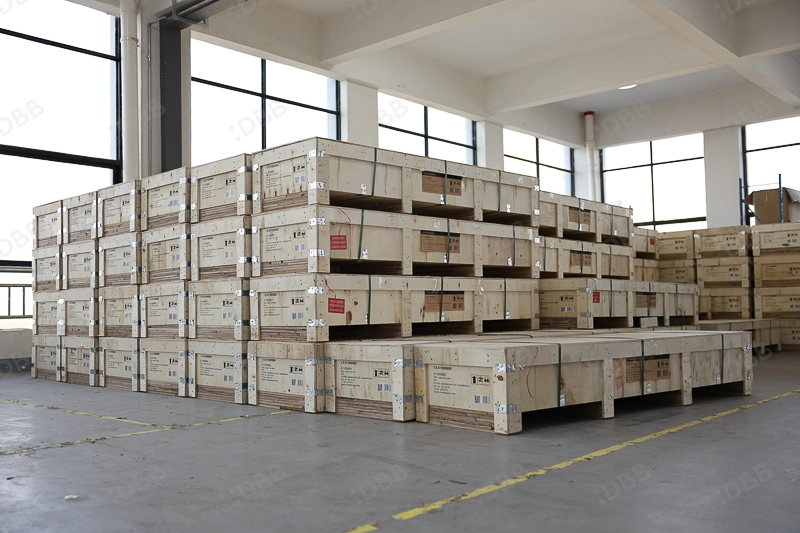
Packaging is easy to overlook, but large outdoor structures contain long profiles, finished panels, hardware, and sometimes fragile accessories. Inadequate protection can lead to scratches, deformation, missing parts, and expensive claims.
The packaging method depends on the structure’s size, finish, transport route, and handling conditions. Options may include protective film, foam separators, reinforced cartons, wooden crates, pallets, and clearly labeled hardware kits. Timber packaging used in international trade may need to satisfy applicable phytosanitary requirements, including ISPM 15 where relevant.
Buyers should balance protection with shipping efficiency. An oversized carton may protect a product but waste valuable container space. Conversely, an aggressively compact packing method may increase the risk of damage or complicate unloading.
Knock-down or flat-pack designs can help reduce shipping volume when components are engineered for safe assembly. However, more assembly steps may increase installation labor, fastener requirements, and the chance of missing parts. Evaluate the complete delivery and installation process rather than packaging dimensions alone.
Before ordering, request a packing list showing package count, gross weight, dimensions, cubic volume, and loading quantities for the intended container type. Ask whether spare hardware, assembly instructions, and product identification labels are included.
6. Transportation, Incoterms, and Landed Cost
Freight can materially change the economics of importing outdoor structures, especially where long components limit container loading efficiency. Transport cost is affected by shipment volume, gross weight, package length, origin, destination, container availability, route, season, and the services included.
A buyer should distinguish the factory quotation from the landed cost. The latter may include the goods, origin charges, international freight, insurance, import duties, taxes, customs clearance, terminal fees, and inland delivery, depending on the transaction and accounting treatment.
Supplier offers are also shaped by the agreed Incoterms® rule. Under Incoterms® 2020, commonly discussed terms include:
- EXW (Ex Works): The seller makes the goods available at the named place, with the buyer taking on substantial transport responsibilities.
- FOB (Free On Board): For qualifying sea shipments, the seller delivers the goods on board the vessel at the named port of shipment.
- CIF (Cost, Insurance and Freight): For qualifying sea shipments, the seller arranges and pays for freight and specified minimum insurance to the named destination port, while risk transfers at shipment.
- DDP (Delivered Duty Paid): The seller assumes extensive delivery and import-clearance responsibilities to the named destination, subject to contractual and local feasibility.
Incoterms allocate responsibilities, costs, and risk; they do not by themselves specify every commercial term of the sales contract. Always state the named place or port and the applicable Incoterms edition. For containerized freight, buyers should also discuss whether a multimodal rule such as FCA is more appropriate than FOB.
Illustrative landed-cost calculation (not a market price): If goods cost $20,000, freight and insurance total $3,000, and destination charges, duties, and other import costs total $4,000, the landed cost is $27,000 before any excluded local expenses. For 30 saleable units, that equals $900 per unit. Actual costs and tax treatment depend on the destination and shipment.
7. Order Quantity and Production Volume
Order quantity affects pricing because manufacturers incur both fixed and variable costs. Factory setup, procurement coordination, engineering, and production scheduling may be spread across more units in a larger order. Material purchasing and batch finishing can also become more efficient at scale.
However, a larger order does not guarantee the lowest total cost. Importers must consider inventory carrying costs, warehouse capacity, working capital, product demand, and the possibility of holding slow-moving styles or colors.
Minimum order quantity (MOQ) may vary by model, finish, component, or customization level. A manufacturer might accept a small order for a standard product but require a larger volume for a new extrusion or specialized coating batch.
Ask suppliers to quote several volume tiers, such as a trial order, a regular replenishment order, and a full-container order. Confirm whether mixed models or colors can be combined to reach an MOQ. For repeat business, a forecast or scheduled release arrangement may improve production planning without requiring all inventory to arrive at once.
The best purchasing quantity balances unit price, freight efficiency, cash flow, and sell-through expectations.
How to Compare Custom Outdoor Structure Quotations
Two supplier prices are only comparable if they cover the same scope. Use a standardized request for quotation (RFQ) and ask each factory to specify inclusions, exclusions, and assumptions.
| RFQ item | Information to provide or request |
|---|---|
| Product and use | Pergola, gazebo, pavilion, canopy or other structure; residential or commercial application |
| Dimensions | Length, width, height, spans and roof configuration |
| Site requirements | Destination market, relevant design loads and required standards |
| Materials | Grade, profile sizes, wall thickness and fastener specifications |
| Finish | Treatment system, color, texture and inspection requirements |
| Custom features | Screens, louvers, lighting, drainage, branding and controls |
| Packaging | Packing method, dimensions, weight and container loading plan |
| Commercial terms | MOQ, price tiers, currency, payment terms and quotation validity |
| Delivery | Lead time, named Incoterms rule and place, and shipping scope |
| Quality support | Inspection procedure, drawings, warranties and spare-parts policy |
Avoid comparing one supplier’s EXW price with another supplier’s delivered quotation without adjusting for included services. Also confirm whether prototype costs, tooling, third-party testing, replacement parts, and destination charges are in scope.
Practical Ways to Reduce Cost Without Sacrificing Quality
Cost optimization should begin during product development, not after production starts. Standardizing profile sizes, modularizing components, and reducing unnecessary design variation can make manufacturing more efficient. A carefully designed knock-down system may improve container utilization, while a consistent color palette can minimize small-batch finishing charges.
Other practical approaches include sharing an accurate demand forecast, consolidating compatible orders, choosing appropriate rather than excessive material specifications, and approving technical drawings before fabrication. A clear inspection checklist can prevent defects, rework, and disputes that would otherwise erase an apparent unit-price saving.
Do not reduce material thickness, remove reinforcement, or downgrade coatings without technical assessment. Outdoor structures must remain suitable for their intended site, local regulatory requirements, and expected service conditions. The lowest quote has little value if it leads to installation problems, warranty claims, or premature deterioration.
Frequently Asked Questions
Why do similar-looking outdoor structures have different prices?
Visible design does not reveal profile thickness, material grade, connection details, coating quality, structural performance, hardware specification, or packaging. Those differences can substantially affect manufacturing and delivered cost.
Does a larger pergola always cost more per square meter?
Not necessarily. Some larger standard designs benefit from efficient material utilization, while long unsupported spans or unusual dimensions may require more expensive structural members. Compare equivalent designs and engineering criteria.
Is aluminum cheaper than steel for outdoor structures?
There is no universal answer. Aluminum and steel differ in profile design, fabrication, coating, weight, and freight requirements. Request technically equivalent specifications and compare the total landed and lifecycle costs.
Can customization be affordable for small orders?
Simple changes to existing models may be manageable in small quantities. New tooling, bespoke engineering, and complex integrated features generally have higher setup costs. Ask whether a standard platform can accommodate the required modifications.
What should I send a manufacturer to get an accurate quote?
Provide product drawings or reference photos, target dimensions, material and finish preferences, estimated order quantity, destination, intended application, required performance criteria, packaging expectations, and preferred delivery terms. State which details are flexible.
How can importers avoid hidden charges?
Request a line-item quotation, confirm the named Incoterms rule and place, review packaging and loading data, and obtain destination-side freight and customs estimates. Verify duty classifications and taxes with qualified local advisers before committing to a shipment.
Conclusion: Buy on Total Value, Not Unit Price Alone
The cost of custom outdoor structures is shaped by seven connected decisions: size, material, finish, customization, packaging, transportation, and order quantity. Each can affect not only the quoted unit price but also product durability, delivery reliability, installation effort, and future support costs.
For purchasing managers and importers, the most effective strategy is to define technical requirements clearly, request itemized quotations, compare like-for-like specifications, and calculate the full landed cost. This creates a stronger basis for supplier negotiations and long-term sourcing decisions.
Ready to request a custom outdoor structures quote? Share your drawings, dimensions, material preferences, destination port or delivery address, expected quantity, and target timeline with your shortlisted manufacturer. Ask for a detailed quotation with optional features priced separately so you can make a confident purchasing decision.
Reference for trade terminology: International Chamber of Commerce — Incoterms® 2020. This article is a general sourcing guide, not structural engineering, customs, or legal advice.