Outdoor spaces are no longer just places to put a table and a few chairs. Homeowners increasingly want patios, decks, and gardens that feel like natural extensions of their living rooms. But outdoor comfort comes with a challenge: the weather rarely stays the same all day. Strong midday sun can make a patio uncomfortable, while an unexpected shower can interrupt dinner.
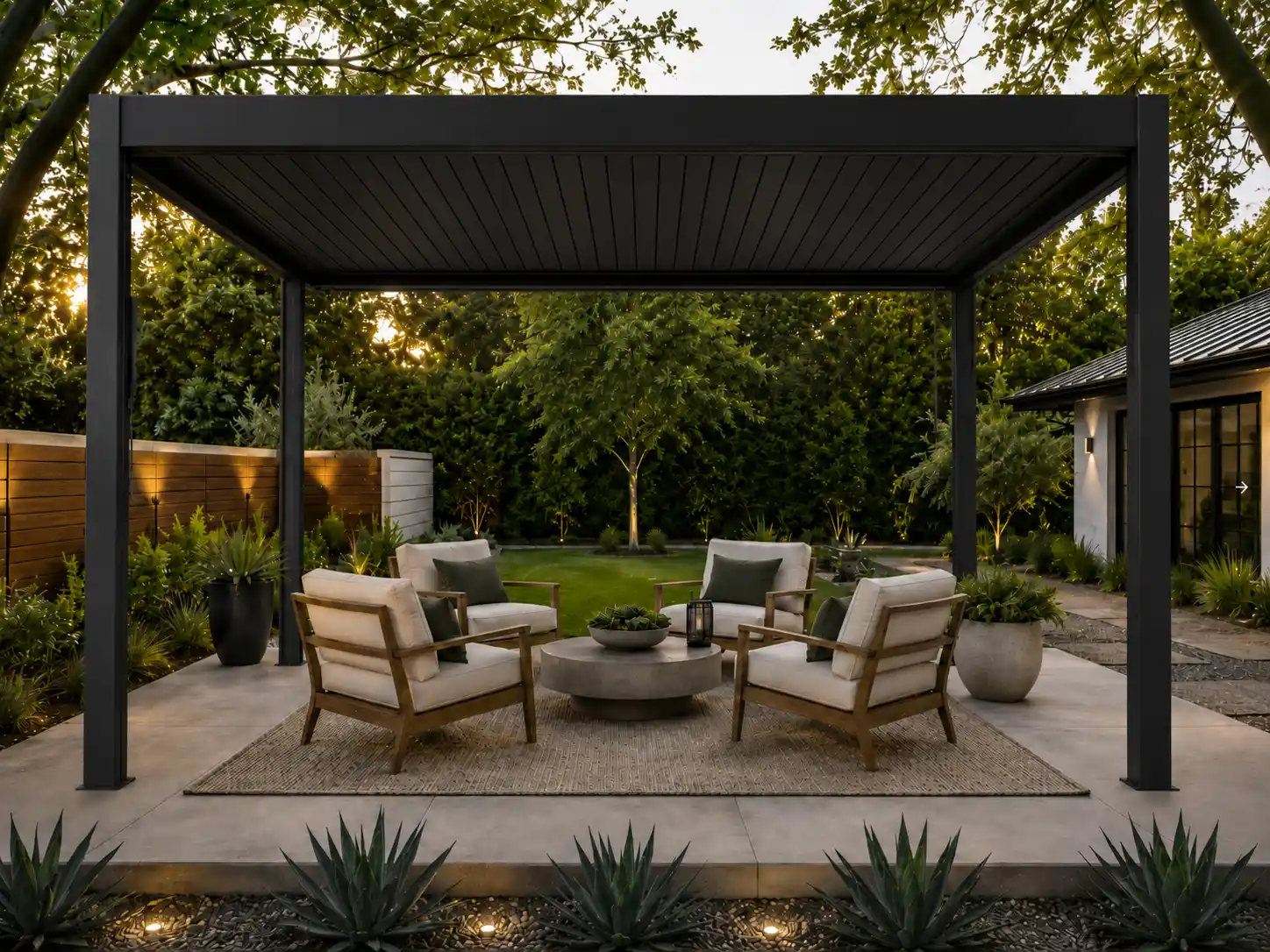
A louvered pergola offers a flexible solution. Instead of relying on a permanently open or solid roof, it uses adjustable slats to control sunlight, shade, and airflow. Many models can also help manage rainwater when the roof is closed.
So, what is a louvered pergola, how does it work, and is it worth the investment? This guide explains the technology, practical benefits, limitations, costs, and factors to consider before buying.
What Is a Louvered Pergola?
A louvered pergola is an outdoor structure with a roof made from adjustable slats, known as louvers. These slats rotate to change how much sunlight and air enter the space below. Depending on their position, the roof can provide an open-air experience, filtered sunshine, or more continuous overhead coverage.
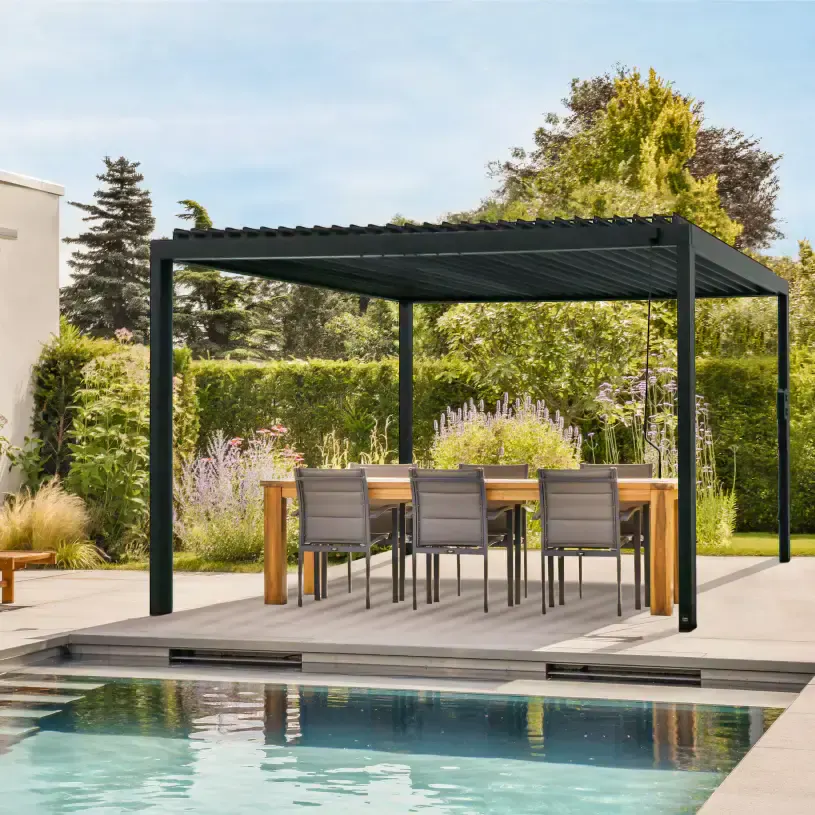
Think of the roof as a set of large, weather-resistant horizontal blinds. When the louvers are open, daylight and fresh air pass between them. Tilt them to create shade while maintaining ventilation. Close them and, on models designed for rain management, the overlapping slats channel water toward an integrated drainage system.
Louvered pergolas are typically made from powder-coated aluminum, although materials and construction details vary. They can be freestanding in a garden or attached to a building to cover a patio or terrace.
You may also see these structures described as adjustable pergolas, louvered roof pergolas, or bioclimatic pergolas. The terms are often used in similar contexts, but features differ between products.
How Does a Louvered Pergola Work?
The operating principle is straightforward: a mechanical system rotates a series of roof slats together. The frame remains in place while the roof changes position.
1. Adjustable roof louvers
Each louver is mounted on pivot points within the roof frame. A linked mechanism coordinates movement across the slats so they open or close in a controlled sequence. The available rotation range depends on the manufacturer and model.
The roof generally has three useful settings:
- Open: Allows more direct sunlight and air to pass through.
- Partially tilted: Blocks some direct sun while retaining daylight and ventilation.
- Closed: Forms a more continuous overhead surface, often designed to direct rainwater toward gutters.
This flexibility makes the roof useful throughout changing daily conditions. For example, you might open the louvers during a cool morning, tilt them at lunchtime, and close them when rain begins.
2. Manual or motorized controls
A manual louvered pergola uses a crank or similar mechanism to move the roof. It usually has fewer electrical components and can be suitable for smaller spaces or buyers who only adjust the roof occasionally.
A motorized louvered pergola uses an electric drive to rotate the slats. Depending on the product, it may be operated through a remote control, wall switch, or smartphone app. Motorized designs can be particularly convenient for larger roofs or users who want to change the angle frequently.
Some advanced systems support weather sensors and smart-home connections. These features are not universal, and their operation depends on compatible hardware and the manufacturer’s control settings.
3. Integrated rainwater drainage
Many high-quality louvered pergolas incorporate channels that collect water when the louvers are closed. Water may flow into perimeter gutters, through the beams, and down concealed routes inside the posts before exiting at a designated outlet.
However, rain-resistant does not mean completely waterproof in every condition. Wind-driven rain can enter through open sides, and heavy storms may challenge a system with inadequate drainage. Performance also depends on correct installation, roof seals, and regular cleaning.
Why Are Louvered Pergolas So Popular?
The growing appeal of louvered pergolas comes from their combination of comfort, flexibility, and modern design. Rather than forcing homeowners to choose between sunshine and shade, they allow the outdoor space to respond to changing conditions.
Better control over sun and shade
A traditional fixed cover provides approximately the same roof coverage throughout the day. A louvered roof can be adjusted as the sun moves, helping reduce glare and excessive direct sunlight when outdoor temperatures rise.
Improved airflow and ventilation
Unlike a solid overhead roof, partially open louvers allow warm air to move upward and fresh air to circulate. This can help an outdoor seating area feel less enclosed, especially on warm days. The actual cooling effect depends on surrounding walls, wind, orientation, and local climate.
More usable outdoor time
A well-designed adjustable roof can make outdoor areas more convenient across different weather conditions. You can enjoy sunshine when desired and create overhead coverage when the weather changes.
Clean, contemporary appearance
Louvered pergolas commonly feature slim posts, straight rooflines, and powder-coated metal finishes. Their architectural appearance suits many modern homes, restaurants, hotels, and landscaped patios.
Key Benefits of a Louvered Pergola
The main advantages are practical rather than purely decorative:
- Adjustable comfort: Choose how much sun, shade, and airflow you want at different times.
- Flexible entertaining space: Adapt a patio for morning coffee, afternoon relaxation, or evening meals.
- Rain management: Many closed-roof systems guide runoff away from the seating area.
- Low-maintenance material options: Powder-coated aluminum generally needs less routine finishing than untreated timber.
- Accessory compatibility: Selected models support screens, lighting, heating, and integrated controls.
- Design versatility: Freestanding and attached configurations work with different outdoor layouts.
These benefits explain the popularity of the adjustable louvered pergola, but the best choice depends on how you plan to use your space.
Louvered Pergola vs. Traditional Pergola
The biggest difference is the roof. Traditional pergolas often have open beams or fixed slats, while louvered models offer movable roof panels.
| Feature | Louvered pergola | Traditional open-roof pergola |
|---|---|---|
| Roof design | Adjustable rotating slats | Fixed beams or slats |
| Sun control | Variable throughout the day | Primarily fixed shade pattern |
| Rain protection | Possible with closed, drained roof systems | Usually limited without an added cover |
| Airflow | Adjustable through roof openings | Typically open overhead |
| Operating mechanism | Manual or motorized | Usually none |
| Initial cost | Generally higher | Often lower for basic designs |
| Maintenance | Includes hinges, drainage, and possibly electronics | Depends mainly on structure and material |
A traditional pergola can be the right option if you want a simple garden feature for climbing plants or partial shade. A louvered pergola is better suited to buyers who prioritize adjustable comfort and a more multifunctional patio.
Manual vs. Motorized Louvered Pergolas
Both types use movable roof slats, but they offer different ownership experiences.
Manual systems are appealing when affordability, simplicity, and minimal electrical requirements are priorities. They may be ideal for a compact patio where turning a handle occasionally is not inconvenient.
Motorized systems cost more but make frequent adjustment easier. They are particularly useful for large pergolas, hospitality spaces, or installations with optional sensors and lighting controls. Budget for electrical work and potential future motor maintenance.
Before choosing either type, test the controls if possible. Ask about the louver movement range, service access, replacement parts, warranty terms, and what happens during a power outage.
Are Louvered Pergolas Waterproof?
This is one of the most important buying questions. Many manufacturers design closed louvers to shed rain into integrated gutters. In ordinary rainfall, a correctly installed system may provide effective overhead protection.
Nevertheless, not every louvered pergola is rated for the same weather conditions. Leaks can occur at joints, under wind-driven rain, or where gutters are blocked. Water may also enter from the sides. Do not assume that every model delivers the weather resistance of a conventional building roof.
Ask the supplier for documented rain-performance information, drainage specifications, and the recommended roof position during severe weather. Confirm how water will leave the pergola and where the outlet will discharge on your property.
How Much Does a Louvered Pergola Cost?
Pricing varies widely by location, dimensions, materials, structural engineering, features, and labor. A small standard-size manual kit may cost substantially less than a bespoke motorized structure with integrated screens, lighting, and professional installation.
Rather than rely on a single advertised price, compare total installed cost. Your budget may need to include:
- Pergola frame and adjustable roof system
- Foundations, anchoring, and structural preparation
- Professional assembly and electrical installation
- Drainage connections or surface-water management
- Optional lighting, screens, heaters, and controls
- Delivery, permits, taxes, and ongoing servicing
A motorized pergola also adds potential expenses for wiring, motors, control boards, and sensor replacement. Request itemized quotations from several suppliers so that similar specifications are compared fairly.
What Should You Look for When Buying One?
Material and construction quality
Powder-coated aluminum is a popular option because it resists corrosion and does not require regular painting in the same way as many timber structures. Still, not all aluminum frames have equal thickness, structural performance, or coating quality.
Request information about frame specifications, fasteners, coating warranties, and suitability for coastal or exposed environments.
Wind and snow load ratings
A pergola must be appropriate for its site. Wind exposure, snow accumulation, roof dimensions, and attachment details all affect structural requirements. Never assume a generic load rating applies to your specific installation.
Choose a supplier that can provide model-specific technical documents and installation guidance aligned with local building requirements.
Water management
Review the gutter capacity, outlet design, and drainage route. A system that collects rainwater effectively still needs a suitable discharge point. Poor drainage planning can create puddles around posts or adjacent paving.
How Do You Maintain a Louvered Pergola?
Routine maintenance helps preserve reliable movement and drainage. Fortunately, the basic tasks are relatively simple.
Clean the louvers and frame with a soft cloth or sponge, mild detergent, and water, following the manufacturer’s instructions. Remove leaves, dirt, and debris from gutters and drainage outlets, particularly after storms or during autumn.
Check the roof periodically for unusual noises, obstructions, loose fittings, or irregular movement. Do not force a jammed mechanism or operate it when ice or debris may prevent safe rotation. For motorized models, arrange professional inspection when recommended and keep electrical components serviced according to the manufacturer’s guidance.
Maintenance frequency depends on tree cover, coastal exposure, weather, and how often the roof is operated.
Are Louvered Pergolas Worth It?
A louvered pergola can be a worthwhile investment if you use your outdoor space frequently and value control over sun exposure and overhead cover. The ability to adjust conditions can make a patio more comfortable and functional than a fixed, open-roof structure.
However, it may not be the best choice for every budget. If you only need occasional shade, a basic pergola, awning, or umbrella could be more economical. If you need a fully weatherproof, insulated room, a properly designed building extension or enclosed structure is more appropriate.
Focus on practical value rather than assuming the pergola will automatically increase property value. Consider how often you will use it, the local climate, quality of installation, operating convenience, and expected maintenance costs.
Frequently Asked Questions
What is the main purpose of a louvered pergola?
Its main purpose is to provide adjustable control over sunlight, shade, and ventilation in an outdoor living area. Many models also offer designed rainwater management when closed.
How does a motorized louvered pergola work?
An electric motor drives a mechanism that rotates the roof louvers together. Users typically adjust the angle with a remote, switch, or compatible app. Some systems also offer optional weather sensors.
Can a louvered pergola stay outside all year?
These structures are designed for permanent outdoor installation, but suitability depends on the model, local climate, wind and snow ratings, anchoring, and manufacturer instructions. Severe weather may require specific louver positions or other precautions.
Does a louvered pergola need electricity?
A manually operated pergola generally does not require electricity for roof movement. Motorized models require an appropriate power supply unless the manufacturer specifies another approved solution.
How long does a louvered pergola last?
Service life depends on materials, exposure, installation quality, maintenance, and the lifespan of mechanical or electrical parts. Check model-specific warranties rather than treating a general lifespan claim as a guarantee.
Can you add screens or lights to a louvered pergola?
Many systems offer compatible retractable screens, LED lighting, heaters, and other accessories. Confirm compatibility and wiring requirements before installation because retrofits may be more complicated or expensive.
Final Thoughts
Understanding what a louvered pergola is makes its appeal easy to see: it combines the open-air feeling of a pergola with a roof you can adjust to suit the moment. Open the slats for sunlight, tilt them for shade and ventilation, or close a rain-management-equipped roof when showers arrive.
For homeowners seeking a more versatile patio or garden, a well-specified louvered pergola can be an excellent addition. Compare manual and motorized options, verify structural and weather ratings, plan drainage carefully, and choose a supplier that provides clear installation guidance and support. The right system should fit both your outdoor space and the way you intend to enjoy it.