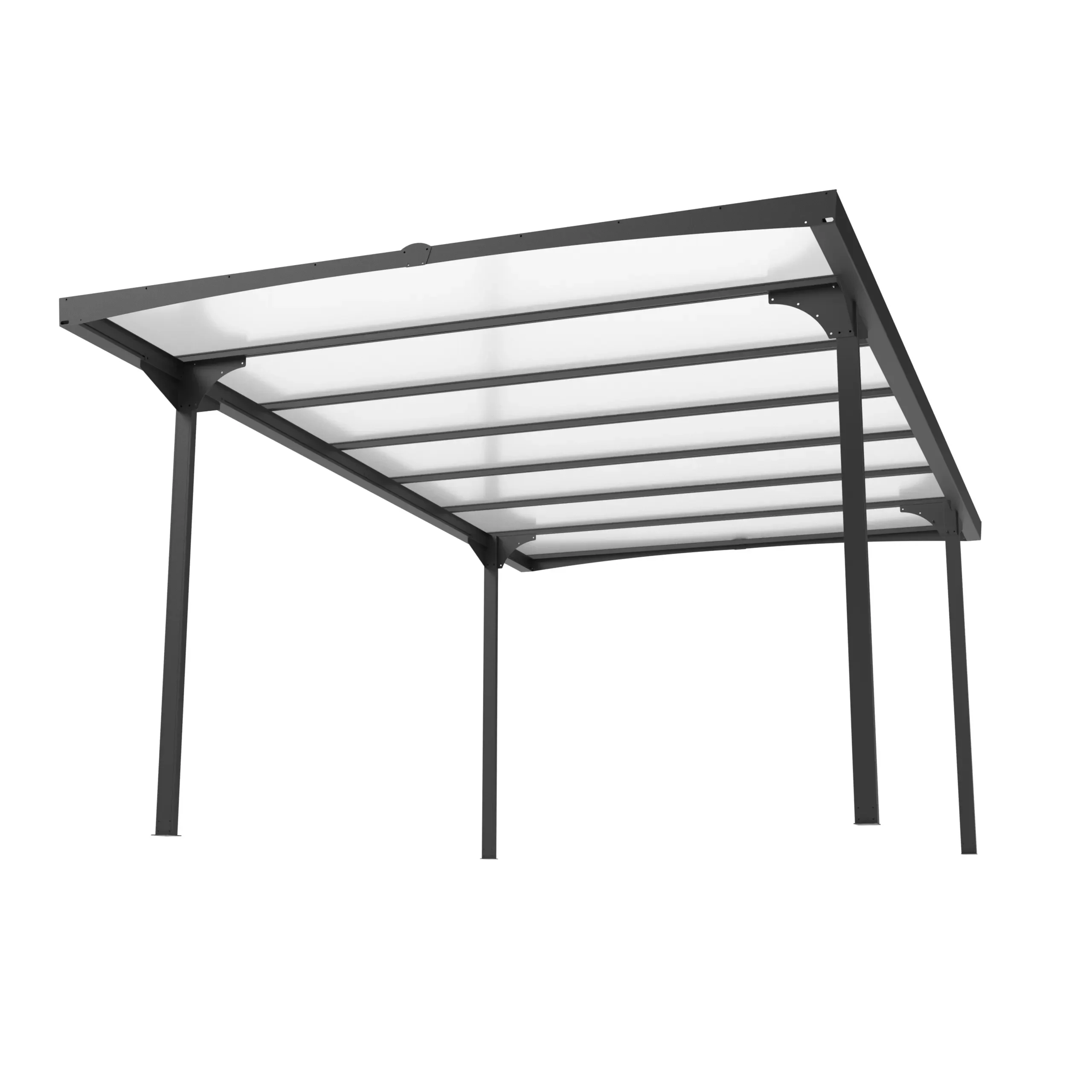
An aluminum carport can protect your vehicle from rain, sun, and falling debris without the expense of building an enclosed garage. But how much does an aluminum carport cost, and what should you include in your budget?
For the next planning step, see Private: Custom Aluminum Carports: Sizes, Roof Styles, Colors, and Design Options and Private: How to Choose a Reliable Carport Manufacturer in China: A Complete Buyer’s Guide.
In the United States, a basic aluminum carport typically costs approximately $8–$20 per square foot installed for a straightforward structure, according to HomeGuide’s 2026 metal-carport pricing guide. That suggests roughly $1,920–$4,800 for a 12-by-20-foot single-car carport and $3,200–$8,000 for a 20-by-20-foot double-car carport. These are planning estimates, not guaranteed quotes; complex custom designs, foundation work, and higher structural specifications can increase the final price considerably.
This guide explains aluminum carport prices by size, the factors that drive costs, common extra expenses, and how to compare quotes without sacrificing durability.
Average Aluminum Carport Cost in 2026
The total price depends on whether you’re buying a kit, ordering an installed structure, or commissioning a custom design. Material-only aluminum carport pricing is often around $5–$15 per square foot, while standard installed aluminum structures are commonly estimated at $8–$20 per square foot. These ranges overlap because kits, installation packages, and material specifications vary.
| Cost category | Estimated price | What’s generally included |
|---|---|---|
| Aluminum material or kit | $5–$15 per sq. ft. | Structural components; contents vary |
| Standard aluminum carport, installed | $8–$20 per sq. ft. | Typical structure and installation |
| 12′ × 20′ single-car carport | $1,920–$4,800 | 240 sq. ft. × installed range |
| 20′ × 20′ double-car carport | $3,200–$8,000 | 400 sq. ft. × installed range |
| 24′ × 30′ larger carport | $5,760–$14,400 | 720 sq. ft. × installed range |
The size examples are calculations using the standard installed price range, not independently quoted market averages. Estimates are in USD for the U.S. market and generally exclude major concrete work, extensive grading, exceptional engineering, and optional accessories.
For context, Angi’s broader 2026 metal-carport installation guide reports an average project cost of about $5,400 across metal types. Since that figure includes structures other than aluminum, it should not be treated as an aluminum-only average.
1. Carport Size and Vehicle Capacity
Size is usually the biggest aluminum carport cost factor. A wider or longer structure needs additional framing, roofing, fasteners, and sometimes more substantial supports.
Single-Car Aluminum Carports
A 12′ × 20′ carport provides approximately 240 square feet of covered space and is a common starting point for one passenger vehicle. Using the standard installed aluminum range, budget about $1,920–$4,800, before major site preparation.
Check your vehicle’s actual width and length, including mirrors, doors, and anticipated clearance. A carport that’s technically large enough to cover a car may still feel cramped when loading groceries or opening doors.
Double-Car Aluminum Carports
A 20′ × 20′ structure covers 400 square feet, giving a baseline installed estimate of $3,200–$8,000. Many households prefer additional width for SUVs, larger vehicles, or comfortable side-by-side parking.
Larger spans may require upgraded beams or engineered connections, so total cost does not always increase in a perfectly linear way with square footage.
RV and Oversized Carports
RVs, boats, and commercial vehicles often require greater height, longer roof panels, or custom support spacing. These specifications can add cost beyond the standard per-square-foot range. Measure the highest point of the vehicle, including rooftop equipment, before requesting a quote.
2. Aluminum Grade, Frame Strength, and Finish
Not all aluminum carports use the same material specifications. Frame thickness, alloy selection, extrusion design, and the number of support members influence both price and structural performance.
A lightweight standard kit may be less expensive than an engineered structure designed for substantial wind or snow loads. Manufacturers may offer powder-coated finishes, anodized surfaces, or specialty colors. Decorative and high-performance finishes can cost more than basic options.
Aluminum naturally resists rust, making it attractive in humid or coastal areas. However, corrosion resistance is not the same as structural strength. A properly engineered aluminum carport can perform well, but its suitability depends on design, connections, anchoring, and local conditions—not the metal name alone.
Ask suppliers about the applicable design loads, material specifications, finish warranty, and maintenance requirements before comparing prices.
3. Roof Design and Roofing Material
The roof influences appearance, drainage, shade, and the amount of framing required. Typical options include:
- Flat-looking or low-slope roofs: A clean, modern appearance, but still need adequate drainage slope.
- Single-slope roofs: Direct water toward one side and often complement contemporary houses.
- Gable roofs: Create a more traditional profile and may need additional framing or trim.
- Curved or custom roofs: Offer a distinctive appearance but often require specialized components.
Roof covering matters as much as shape. A carport may combine an aluminum frame with aluminum panels, insulated metal panels, or polycarbonate sheets. Insulated or premium roofing systems generally raise the price, while translucent panels may offer light transmission at the expense of some shade or thermal comfort.
Before purchasing, confirm whether the advertised product is an all-aluminum carport or an aluminum-framed structure with a different roof material. These are not interchangeable specifications.
4. Freestanding vs. Attached Carports
A freestanding aluminum carport has its own posts and supports, giving you flexibility to position it on a driveway or elsewhere on the property. It may need more columns and foundations than a comparable wall-supported design.
An attached aluminum carport connects to an existing building. It can save space and create a sheltered route into the house, but attaching it correctly may require wall flashing, structural verification, waterproofing, and additional permitting.
Neither option is automatically cheaper. A simple freestanding installation on prepared ground may cost less than an attached carport needing extensive work on the existing building. Obtain site-specific estimates for both options if your layout allows them.
5. Installation Labor and DIY vs. Professional Assembly
Labor is an important part of the aluminum carport installation cost. HomeGuide estimates carport kit installation labor at approximately $3–$5 per square foot, while more complex custom construction can cost more. Actual bids vary by region, crew size, access, and project complexity.
DIY assembly may reduce labor expenses if the kit is designed for homeowners and you have the right tools, experience, and assistance. However, mistakes with foundations, anchors, roof connections, or drainage can create expensive repairs and safety problems.
Professional installation is especially advisable for taller structures, large spans, attachment to a house, or sites with demanding wind and snow requirements. Some manufacturers include installation in the advertised price; others quote it separately. Always confirm which applies.
6. Foundation, Anchoring, and Site Preparation
The foundation is one of the most frequently overlooked costs. A carport may be installed over an existing suitable concrete pad, on engineered footings, or over another approved surface, depending on the system and local code.
Potential additional expenses include grading uneven ground, removing obstacles, excavating footings, pouring a concrete slab, adding drainage, and restoring landscaping. If the existing driveway is damaged or too thin for the required anchors, reinforcement may be necessary.
For general budgeting, Angi’s 2026 carport guide identifies concrete slabs and site work as meaningful extras; its published slab examples range from approximately $1,200 to $2,800 for certain projects. Your cost may be much higher or lower based on thickness, area, local concrete pricing, reinforcement, and site access.
Do not assume a carport kit price includes a usable foundation. Ask the contractor to identify the anchoring method and any required ground improvements in writing.
7. Permits, Engineering, and Local Weather Requirements
Local building rules can influence the price and design of an aluminum carport. Your jurisdiction may require a building permit, setback compliance, approved drawings, engineered structural calculations, or inspections.
Wind exposure and snow loads are particularly important. A carport that works in a mild climate may need stronger members, additional bracing, or different anchoring in a hurricane-prone or snowy region.
Permit fees vary widely; Angi’s 2026 guide cites example permit costs of approximately $60–$800. Treat this as an indicative allowance, not a fixed national fee. Contact your local building department before ordering, especially if a seller claims a permit is unnecessary.
Homeowners’ association restrictions can also affect height, color, placement, and appearance.
Aluminum vs. Steel Carport Cost: Which Is Better Value?
Aluminum and steel are both popular carport materials, but they solve different priorities.
| Comparison | Aluminum carport | Steel carport |
|---|---|---|
| Typical material price | About $5–$15/sq. ft. | About $5–$10/sq. ft. |
| Weight | Generally lighter | Generally heavier |
| Corrosion performance | Naturally rust-resistant | Usually needs protective coatings |
| Structural design | Depends on engineered sections and supports | Often favored for demanding spans and loads |
| Maintenance | Usually relatively low | Coatings may need inspection and repair |
| Best fit | Humid/coastal settings and low-maintenance priorities | Value-focused projects and high-load applications |
Material-price estimates are drawn from HomeGuide’s 2026 comparisons; complete installed prices depend on the specific design.
Steel can offer a lower upfront material cost and is often selected where high structural loads matter. Aluminum may justify a premium when low weight, appearance, and resistance to rust are top priorities. Neither is universally superior: compare engineered performance, warranty terms, local climate, and lifetime maintenance, not just the first quote.
How to Save Money on an Aluminum Carport
Reducing costs does not have to mean choosing the cheapest structure. A few smart decisions can protect your budget:
- Choose a standard size. Stock dimensions may avoid custom fabrication charges.
- Keep the design simple. Straightforward rooflines and fewer decorative details can lower labor and material costs.
- Use a suitable existing base. Have the installer assess whether your current concrete can safely support the required anchors.
- Compare complete installed quotes. Include delivery, assembly, anchoring, permits, and taxes where applicable.
- Prioritize essential specifications. Spend on structural performance and weather resistance before nonessential accessories.
- Request multiple local estimates. Ask each contractor to quote the same dimensions, design criteria, and scope of work.
Avoid cutting corners on anchoring, load ratings, or required permits. A low initial price can become expensive if the carport needs to be redesigned or repaired later.
Frequently Asked Questions About Aluminum Carport Costs
How much does a 12′ × 20′ aluminum carport cost?
At an estimated $8–$20 per square foot installed, a 12′ × 20′ aluminum carport works out to roughly $1,920–$4,800 for the basic installed structure. Foundation work, permits, and upgrades may cost extra.
Is an aluminum carport cheaper than a garage?
Usually, yes. An open-sided carport generally requires fewer walls, finishes, doors, and building systems than a fully enclosed garage. The actual savings depend on the foundation, structural specification, and any custom features.
Are aluminum carports good for coastal areas?
Aluminum’s natural resistance to rust makes it attractive near the coast. However, salt exposure can still affect finishes, fasteners, and connections. Look for compatible hardware, suitable coatings, and maintenance instructions designed for coastal environments.
Can I install an aluminum carport myself?
Some prefabricated kits are designed for DIY assembly, but the project still requires accurate measurements and safe anchoring. Check local permit requirements and the kit’s installation instructions. Large or engineered structures are generally better handled by qualified installers.
Final Thoughts: What Should You Budget?
For a straightforward residential project, $8–$20 per square foot installed is a useful starting estimate for aluminum carport cost in the U.S. A single-car structure may fall around $1,920–$4,800, while a standard double-car example may be around $3,200–$8,000 before substantial site work and upgrades.
The best way to control your final cost is to choose appropriate dimensions, confirm the required weather-load rating, understand foundation requirements, and compare detailed local quotes. A properly specified aluminum carport can provide practical, low-maintenance vehicle shelter without the complexity of a full garage.
Next step: Measure your parking area and request two or three itemized quotes using the same specifications. You’ll get a far more reliable project budget than any national average can provide.
Sources and Pricing Methodology
Prices are U.S. dollar planning estimates informed by published 2026 cost guides, not a real-time contractor quote. Size-based figures are arithmetic estimates using the stated $8–$20 per-square-foot installed range; do not interpret them as guaranteed transaction prices.
- HomeGuide: How Much Are Metal Carport Prices? (January 2026) — aluminum material and installed cost ranges.
- HomeGuide: How Much Does It Cost to Build a Carport? (January 2026) — material comparisons and installation labor.
- Angi: How Much Does Metal Carport Installation Cost? (October 2026) — broader metal-carport installation benchmarks.
- Angi: How Much Does a Carport Cost to Install? (September 2026) — permits, site preparation, and general carport cost factors.