













OEM partners, private-label brands, importers, distributors, e-commerce sellers and DIY retail chains — each with its own MOQ, tooling and lead-time terms.
Buyer case
DTC Retailer: Redesigning a Multi-Carton Resin Shed
A European DTC retailer needed a large resin shed to fit its warehouse carton limits. DiBiBi redesigned the side panels and prepared every carton for its fulfillment workflow.
Profile
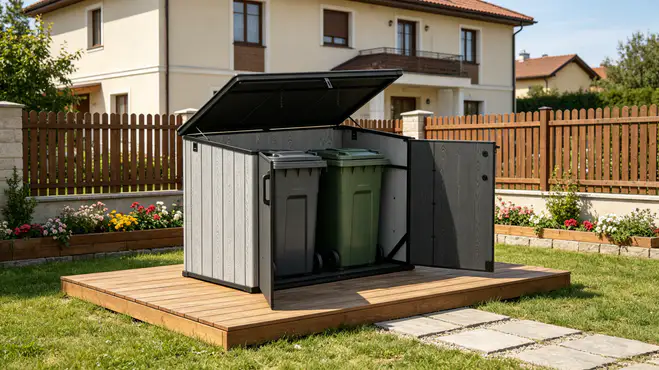
A European retailer selling direct to consumers wanted to add a large resin storage shed to its catalogue. Orders would ship through its own warehouse and delivery network, so the shed had to clear the carton size, labeling and transport rules of that network before the warehouse would accept it.
Situation
Large outdoor sheds are difficult for e-commerce fulfillment. The assembled shed has to hold enough gear and survive the weather, but the flat-packed parts still have to fit inside the carton limits set by the warehouse and its carriers.
That is where the retailer got stuck. Several of the original resin panels produced cartons that were longer than the warehouse would take. An oversized carton means the shipment can be refused at receiving, or held for extra handling before it enters inventory.
Shrinking the shed was not an option. The retailer selected this model for its storage capacity, its look and its outdoor performance. The packed size had to come down while the assembled size, the structure and the weather resistance all stayed the same.
The shed also had to ship in multiple cartons. That added a second problem: every box in the set had to stay identifiable through receiving, storage, picking and the final delivery.
The retailer did not need a packaging vendor. It needed a manufacturer willing to redesign the product around how DTC fulfillment actually works.
DiBiBi Solution
DiBiBi put its structural engineering team on the link between the side-panel design and the packed carton size.
The team came back with a new panel layout inside a week. Rather than shrinking the shed, they made each resin side-panel section slightly narrower and used more sections to build the same wall.
The panels still lock together with the shed’s reinforced connection system, including the strengthening ribs and screws. The assembled shed keeps its original dimensions and performance, and the individual parts now fit the retailer’s carton limits.
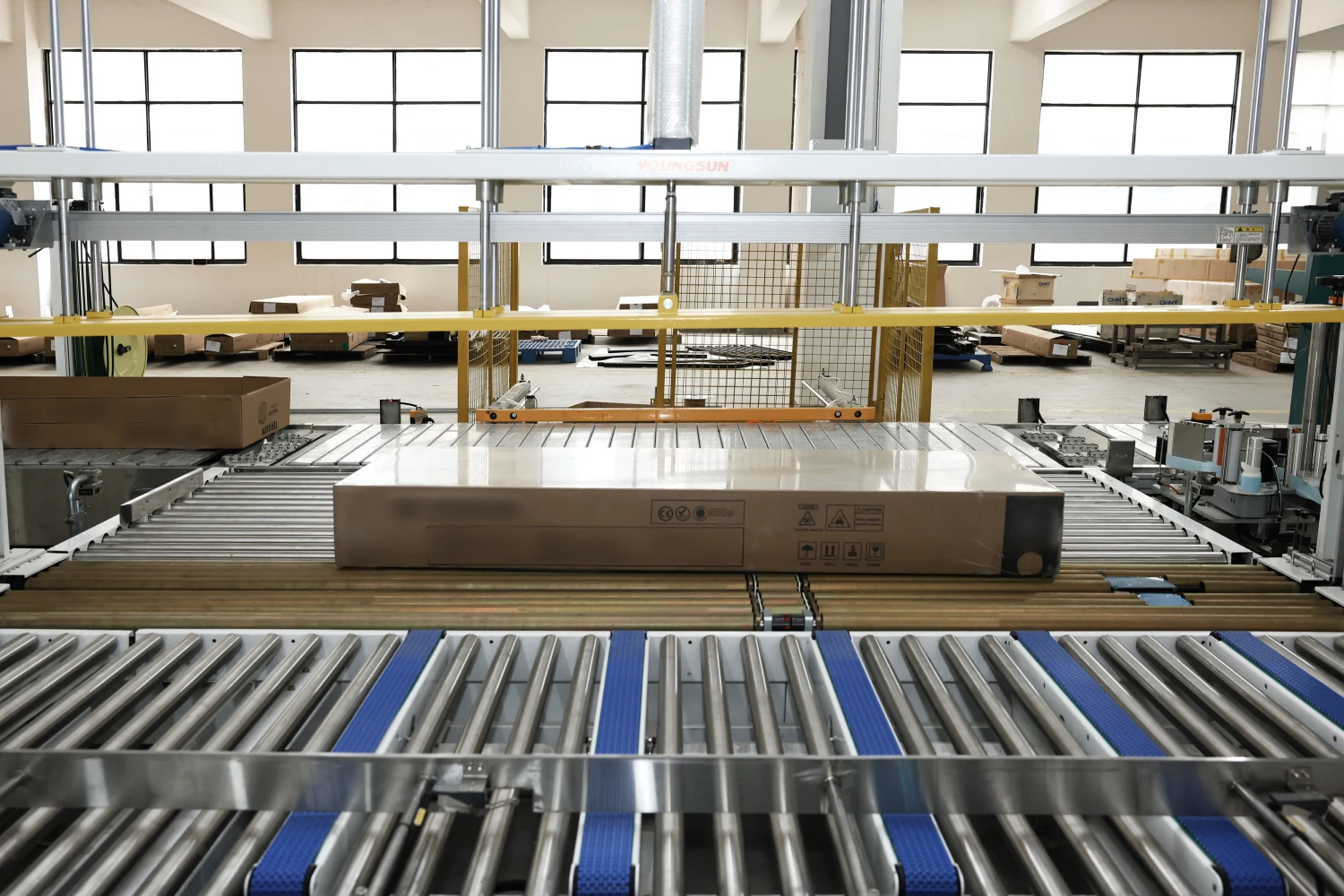
DiBiBi then built the multi-carton packaging around the retailer’s warehouse workflow. Every carton carries the information the warehouse needs to identify and trace it:
- The retailer’s brand logo
- A scannable product barcode
- Product model
- Product color
- Production batch number
- Carton sequence identification
The carton sequence tells warehouse staff which boxes make up one complete shed. That is what keeps sets from being mixed up, split or shipped incomplete during receiving and order picking.
The finished packaging also passed ISTA 3A testing, which documents that the packed product was evaluated against the handling and transport conditions it meets on the way to the consumer.
Because the retailer’s labels, barcodes and product data were applied before the shipment left the factory, the product was ready to enter the existing warehouse workflow on arrival. No second labeling vendor, no relabeling work at the warehouse.
Customer Benefits
The retailer approved the redesigned product and packaging, completed its factory audit, and placed a first order of 500 units.
Every carton now fits the limits its warehouse accepts, and the shed the consumer builds is still the shed the retailer chose: same assembled dimensions, same structural strength, same weather resistance. The packaging passed ISTA 3A testing, so the retailer has documented evidence of how the packed product holds up in transit. Each box is identifiable by model, color, batch and carton sequence, which is what keeps a multi-box set together through receiving and picking. Branding and barcodes go on before the shipment leaves the factory, so the product moves straight into the retailer’s fulfillment workflow with no second labeling supplier to manage.
More Than a Smaller Box
For a DTC retailer, packaging compliance is not just about fitting the product into a smaller carton. Carton size, transport protection, barcode accuracy and multi-carton traceability all decide whether a bulky product can move cleanly from factory to warehouse to consumer.
DiBiBi treated this as two jobs at once: a product-engineering job and a fulfillment-readiness job. Redesigning the panel layout, validating the transport packaging and preparing every carton for the warehouse system turned a packaging blocker into a first order.
What DiBiBi Offers E-commerce and DTC Brands
DiBiBi does more than manufacture resin sheds. Our structural engineering and packaging work helps retailers adapt large outdoor products to real warehouse, transport and private-label requirements.
That covers carton-driven product redesign, multi-box identification, ISTA-tested packaging, branded labels and product barcodes, so a resin storage product arrives ready for your fulfillment network.