An outdoor space should be more than an area you occasionally use when the weather is perfect. With the right shade structure, a patio, deck, or garden can become a comfortable extension of your living space. Aluminum pergolas offer a practical way to achieve that balance, combining contemporary design with long-term durability and relatively simple maintenance.
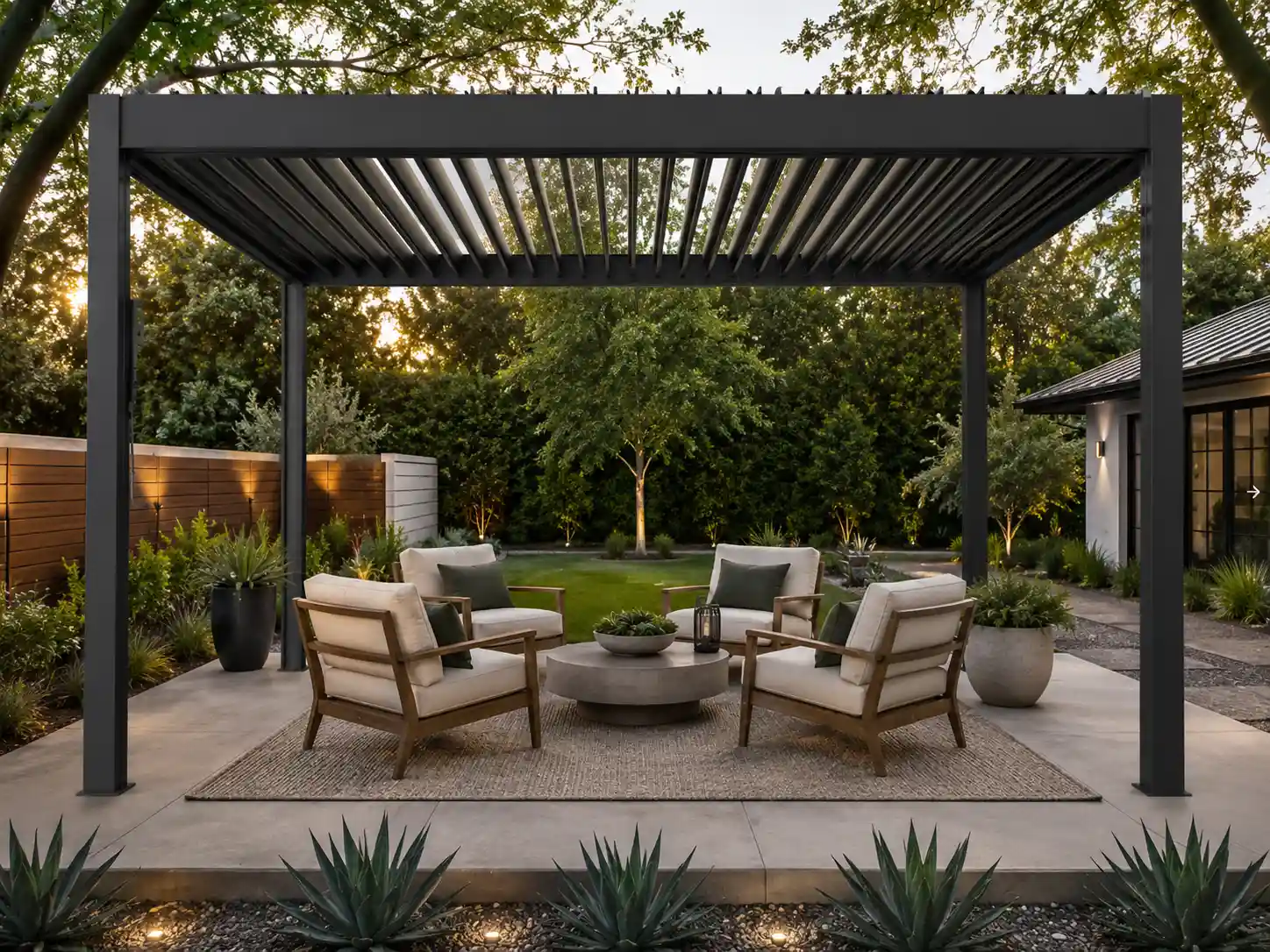
Unlike traditional timber structures, aluminum pergolas do not require regular staining or sealing to protect the frame. They can also accommodate a range of roof styles, from open slats to adjustable louvers that help regulate sunlight and rain exposure. Whether you are improving a residential backyard or planning a commercial terrace, understanding the available features and configurations will help you choose a structure that suits your needs.
This guide explains what aluminum pergolas are, their key features and benefits, common applications, and important considerations before installation.
What Is an Aluminum Pergola?
An aluminum pergola is an outdoor architectural structure built primarily from aluminum posts, beams, and roof components. It can be freestanding or attached to a building, creating a defined area for seating, dining, entertaining, or relaxation.
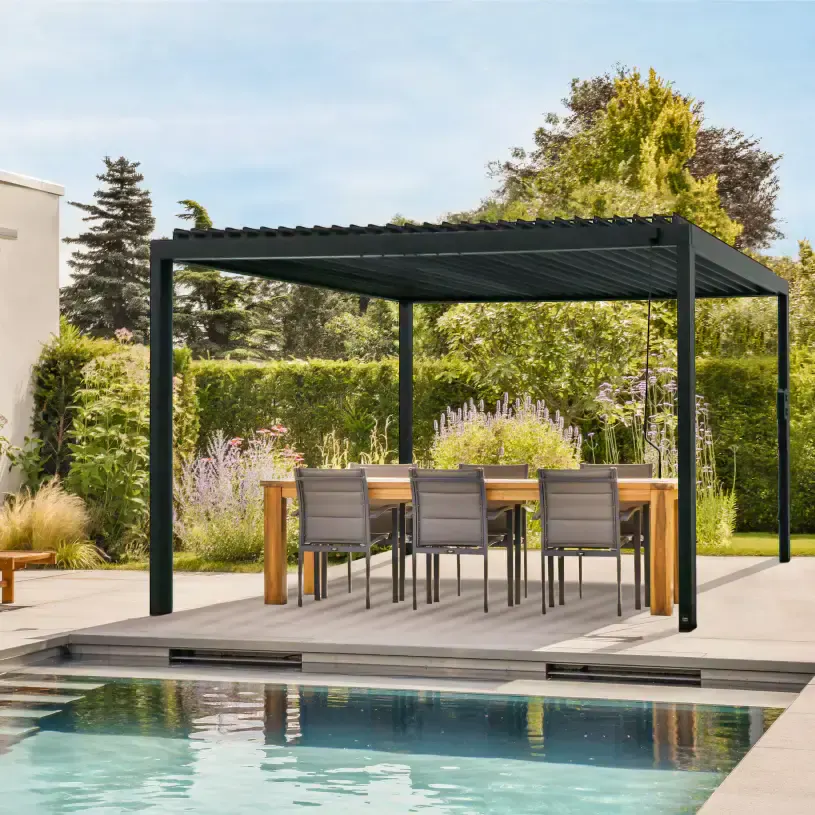
Traditional pergolas generally have open roofs that provide partial shade. Modern aluminum designs may also include fixed panels, retractable canopies, or adjustable louvered roofs. Some louvered systems close to form a rain-shedding surface, although performance depends on the product, drainage design, and installation quality.
Aluminum pergolas are available in many sizes, finishes, and architectural styles. Their clean lines make them especially popular with modern homes, but they can also complement transitional and traditional properties when the proportions and colors are carefully selected.
Key Features of Aluminum Pergolas
1. Durable, Corrosion-Resistant Frames
Aluminum naturally develops a protective oxide layer that helps resist corrosion. This makes it well suited to outdoor environments exposed to sun, humidity, and seasonal rainfall. Quality outdoor powder coating can provide additional surface protection and consistent color.
However, corrosion resistance does not mean every aluminum structure performs identically. Alloy quality, surface treatment, fasteners, drainage, and local environmental conditions all influence long-term durability. Coastal properties in particular benefit from finishes and hardware specified for salt-air exposure.
2. Lightweight but Engineered Construction
Aluminum is lighter than steel, which can simplify handling and installation. Yet an aluminum pergola still needs adequately engineered posts, beams, connections, and foundations. The appropriate structural design depends on span, roof type, anticipated wind and snow loads, and local building requirements.
For larger installations, request documentation confirming the manufacturer’s load ratings and engineering assumptions instead of relying on general claims that a pergola is “heavy-duty.”
3. Powder-Coated Finishes and Modern Styling
Many aluminum pergolas feature factory-applied powder coating in neutral shades such as black, white, gray, or bronze. These finishes offer a streamlined appearance and eliminate the recurring paintwork often associated with wood.
Available aesthetics range from minimalist flat-roof designs to pergolas with decorative profiles. Choosing a color that coordinates with window frames, exterior cladding, and garden furniture helps the structure feel integrated rather than added as an afterthought.
4. Flexible Roof Options
Roof design has a major influence on comfort and usability. Popular configurations include:
- Open-slat roofs: Provide architectural definition and intermittent shade while allowing substantial airflow.
- Fixed-roof systems: Deliver more consistent overhead coverage, subject to the roofing material and design.
- Retractable canopy roofs: Allow users to vary coverage as the weather changes.
- Adjustable louvered roofs: Rotate slats to control daylight and ventilation, and in some models channel rainwater toward integrated gutters.
If rain protection is important, confirm whether the particular product is rated as water-resistant or designed to shed rain when closed. An enclosed louvered roof should not automatically be treated as a completely waterproof room.
5. Optional Comfort and Smart Features
Higher-specification aluminum pergolas can support accessories such as integrated LED lighting, privacy screens, retractable side shades, ceiling fans, and outdoor heating. Motorized louvers may operate through a remote control, wall switch, or compatible smart-home integration.
Some systems offer wind or rain sensors that trigger preset adjustments. These add convenience, but their capabilities vary by manufacturer, and users should always follow the product’s storm and high-wind guidance.
Top Benefits of Aluminum Pergolas
Low Maintenance Compared With Wood
One of the strongest aluminum pergola benefits is its modest maintenance demand. Wood may need periodic sealing, staining, painting, and inspection for rot or insect damage. Aluminum frames generally require routine cleaning, checks for loose hardware, and occasional inspection of gutters or moving components.
That said, low maintenance is not zero maintenance. Cleaning frequency should be increased in coastal, dusty, or heavily polluted environments, and powered roof mechanisms should be serviced according to the manufacturer’s instructions.
Long-Term Outdoor Durability
Properly designed and installed aluminum pergolas can provide many years of service without the warping, splitting, or termite damage associated with some timber structures. This can make aluminum an appealing choice for owners who want a durable frame with fewer recurring surface treatments.
Longevity varies with manufacturing quality, climate, installation, and upkeep, so review the specific product warranty and its exclusions before purchasing.
Better Control of Sun and Shade
A pergola can make an exposed patio more comfortable by reducing direct solar exposure. Adjustable louvers offer additional control: open them to admit light and air, angle them for partial shade, or close them where the system is designed to provide greater overhead coverage.
Shade effectiveness changes with the sun’s position, pergola orientation, roof geometry, and neighboring buildings or trees. Side screens can be useful when low-angle morning or afternoon sun is the main concern.
Attractive Outdoor Living Areas
An aluminum pergola creates a visual focal point while defining zones for dining, lounging, or entertaining. Coordinated lighting, outdoor furniture, planters, and paving can make the space feel like an extension of the home.
A well-planned pergola may improve a property’s appeal to prospective buyers, but any effect on resale value depends on the local market, design quality, and buyer preferences. It should not be assumed to deliver a guaranteed financial return.
Customization Across Different Spaces
From compact courtyards to large hospitality terraces, aluminum pergolas can be configured for varied layouts. Buyers may be able to choose dimensions, freestanding or wall-mounted construction, roof operation, color, privacy elements, and lighting packages.
Modular systems can also help cover larger areas, although adjoining modules require careful detailing for drainage, structural continuity, and consistent appearance.
Popular Applications of Aluminum Pergolas
Residential Patios and Decks
An outdoor aluminum pergola can transform a sunny patio into a practical dining or seating area. For homes with sliding doors opening onto a deck, an attached pergola can establish a smooth connection between indoor and outdoor spaces.
Before installation, confirm that an existing deck can support the additional loads. A pergola should not simply be bolted to decking boards without an appropriately designed load path and anchoring system.
Gardens and Backyard Lounges
Freestanding aluminum pergolas work well as garden destinations. Position one beside a pool, near a landscaped border, or at the end of a pathway to create a dedicated relaxation zone. Soft furnishings, planters, and warm lighting can make the area welcoming after sunset.
When setting a pergola among planting, allow adequate clearance for tree growth and leaf collection, particularly around retractable roofs and gutter channels.
Outdoor Kitchens and Dining Areas
Aluminum pergolas can define an outdoor dining zone and provide shade for tables and preparation surfaces. An adjustable roof is useful where cooking and dining areas need different levels of sunlight throughout the day.
Outdoor kitchens require additional planning. Grills and other heat-producing appliances must meet the clearance, ventilation, and fire-safety requirements specified by the appliance and pergola manufacturers. Never assume a covered pergola is suitable for a barbecue or fire feature without checking these requirements.
Restaurants, Cafés, and Hotels
Commercial operators use aluminum pergolas to create attractive outdoor seating for guests. Adjustable shade, lighting, and optional side screens can improve comfort across changing daytime conditions and shoulder seasons.
Commercial designs should account for accessibility, evacuation routes, expected occupancy, maintenance access, and local approvals. Operators should also assess weather-related closure procedures rather than treating the structure as all-weather shelter.
Poolside and Spa Areas
An aluminum pergola can provide a shaded place for loungers and towels beside a pool or spa. Its corrosion-resistant frame is an advantage in moist conditions, provided suitable coatings and fasteners are selected.
Keep electrical accessories appropriately rated and installed for wet locations, and follow applicable clearance and safety standards around pools and hot tubs.
Rooftop Terraces and Urban Courtyards
In cities, outdoor space is often limited and exposed. Slim-profile aluminum pergolas can give rooftop terraces and courtyards a more intentional layout without visually overwhelming them.
Rooftop installations demand special attention to wind uplift, building structure, waterproofing membranes, anchoring, and permitting. These issues should be assessed by qualified professionals before any purchase or installation begins.
Aluminum Pergolas vs. Wood and Steel
| Factor | Aluminum | Wood | Steel |
|---|---|---|---|
| Routine upkeep | Usually cleaning and inspection | Often sealing, staining, or painting | Coating inspection and corrosion control |
| Moisture and pests | Does not rot or attract termites as a food source | May be vulnerable without protection | Needs suitable corrosion protection |
| Weight | Relatively lightweight | Depends on timber species and section | Generally heavier for comparable components |
| Appearance | Clean, consistent factory finishes | Natural grain and traditional character | Can achieve slender engineered profiles |
| Design considerations | Engineered profiles and connections | Moisture movement and weathering | Weight, coatings, and thermal behavior |
No material is universally best. Wood remains appealing for a natural appearance, while steel may be appropriate for specific structural demands. Aluminum is especially compelling when low upkeep, contemporary styling, and corrosion resistance are major priorities.
How Much Does an Aluminum Pergola Cost?
The price of an aluminum pergola depends on size, structural specifications, finish, roof type, and accessory package. A simple manual, open-roof kit will generally cost less than a custom motorized louvered system with lighting, side screens, and integrated drainage.
Installation costs can also vary significantly based on foundations, electrical work, site access, engineering, and the complexity of attaching the pergola to a building. Local labor rates and permit requirements add further differences.
Instead of comparing headline prices alone, request itemized quotations covering the frame, roof, motors, accessories, delivery, foundations, installation, tax, and warranty. This gives you a more reliable basis for assessing overall value.
How to Choose the Right Aluminum Pergola
Start by identifying how the space will be used. A dining area may prioritize reliable overhead shade, while a garden lounge may benefit from adjustable sunlight and privacy screens. Then consider the following factors:
- Measure the site. Allow room for circulation, doors, furniture, and roof or screen movement.
- Assess local weather. Check documented wind and snow load ratings relevant to the installation location.
- Select the roof system. Decide whether partial shade, retractability, or rain-shedding capability matters most.
- Review drainage. Understand where roof water exits and how it will be managed around the property.
- Check the finish and hardware. Ask about coating specifications and suitability for coastal or high-exposure settings.
- Understand the warranty. Compare coverage for the frame, finish, motors, controls, and installation workmanship.
- Confirm approvals. Consult local authorities or qualified professionals about planning permission, building codes, and structural requirements.
A reputable supplier should provide product drawings, installation guidance, operating limitations, and clear after-sales support.
Maintenance Tips for an Aluminum Pergola
Simple preventive care helps preserve appearance and function. Rinse dirt from the frame using water and a mild, manufacturer-approved cleaning solution, then wipe with a soft cloth or sponge. Avoid harsh abrasives and aggressive chemicals that could damage protective finishes.
Inspect roof gutters and drainage outlets for leaves or debris, especially after storms. If the pergola has motorized louvers or retractable screens, keep tracks clear and follow the recommended servicing schedule. Periodically check visible connections, and arrange professional inspection if you notice movement, damage, or unusual operating noise.
Frequently Asked Questions About Aluminum Pergolas
Are aluminum pergolas worth it?
They can be a worthwhile investment for homeowners and businesses seeking durable outdoor shade with relatively low frame maintenance. The value depends on product quality, local conditions, planned use, and total installed cost.
Do aluminum pergolas get hot in the sun?
Metal surfaces can become hot in direct sunlight. The shade beneath a pergola may still feel more comfortable than an uncovered area, but temperature depends on ventilation, roof design, color, and surrounding surfaces. Avoid touching sun-exposed metal during extreme heat.
Can aluminum pergolas withstand strong winds?
Some systems are engineered for demanding wind conditions, but performance is model- and installation-specific. Always verify the stated load rating and follow instructions for positioning louvers or retractable components during storms.
Are louvered aluminum pergolas waterproof?
Not necessarily. Some closed-roof systems are designed to shed rain through seals and integrated drainage, but wind-driven rain, installation tolerances, and product limitations can affect protection. Check the manufacturer’s exact water-performance claims.
Can an aluminum pergola be attached to a house?
Yes, many models support wall-mounted installation, provided the wall structure, flashing, connections, and drainage are suitable. Professional design and installation are important to prevent water intrusion and structural problems.
Conclusion
Aluminum pergolas combine modern aesthetics, corrosion resistance, flexible roof configurations, and manageable upkeep. They are suitable for residential patios, landscaped gardens, outdoor kitchens, hospitality terraces, pool areas, and carefully engineered rooftop installations.
The best choice is not simply the most feature-rich model. It is the pergola that fits your space, climate, budget, and intended use, backed by credible engineering information and a clear warranty. Compare specifications carefully and plan installation early to create an outdoor area that remains practical and inviting for years to come.