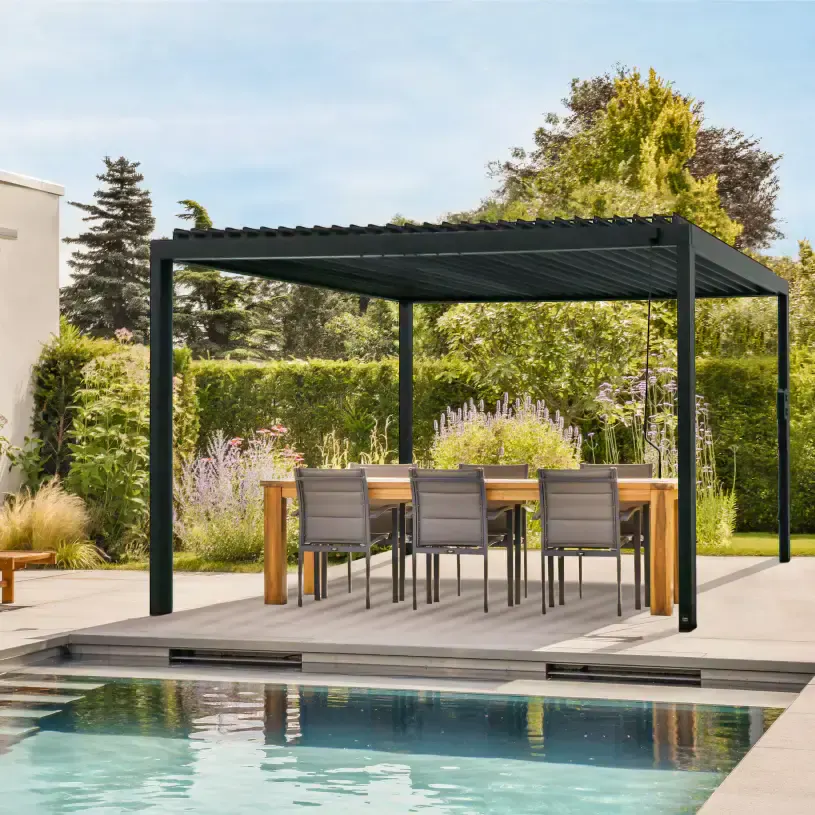
Coastal hotels, waterfront restaurants, resorts, public promenades, and commercial developments need outdoor structures that do more than look attractive. Pergolas, shade canopies, pavilions, covered walkways, and freestanding shelters must withstand an unusually demanding combination of salt-laden air, moisture, ultraviolet exposure, and potentially severe wind events.
Choosing outdoor structures for coastal environments therefore requires a different approach from selecting equipment for an inland site. A premium finish or a “marine-grade” label is not enough. Project teams need to evaluate the exposure conditions, structural system, fasteners, protective coatings, drainage details, documented test results, and the maintenance program together.
This guide explains how architects, engineers, contractors, and commercial buyers can make evidence-based decisions without relying on unsupported durability claims.
1. Understand the Coastal Exposure Before Selecting Materials
Not every waterfront site has the same corrosion risk. An oceanfront pergola exposed to direct sea spray faces different conditions from a covered terrace several streets inland. The local microclimate can also vary within one property.
Assess the following conditions during early design:
- Distance and orientation: Proximity to breaking waves and exposure to prevailing onshore winds influence chloride deposition.
- Salt spray and splash: Direct seawater contact is more aggressive than occasional airborne salt deposition.
- Humidity and wetness: Persistent dampness can accelerate corrosion, particularly in sheltered joints.
- Rain washing: Exposed surfaces may receive beneficial natural rinsing, while protected undersides accumulate salts.
- Temperature and sunlight: Heat, UV exposure, and thermal cycling affect finishes, sealants, and components.
- Industrial pollution: Nearby ports or industrial activity can introduce additional corrosive contaminants.
For a defensible specification, consider the atmospheric corrosivity classification methods in ISO 9223 and the exposure categories in ISO 12944-2. Depending on the actual conditions, coastal installations may fall into high or very high corrosivity categories, while particularly aggressive offshore environments may require the CX category. A coastal address alone does not establish the correct classification.
Specification tip: Ask the design team to document the assumed exposure category and the evidence behind it before approving a coating or material system.
2. Compare Structural Materials for Marine Environments
Material selection affects structural capacity, corrosion protection, appearance, fabrication, and total ownership cost. No single option is best for every coastal commercial application.
| Material | Potential advantages | Coastal considerations |
|---|---|---|
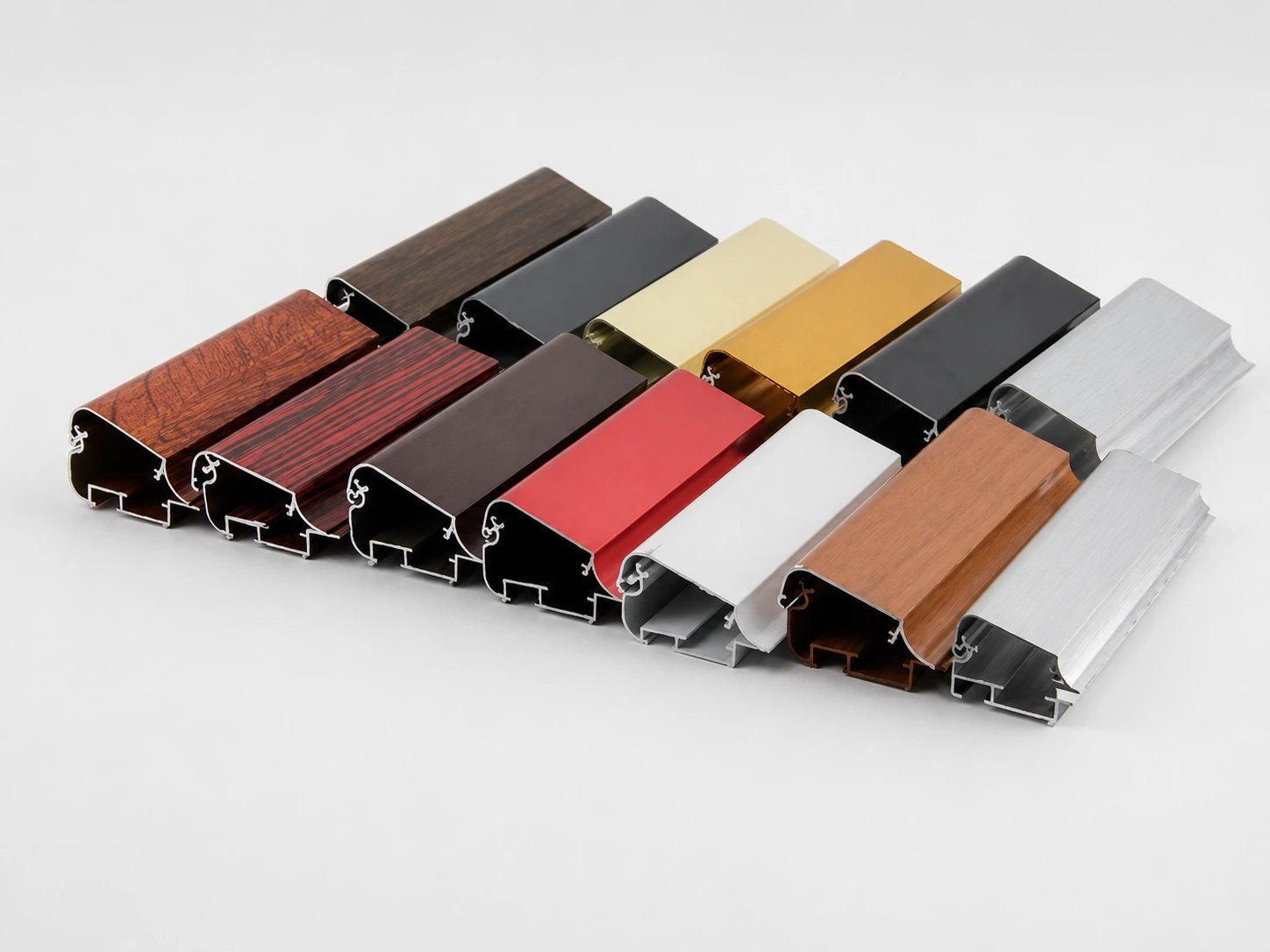
| Powder-coated aluminum | Relatively lightweight, formable, and suitable for architectural finishes | Confirm alloy, surface pretreatment, coating system, and resistance to localized corrosion; isolate dissimilar metals |
| Hot-dip galvanized steel | High structural versatility with sacrificial zinc protection | Check galvanizing specification, coating thickness, drainage details, and site-specific corrosion exposure |
| Duplex-coated steel | Combines galvanizing with a compatible paint or powder-coat barrier | Requires suitable surface preparation and verified compatibility between layers |
| Stainless steel | Useful for selected exposed connections and architectural components | Grade selection matters; even 316 stainless steel can suffer pitting or crevice corrosion in chloride-rich conditions |
| Engineered or preservative-treated timber | Natural appearance for resort or hospitality settings | Check treatment, moisture management, connection compatibility, inspection access, and applicable structural grading |
Aluminum for Pergolas and Shade Structures
Aluminum is popular for commercial coastal pergolas because its lower weight can simplify fabrication and installation. However, “rust-free” does not mean “corrosion-proof.” Aluminum can develop localized corrosion, especially where moisture and chlorides remain trapped or where it contacts incompatible metals.
For aluminum systems, request material-grade documentation, coating specifications, and details showing how fasteners and brackets are electrically isolated where necessary. Architectural appearance should be evaluated alongside wind resistance and connection design.
Galvanized and Duplex-Coated Steel
Steel is frequently selected where longer spans, heavier loads, or specialized structural connections are required. Hot-dip galvanizing provides zinc protection, but performance depends on coating quality and the exposure environment. A duplex system—galvanizing plus a compatible organic coating—can offer additional protection and color flexibility in aggressive coastal settings.
The American Galvanizers Association recommends evaluating the project microenvironment rather than assuming identical performance at every coastal location. Designers should also address enclosed spaces, water traps, fabrication edges, and repair procedures.
3. Treat Fasteners and Connections as Critical Components
Bolts, anchors, screws, brackets, and concealed connection plates are often small relative to the entire structure, yet they can determine its long-term reliability. Corrosion at an inaccessible joint may compromise load transfer before the problem becomes obvious from a distance.
For many atmospheric marine applications, 316 stainless steel fasteners deserve consideration over 304 stainless steel. However, 316 is not universally suitable for continuous seawater exposure, stagnant chloride-rich crevices, or all highly aggressive splash-zone conditions. Specialized alloys may be justified after engineering review.
Connection design should address:
- Fastener grade and traceability: Specify a recognized alloy designation and obtain supplier documentation.
- Galvanic compatibility: Assess dissimilar metal contact, exposed surface-area ratios, and the need for isolating washers or sleeves.
- Crevice avoidance: Minimize joints that trap moisture, debris, and concentrated salts.
- Mechanical capacity: Confirm tension, shear, fatigue considerations, and applicable connection design requirements.
- Access for inspection: Make critical connections visible or practically accessible for maintenance.
- Anchor performance: Verify substrate capacity, edge distances, embedment, corrosion exposure, and installation conditions.
The British Stainless Steel Association notes that 316 stainless steel can still experience pitting and crevice corrosion in seawater. This is why specifying “stainless steel hardware” without naming the grade and exposure conditions is inadequate.
4. Specify a Complete Corrosion-Protection System
A coating should be chosen as part of a documented system, not as a decorative finish applied at the end of fabrication. For painted steel, the ISO 12944 series provides a framework for assessing environment, coating design, and protective performance. ISO 12944-9 addresses specified protective paint systems for offshore and related steel structures within its defined scope.
A commercial procurement specification should identify, where applicable:
- Substrate material and surface preparation requirements.
- Primer, intermediate coat, and topcoat product identifiers.
- Pretreatment for aluminum or galvanized substrates.
- Required dry film thickness and measurement method.
- Edge preparation, weld treatment, drainage, and repair details.
- Factory quality-control and inspection records.
- Coating system suitability for the selected corrosivity category.
- Maintenance and touch-up instructions supplied by the manufacturer.
A coating with good laboratory results can still fail early if applied over contaminated metal, damaged during transport, or installed with unprotected cuts and drilled holes. Site inspection and handling requirements are therefore essential.
Important distinction: Coating durability classifications help plan protective maintenance; they are not automatic warranties or guarantees of a structure’s overall service life.
5. Interpret Salt Spray Tests Correctly
Salt fog testing is frequently used in product brochures, but results require careful interpretation. ASTM B117 provides a standardized method for operating a salt spray apparatus. It does not establish a universal minimum number of hours for every coastal structure or reliably translate exposure hours into real-world years of service.
ASTM explicitly cautions that predicting natural-environment performance from salt spray testing alone is generally unreliable without corroborating long-term atmospheric exposure data. Consequently, a claim such as “1,000 hours of salt spray equals 10 years at the beach” should not be accepted without scientifically defensible validation.
When reviewing a supplier’s corrosion test report, check:
- The precise test standard and edition used.
- Whether the test item matches the proposed production material and coating build-up.
- Exposure duration and test conditions.
- Pass/fail criteria, including how corrosion, blistering, or coating creep was assessed.
- Sample count, laboratory identity, and report date.
- Any relevant cyclic corrosion, weathering, field exposure, or coating qualification tests.
For high-exposure projects, appropriate cyclic testing and real-world performance records may provide more useful support than a single salt spray-hour figure. Select acceptance criteria according to the actual material, specification, and intended service conditions.
6. Engineer for Local Wind Loads, Not Generic Ratings
Corrosion resistance does not make a structure safe in high winds. Coastal outdoor structures can experience substantial uplift, lateral loading, and pressure differences, particularly on open roofs and canopies. Retractable elements and operable louvers add configuration-specific considerations.
In the United States, ASCE/SEI 7-22, where adopted by the governing code, provides methods for determining design actions, including wind loads. Outside the United States, designers must use the locally adopted structural codes and applicable national provisions. The legally applicable edition is determined by the project jurisdiction, not by whichever standard is newest.
A qualified structural engineer should evaluate:
- Site-specific design wind speeds and the relevant risk or importance category.
- Terrain exposure, topography, building height, and local wind effects.
- Uplift, lateral loads, overturning, and applicable load combinations.
- Roof shape, open-sided configurations, and cladding or canopy pressures.
- Member strength, deflection, bracing, and connection load paths.
- Foundation and anchor capacities under local soil and site conditions.
- Any manufacturer-defined operating restrictions for adjustable components.
Avoid accepting an unsupported label such as “hurricane-proof pergola.” Ask instead for project-relevant structural calculations, appropriately scoped test reports when applicable, and installation details demonstrating a continuous load path into the foundation.
In flood-prone coastal locations, wind design may be only one part of the assessment. Flood levels, scour, wave action, and foundation resilience may also require specialist review.
7. Design Details That Reduce Corrosion and Maintenance
Good detailing can often improve durability without changing the main structural material. Saltwater becomes especially damaging when it remains concentrated in crevices or enclosed spaces.
Use sloped or draining surfaces instead of water-retaining ledges. Detail hollow sections so water cannot accumulate unintentionally. Avoid concealed interfaces that cannot be cleaned or inspected. Protect cut edges and construction damage according to the approved coating repair procedure, and provide access to gutters, roof drainage, anchors, and moving mechanisms.
For louvered pergolas or motorized shade systems, consider the environmental ratings of motors, control enclosures, cable entries, and electrical connections. Confirm that the manufacturer has documented the appropriate ingress protection and corrosion suitability for the intended location. Electrical safety and installation must follow local requirements.
These details are particularly important for commercial projects, where a single maintenance closure can affect guests, tenants, revenue, and brand perception.
8. Build a Practical Coastal Maintenance Plan
Even well-specified structures need inspection. A maintenance plan should reflect exposure severity, manufacturer instructions, access constraints, and the consequences of failure.
As a starting framework, commercial operators can establish a baseline inspection at handover, routine visual checks during operation, and more detailed periodic inspections by competent personnel. After severe storms, unusual impacts, or visible movement, arrange an additional condition assessment before returning affected areas to normal use.
Routine tasks may include removing salt deposits with a manufacturer-approved cleaning method, clearing drains, checking for coating damage, examining fasteners for staining or loosening, and monitoring moving components. Avoid aggressive chemicals or abrasive cleaning tools that could damage finishes.
Keep a record of inspection dates, photographs, defects, corrective actions, replacement components, and warranty correspondence. The inspection frequency should be increased where site observations show elevated corrosion or deterioration—not set solely by a generic calendar.
9. Evaluate Suppliers on Evidence and Lifecycle Cost
For coastal commercial developments, the lowest initial quote is not necessarily the most economical choice. Procurement teams should account for engineering, installation, planned maintenance, possible replacement, and business disruption over the intended ownership period.
Before placing an order, request a clear documentation package:
| Supplier document | What it helps verify |
|---|---|
| Material certificates and component schedule | Actual substrate and hardware specifications |
| Coating datasheets and inspection records | Proposed protective system and application quality |
| Relevant corrosion test reports | Evidence supporting stated test performance |
| Structural calculations and design drawings | Compliance with project-specific loads and load paths |
| Foundation and anchorage details | Safe transfer of loads to the supporting structure |
| Installation and repair instructions | Correct on-site assembly and finish restoration |
| Maintenance schedule and warranty terms | Owner responsibilities and contractual coverage |
Ask the supplier to identify precisely which product configuration was tested. Reports for a smaller, differently anchored, or differently coated model may not substantiate the system being purchased.
A credible supplier should be willing to explain where its documentation ends and where site-specific engineering begins.
10. Match the Structure to the Commercial Application
Beachfront hotels and resorts: Prioritize corrosion-resistant materials, cleanable surfaces, quiet operation, guest safety, and architectural consistency. Any motorized or retractable system should have clear operating procedures for high winds.
Waterfront restaurants and hospitality terraces: Evaluate drainage, wind comfort, lighting and electrical integration, service access, and the operational consequences of closing outdoor seating during maintenance.
Public promenades and coastal parks: Favor tamper-resistant details, accessible inspection points, replaceable components, and robust connections appropriate for frequent public use.
Marinas and port-adjacent developments: Investigate severe airborne chloride exposure, potential splash-zone conditions, and the need for specialist fastener materials or higher-performance coating systems.
In all applications, confirm accessibility, fire-related requirements, planning permissions, structural approvals, and any local coastal development restrictions relevant to the particular project.
Frequently Asked Questions
What is the best material for outdoor structures near the ocean?
There is no universal best material. Coated aluminum, galvanized or duplex-coated steel, stainless steel, and suitable timber may all be viable when properly detailed and engineered. The correct choice depends on salt exposure, structure size, wind loads, maintenance access, and budget.
Is powder-coated aluminum suitable for coastal pergolas?
It can be, provided the selected alloy, pretreatment, coating system, fasteners, and drainage details are appropriate for the exposure. Ask for coating and corrosion evidence for the proposed product rather than relying only on the word “powder-coated.”
Are 316 stainless steel fasteners completely corrosion-proof?
No. Type 316 is widely used in marine applications, but chloride-rich crevices, stagnant seawater, and severe splash exposure can still cause localized corrosion. Critical connections need project-specific material selection.
How many hours of salt spray testing should a coastal structure pass?
There is no universal ASTM B117 hour requirement that proves a particular coastal service life. The required test, duration, and acceptance criteria should be defined in the product specification and supported by relevant evidence.
Can a supplier certify that a pergola will withstand coastal storms?
A supplier may provide component testing or engineering documentation, but site-specific compliance must be assessed against the governing wind-load requirements, installed configuration, anchorage, and foundation. Broad marketing claims cannot replace that review.
How often should coastal outdoor structures be inspected?
Inspection intervals depend on exposure, materials, manufacturer recommendations, local requirements, and operational risk. Establish a documented program, reassess it using observed conditions, and inspect after significant storms or damage.
Conclusion: Specify Performance, Not Promises
Selecting reliable outdoor structures for coastal environments is an exercise in coordinated engineering and asset management. The most successful commercial projects assess chloride exposure early, choose compatible structural materials and fasteners, specify complete coating systems, and verify the structure against local wind and foundation requirements.
Most importantly, procurement decisions should be supported by applicable standards, authentic testing, sound detailing, and a realistic maintenance strategy—not by unsupported claims about salt spray hours or guaranteed years of performance.
For a coastal hotel, resort, restaurant, or public development, ask prospective suppliers for a project-specific technical submittal that connects every material, coating, connection, and structural claim to verifiable documentation.
Technical References and Further Reading
- ISO 9223:2012 — Corrosivity of atmospheres: classification, determination and estimation.
- ISO 12944-9:2018 — Protective paint systems for offshore and related structures. Review alongside the applicable parts of ISO 12944, including Part 2.
- ASTM B117 — Standard Practice for Operating Salt Spray (Fog) Apparatus.
- ASCE/SEI 7-22 — Minimum Design Loads and Associated Criteria for Buildings and Other Structures.
- British Stainless Steel Association — Selection of 316, 304 and 303 stainless steels for seawater applications.
- American Galvanizers Association — Hot-dip galvanizing in coastal climates.
- FEMA — National Flood Insurance Technical Bulletins, including Technical Bulletin 8 on corrosion protection of coastal metal connectors.
Engineering disclaimer: This article is general specification guidance, not a substitute for project-specific calculations, laboratory qualification, professional engineering review, manufacturer instructions, or legally adopted building codes. Always confirm the applicable edition and requirements with the authority having jurisdiction.