A pergola can transform an ordinary patio, deck, or garden into a comfortable outdoor living area. It creates a defined place to dine, relax, entertain guests, or escape direct sunlight. However, with so many designs, materials, sizes, and roofing options available, choosing the right pergola can feel overwhelming.
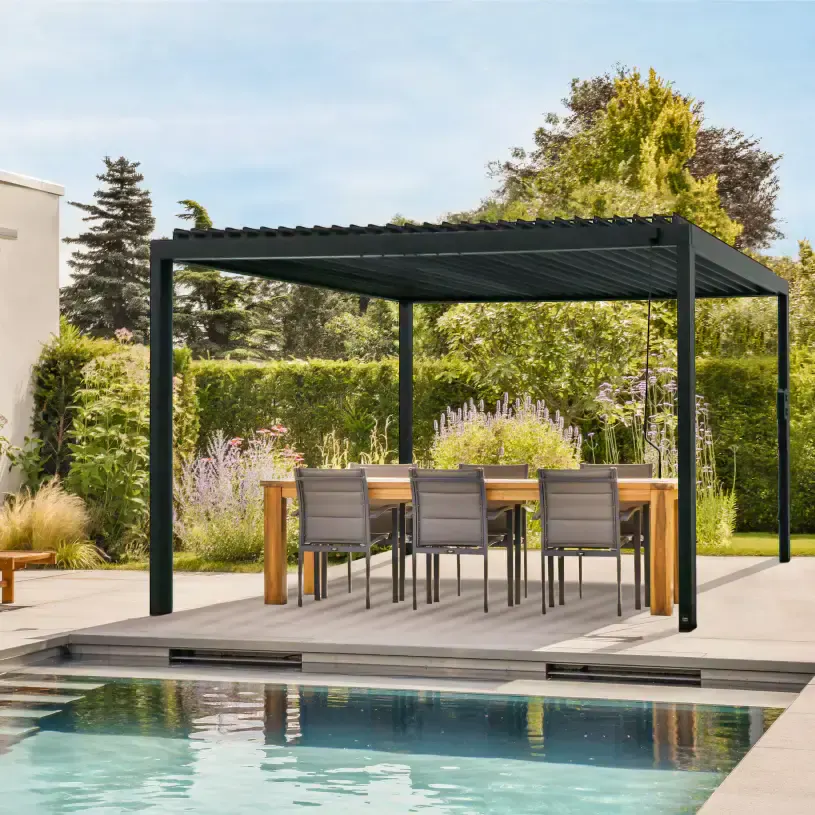
The best pergola for your outdoor space is not necessarily the largest or most expensive model. It is the one that complements your property, fits your lifestyle, responds to your local weather, and stays within your budget. This pergola buying guide explains the key decisions to make before purchasing, from measuring your space to selecting a durable material and practical roof system.
1. Identify How You Want to Use Your Pergola
Before comparing products, decide what you want your pergola to accomplish. Its main purpose will influence almost every other choice.
Outdoor dining and entertaining
If you plan to host dinners or weekend gatherings, choose a pergola that accommodates your table, chairs, and movement around the seating area. Consider integrated lighting for evening meals and a roof that provides reliable shade during sunny afternoons.
Relaxation and lounging
For a quiet reading corner or outdoor sofa, comfort and privacy may matter more than maximum floor area. Side screens, climbing plants, and adjustable shade can create an inviting retreat without enclosing the entire garden.
Poolside or garden focal point
A freestanding pergola can establish a destination near a swimming pool, pathway, or landscaped garden. In these settings, appearance, sightlines, and resistance to moisture are particularly important.
Outdoor kitchen protection
If the structure will cover a grill or outdoor cooking area, plan for safe clearances, ventilation, and fire-resistant materials. Follow the cooking appliance manufacturer’s requirements; never assume any pergola roof is safe above open flames.
Quick tip: Write down your top two priorities—such as shade and entertaining—before shopping. This helps prevent expensive features from distracting you from what you actually need.
2. Measure Your Outdoor Space Carefully
Correct sizing is essential. A pergola should feel proportional to your house and garden while leaving enough space to move comfortably around furniture.
Start by measuring the usable length and width of your patio or garden area. Mark the proposed pergola footprint with stakes, tape, or string. Then position your intended furniture inside the outline to see whether the arrangement feels natural.
Common approximate pergola dimensions include:
| Pergola size | Typical application | What to consider |
|---|---|---|
| 8 × 8 ft (2.4 × 2.4 m) | Compact seating nook | Best for limited furniture |
| 10 × 10 ft (3 × 3 m) | Small patio or lounge | Suitable for a modest seating set |
| 10 × 12 ft (3 × 3.7 m) | Dining area | Check chair pull-out clearance |
| 12 × 16 ft (3.7 × 4.9 m) | Larger entertaining zone | Requires more substantial foundations |
| Custom size | Irregular or expansive spaces | Verify span and structural requirements |
These sizes are general planning examples, not universal capacity guarantees. The clear usable area may be smaller than the advertised external dimensions because of posts and roof overhangs.
Also check vertical clearance. A pergola needs sufficient headroom for people, doors, ceiling fans, and hanging lights. Nearby windows, rooflines, tree branches, underground utilities, and drainage paths may limit where the posts can go.
3. Choose Between a Freestanding and Attached Pergola
Two popular configurations are freestanding and attached pergolas. Neither is automatically better; each works for a different outdoor layout.
Freestanding pergolas
A freestanding pergola stands independently, usually on four or more posts. It can sit in the middle of a garden, beside a pool, or over a detached patio.
Advantages: Flexible placement, an attractive standalone focal point, and no need to connect the main frame to your house. Considerations: More posts, dedicated footings, and careful wind-load design may be necessary.
Attached pergolas
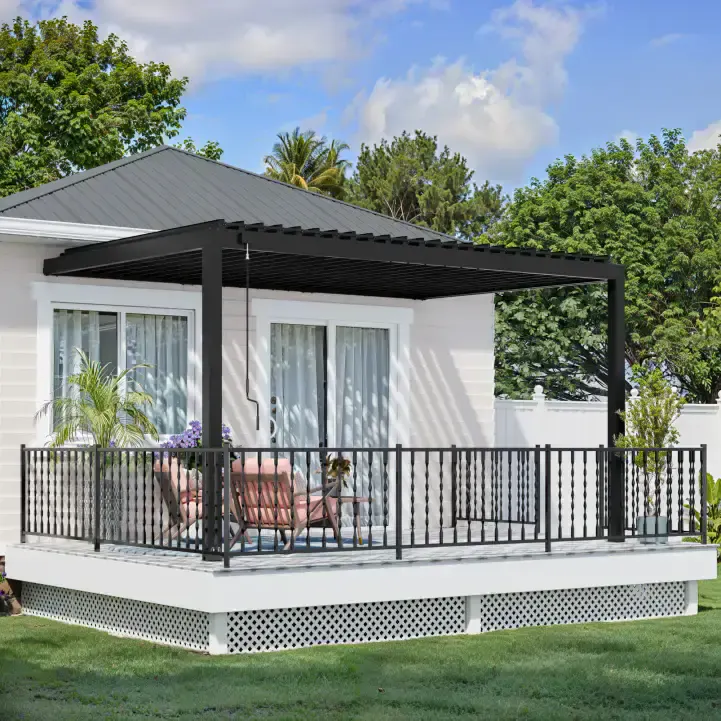
An attached pergola connects to an exterior building wall on one side and is supported by posts on the other. It can make a patio feel like an extension of the indoor living area.
Advantages: Convenient access from the house and a cohesive architectural look. Considerations: Wall attachment, waterproofing, structural loads, and local permission requirements demand special attention.
For a garden destination, a freestanding design often makes sense. For a dining space immediately outside sliding doors, an attached design can provide a more seamless indoor–outdoor transition. Have a qualified professional assess any proposed structural attachment.
4. Compare the Best Pergola Materials
The pergola material determines its appearance, maintenance demands, durability, and long-term cost. Four common choices are wood, aluminum, steel, and vinyl or PVC.
Wood pergolas: Natural and timeless
Timber pergolas suit traditional homes, cottage gardens, and landscaping with plenty of greenery. Cedar and redwood are often selected for their appearance and natural resistance to decay, while treated timber can offer a more economical option.
Wood can be stained, painted, or customized, but it requires periodic inspection and finishing. Moisture, insects, and prolonged ground contact may shorten its life if installation and maintenance are neglected.
Aluminum pergolas: Modern and low maintenance
Powder-coated aluminum is popular for contemporary patios and louvered roof systems. It is lightweight relative to steel, resists rust, and generally requires little more than routine cleaning and inspection.
Look at the thickness and engineering of the frame, quality of its coating, wind-rating documentation, fasteners, and warranty. Not all aluminum pergolas offer the same structural performance.
Steel pergolas: Strong and substantial
Steel can be suitable for larger spans or designs requiring robust structural support. However, it is heavy, and any damaged protective finish may allow corrosion to develop. Galvanized or properly coated systems generally perform better outdoors than unprotected steel.
Vinyl or PVC pergolas: Easy-care appearance
Vinyl or PVC pergolas generally do not need painting and can be easy to clean. They may appeal to homeowners seeking a bright, simple aesthetic. Nevertheless, rigidity, heat response, and long-term UV performance depend on product quality and internal reinforcement.
| Material | Visual style | Maintenance | Main trade-off |
|---|---|---|---|
| Wood | Warm, classic, organic | Moderate to high | Needs ongoing protection |
| Aluminum | Sleek, modern | Low | Quality varies by frame design |
| Steel | Bold, architectural | Low to moderate | Heavy; corrosion protection matters |
| Vinyl/PVC | Clean, traditional | Low | Reinforcement and UV durability vary |
Best choice: Pick wood for natural character and customization, or aluminum if ease of maintenance is your main priority. For exposed or unusual sites, prioritize a verified structural specification over material alone.
5. Select the Right Pergola Roof and Shade Options
The roof determines how much protection your pergola provides. An attractive frame will disappoint if its roof cannot handle your typical weather.
Open-roof pergolas
Traditional beams and rafters allow sunlight and air to pass through. They create patterned shade rather than full sun or rain protection. Climbing plants or optional fabric panels can increase coverage over time.
Retractable canopy pergolas
A fabric canopy lets you adjust the amount of shade as conditions change. Check the fabric’s UV resistance, water resistance, operating mechanism, and storage instructions. Many retractable canopies should be closed or removed during strong winds and severe weather.
Louvered pergolas
An adjustable louvered pergola has rotating roof slats that control sunlight and ventilation. Some engineered systems close to channel rainwater toward built-in gutters. A motorized louvered pergola adds convenience, particularly for large roofs, but introduces motors, controls, and electrical components that may need servicing.
Fixed-roof pergolas
A solid or translucent roof offers more consistent overhead coverage, depending on its construction. However, fixed roofs must be assessed for drainage, wind uplift, snow loading, heat buildup, and applicable building requirements.
If your main goal is summer shade, an open-roof structure may be sufficient. For changing weather, consider a well-engineered adjustable or covered system with clearly stated limitations.
6. Match the Pergola to Your Climate
A pergola that performs well in a mild, sheltered garden may be unsuitable for a windy coastal property or snowy mountain region.
In hot climates, prioritize shade coverage, airflow, and surfaces that do not retain excessive heat. In rainy locations, focus on roof water management, rust-resistant hardware, and drainage away from foundations. In areas with snow or high winds, seek a structure rated for the relevant local design loads, not simply one described as “weatherproof.”
For coastal properties, ask about salt-spray resistance, coating warranties, and compatible fasteners. For gardens exposed to heavy leaf fall, ensure gutters and drainage channels can be cleaned easily.
Importantly, water-resistant does not always mean waterproof, and a closed louvered roof is not necessarily designed to carry heavy snow. Follow the manufacturer’s operating and weather guidance.
7. Set a Realistic Pergola Budget
Pergola prices vary significantly by size, material, roof type, location, and level of customization. A basic kit and a professionally installed motorized louvered system are not comparable purchases.
Instead of choosing on the frame price alone, calculate the total project cost:
- Pergola kit or custom fabrication
- Delivery, site access, and installation labor
- Footings, anchoring, decking, or patio modifications
- Electrical work for lighting, outlets, or motors
- Side screens, curtains, heating, and accessories
- Required permits, engineering, and inspections
- Cleaning, servicing, and repairs over time
Request itemized quotations from multiple suppliers. Confirm what is included, what is excluded, and whether the warranty covers the frame, finish, roof mechanism, and installation separately.
The lowest upfront quote may not represent the best value if it excludes suitable foundations or uses components that are difficult to replace.
8. Check Installation, Foundations, and Local Rules
A pergola must be securely anchored to an appropriate base. A patio slab or timber deck is not automatically a suitable structural foundation. Footing size and anchoring methods depend on soil conditions, the pergola design, and the loads it must resist.
Some smaller kits may be suitable for experienced DIY installers, provided the manufacturer’s instructions and local rules are followed. Complex attached, large-span, motorized, or roofed designs are generally better assessed and installed professionally.
Before ordering, check local planning and building requirements, property boundaries, neighborhood restrictions, and any protected-building rules. For example, in England, some pergolas may fall within permitted development, but eligibility depends on the design, site, and applicable limits. The UK Planning Portal’s outbuildings guidance advises contacting the local planning authority when classification or permission is uncertain.
Rules differ between countries and jurisdictions, so never assume that a pergola advertised as “permit-free” can be installed without approval on your property.
9. Think About Long-Term Maintenance
Your pergola should remain enjoyable after the excitement of installation has passed. Before buying, find out exactly what ongoing care the supplier recommends.
For wood, inspect for cracking, moisture damage, and deteriorating finishes; renew protective coatings when needed. For aluminum and vinyl, wash surfaces with suitable mild cleaners and inspect joints and fixings. For steel, address scratched coatings before corrosion spreads.
All roof systems benefit from periodic checks of gutters, drainage outlets, bolts, and moving components. After severe weather, inspect for visible damage before using the structure again. Keep the owner’s manual and warranty documents so future maintenance follows the product’s specifications.
10. Common Mistakes to Avoid When Buying a Pergola
Even a good-looking pergola can underperform if basic planning is overlooked. Avoid these frequent errors:
- Buying before measuring: Check post positions, usable clearances, and furniture layouts.
- Choosing appearance over performance: Verify wind, snow, and roof-water specifications for your location.
- Ignoring the sun’s direction: Observe morning and afternoon shade before choosing roof orientation.
- Underestimating installation costs: Include foundations, labor, electrical work, and permits.
- Overlooking maintenance: Choose materials and mechanisms you are willing to care for.
- Assuming every covered roof is waterproof: Read the exact product performance claims and exclusions.
A few hours of site planning can prevent years of inconvenience.
Frequently Asked Questions About Choosing a Pergola
What is the best pergola for a small backyard?
A compact pergola with a simple footprint and appropriately slim posts often works best. Measure your furniture first, preserve walking routes, and consider an attached design if the location and wall structure permit it.
Is a wood or aluminum pergola better?
Wood delivers a natural look and offers flexibility for custom designs, but needs more upkeep. Aluminum generally offers easier maintenance and a contemporary appearance. The better option depends on your design preferences, climate, and maintenance expectations.
What size pergola do I need for a dining table?
The right size depends on the table dimensions, chair clearance, and circulation space. A 10 × 12 ft pergola may suit some smaller dining arrangements, but test the full furniture layout rather than relying on a size label alone.
Are louvered pergolas worth it?
They can be worthwhile when adjustable shade and changing weather protection are important. Compare manual and motorized systems, roof drainage, structural ratings, warranty coverage, and long-term service availability before deciding.
Can a pergola stay outside all year?
Many pergolas are designed for permanent outdoor installation, but seasonal operation varies. Canopies may need removal, and adjustable roofs may require special settings during high winds, ice, or snow. Always follow the manufacturer’s instructions.
Does a pergola add value to a home?
A well-designed pergola may improve outdoor usability and buyer appeal, but a financial return is not guaranteed. Quality, design compatibility, local demand, and professional installation all influence perceived value.
Final Thoughts: Choose a Pergola That Fits Your Lifestyle
Choosing the right pergola starts with a clear understanding of how you want to use your outdoor space. Measure carefully, decide whether freestanding or attached construction fits the site, compare materials honestly, and select a roof that matches your local conditions.
Then evaluate the complete installation cost, structural requirements, maintenance needs, and features you will actually use. Whether you prefer a traditional wooden frame or a modern aluminum louvered pergola, the best choice is a safe, durable, attractive structure that makes outdoor living more comfortable for years to come.
Ready to plan your outdoor upgrade? Measure your space, list your priorities, and use this pergola buying guide as a checklist when comparing designs and supplier quotes.