An aluminum pergola can turn an exposed patio into a comfortable outdoor living area. But before investing in one, most homeowners ask an essential question: Are aluminum pergolas waterproof?
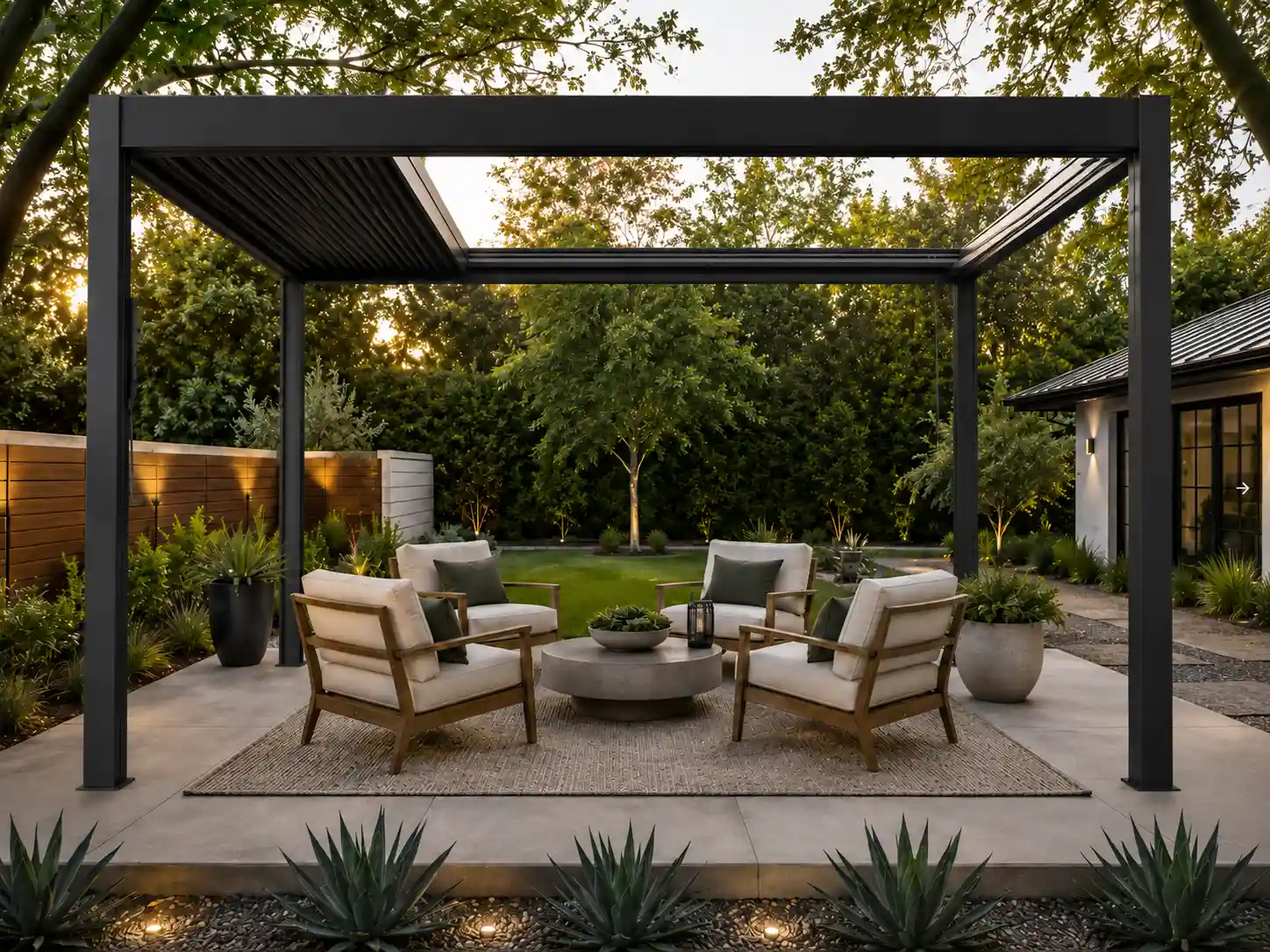
The short answer is: some are designed to provide excellent rain protection, but not every aluminum pergola is waterproof. The result depends primarily on the roof design, drainage system, installation quality, and weather conditions—not simply on whether the frame is made of aluminum.
A high-quality aluminum pergola with a fully closing louvered roof and integrated gutters can keep much of the space beneath it dry during typical rainfall. An open-beam pergola, on the other hand, offers little protection without an additional roof covering. Even a rain-resistant louvered system may allow some water inside during wind-driven storms.
This guide explains how waterproof aluminum pergolas work, what limitations to expect, and what to check before buying.
Are All Aluminum Pergolas Waterproof?
No. Aluminum is a water-resistant construction material, but an aluminum frame does not automatically create a waterproof roof. It is important to distinguish the durability of the frame from the rain performance of the entire pergola.
Aluminum naturally forms a protective oxide layer, helping it resist corrosion. Powder coating adds another protective finish and gives the frame an attractive appearance. These properties make aluminum an excellent choice for outdoor structures exposed to changing weather.
However, the roof determines how well the pergola keeps rain out.
- Open-roof aluminum pergolas: Their exposed slats or beams provide shade and architectural appeal but allow rain through.
- Fixed-roof aluminum pergolas: Models with properly sealed solid panels can provide substantial overhead rain protection.
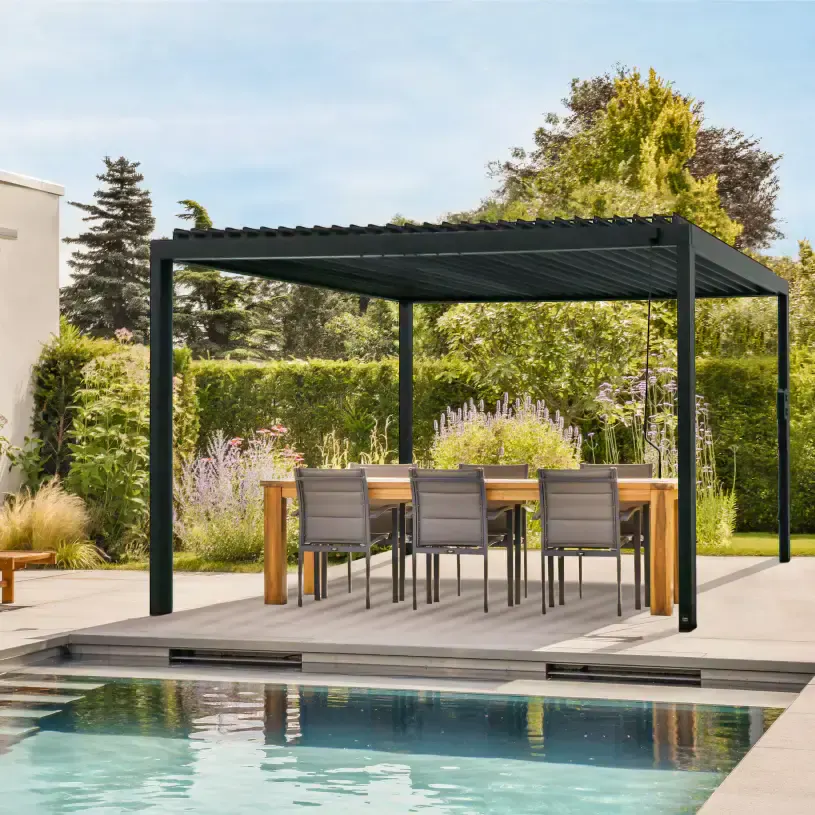
- Adjustable louvered aluminum pergolas: Interlocking louvers can form a rain-shedding roof when closed, provided the system has effective water management.
- Retractable-roof pergolas: Protection depends on the canopy material, tension, slope, edge details, and whether the cover is fully deployed.
When shopping, look beyond the phrase “waterproof aluminum pergola.” Ask precisely how the roof sheds water, where runoff exits, and what weather conditions the manufacturer covers.
Waterproof vs. Water-Resistant Aluminum Pergolas
Although these terms are frequently used interchangeably in advertising, they describe different expectations.
A water-resistant pergola is designed to tolerate moisture and may reduce rain penetration, but it does not necessarily prevent water from reaching the space underneath. A waterproof pergola roof is generally marketed as preventing overhead rain penetration under specified operating conditions.
Neither label guarantees that an open-sided patio will remain completely dry in every storm. Rain can blow in from the sides, splash from the ground, or enter at connections between the pergola and a building.
For practical buying decisions, ask for documented performance conditions rather than relying on marketing terminology alone. Consider rainfall intensity, wind exposure, roof position, drainage capacity, and any exclusions in the warranty.
How Does a Waterproof Aluminum Pergola Work?
Well-designed louvered systems combine several components to manage rain. Each component matters: a tightly closed roof is not enough if the water has nowhere to go.
1. Interlocking Roof Louvers
A louvered aluminum pergola has parallel roof blades that rotate to regulate sunlight and airflow. When opened, they let light and ventilation in. When closed, specially shaped blades overlap or interlock to create a substantially continuous overhead surface.
Many systems include blade profiles, channels, or seals that help direct water away from the seams. The exact performance varies between products, so check whether the roof is specifically designed for rain protection and not just adjustable shade.
2. Integrated Gutters and Drainage Channels
Water running off the louvers needs to be collected quickly. In a well-designed system, perimeter gutters or internal channels capture runoff and direct it toward designated outlets.
Without adequate gutters, rain can overflow at the roof edges, drip around the frame, or collect near outdoor furniture. Blocked channels can also compromise an otherwise capable roof.
3. Concealed Downspouts in the Posts
Many premium aluminum pergolas route rainwater through hollow supporting posts. This concealed drainage arrangement reduces visible downpipes and helps guide water away from the seating area.
However, the outlet still needs a suitable discharge location. If water empties onto a poorly draining patio or directly beside a foundation, surface pooling can become a problem.
4. Precise Seals, Connections, and Installation
Waterproofing depends on correct assembly. Uneven posts, poorly aligned louvers, gaps around fixings, and inadequately detailed wall connections can cause unwanted leaks.
Professional installation may be especially valuable for large structures, wall-mounted pergolas, and exposed sites. Follow the manufacturer’s requirements for anchoring, tolerances, drainage, and electrical components.
Which Aluminum Pergola Roof Is Best for Rain Protection?
Different roof types offer different levels of weather protection and flexibility.
| Roof type | Typical rain protection | Main advantage | Main limitation |
|---|---|---|---|
| Open slats or beams | Minimal | Open-air look and ventilation | Rain passes through |
| Fixed solid roof | High when correctly sealed | Consistent overhead coverage | Less control over sunlight |
| Adjustable louvered roof | High when closed and properly drained | Adjustable shade, airflow, and rain shelter | Performance depends on seals and roof position |
| Retractable fabric roof | Varies by fabric and system | Flexible shade coverage | Pooling, wind limits, and fabric maintenance |
| Polycarbonate panel roof | High with correct joints and slope | Natural light with overhead shelter | Condensation, noise, and appearance considerations |
For homeowners who want both an open-air experience on sunny days and meaningful shelter when it rains, a louvered aluminum pergola with integrated drainage is often a compelling option. For maximum fixed overhead coverage, a properly installed solid roof may be more straightforward.
Can a Louvered Aluminum Pergola Keep You Dry in Heavy Rain?
A rain-rated louvered pergola can provide reliable shelter during many ordinary showers when the louvers are fully closed and the drains are clear. But heavy or wind-driven rain may exceed the system’s intended conditions.
Several situations can still result in water entering:
- Strong crosswinds: Rain may blow beneath the roof from open sides.
- Very intense downpours: Gutters and outlets have finite drainage capacity and may overflow.
- Opening wet louvers: Residual water on the blades can drip as they rotate.
- Blocked drainage: Leaves, dirt, and debris can prevent water from flowing freely.
- Installation defects: Incorrect alignment or unsealed interfaces can produce localized leaks.
- Splashback: Rain hitting adjacent walls, decking, or paving can splash into the covered area.
For example, some opening-roof manufacturers explicitly note that no louvered roof should be treated as universally 100% waterproof in every condition. A pergola remains an outdoor structure rather than a fully sealed room.
If your location experiences frequent storms, ask the supplier for model-specific rain performance details, recommended operating positions, and any published limitations.
How to Choose a Waterproof Aluminum Pergola
Choosing the right model involves more than selecting a color and dimensions. The following features can make the difference between occasional rain shelter and dependable outdoor comfort.
Confirm the Roof’s Rain-Protection Design
Look for overlapping or interlocking louvers, suitably detailed roof edges, and a manufacturer description of performance when fully closed. Request documentation for the exact model and dimensions you plan to purchase.
Inspect the Drainage System
Ask whether the gutters are integrated, where the downspouts run, and how water exits the structure. Larger roof areas and exposed climates require particular attention to drainage design.
Check Structural Ratings
Review wind and snow-load ratings applicable to the proposed size and installation. A rating for one configuration does not automatically apply to every pergola in the same range.
Choose Durable Materials and Hardware
A quality powder-coated aluminum frame, corrosion-resistant fasteners, and appropriately specified moving components support long-term performance. Coastal installations may require additional attention to finish and hardware selection.
Consider Manual vs. Motorized Louvers
Manual louvers are generally straightforward and do not need a motor to change position. Motorized roofs offer convenient remote operation; compatible rain sensors may close the louvers automatically when moisture is detected. Check how the system behaves during power failures and high winds.
Evaluate Side Protection
A roof only protects from above. Optional outdoor blinds, screens, or glazed sliding panels may reduce wind-driven rain from the sides. Their effectiveness and suitability depend on the design, wind rating, and whether the space remains intentionally ventilated.
Review Warranty and Installer Support
Compare coverage for the frame, powder coating, motors, electronics, and water-management components separately. Ask who handles future adjustments, replacement parts, and service visits.
How to Improve an Aluminum Pergola’s Waterproof Performance
If you already own a pergola, several practical steps can improve rain management—provided they are compatible with the original structure.
Keep louvers fully closed during rain. If the product is designed for rain protection, its closed position is usually the intended setting for shedding water. Check the manual before operating the roof in severe weather.
Clear gutters and drainage outlets. Remove leaves and debris regularly, and inspect the outlets after storms. Frequency depends on nearby trees and local weather.
Examine joints and seals. Look for damaged gaskets, loose fittings, or gaps at wall connections. Use manufacturer-approved replacement parts and sealants rather than applying products indiscriminately.
Manage water around the base. Ensure discharge does not cause standing water on paving or unwanted flow toward the home. A drainage professional can advise on persistent runoff problems.
Add compatible side screens. Screens can make the space more comfortable during breezy showers, but they should not be presented as making an open pergola completely watertight.
If your pergola has an open-slatted roof, adding a purpose-built roof kit may help. However, verify the frame’s load capacity and obtain manufacturer approval before making structural modifications.
Are Waterproof Aluminum Pergolas Worth It?
For many households, the answer is yes—particularly when the goal is to use a patio more often without building a fully enclosed room.
A well-chosen pergola can provide adjustable shade, attractive outdoor architecture, and practical shelter from typical rainfall. It can make outdoor dining, entertaining, and relaxing more convenient when weather conditions are changeable.
Still, it is worth balancing the benefits against the cost. A fully equipped motorized louvered pergola may cost more than a basic open-frame model. Installation, foundations, screens, lighting, and electrical work can add to the overall budget. More advanced systems also introduce motors and moving parts that may eventually need servicing.
The right choice depends on how often you plan to use the space, your climate, site exposure, and the level of protection you genuinely need. If you require a guaranteed dry, fully enclosed environment, an appropriately designed enclosed structure may be a better match than an open-sided pergola.
Frequently Asked Questions
1. Are aluminum pergolas 100% waterproof?
Not universally. Certain aluminum pergola roofs are engineered to shed rain very effectively when closed, but open sides, extreme weather, drainage limits, and installation details can still allow water in. Check the manufacturer’s specific performance claims.
2. Are louvered aluminum pergolas waterproof when closed?
Many are designed to provide substantial overhead rain protection when the louvers are fully closed. Effective drainage and proper installation are essential, and performance varies by model.
3. Can rain get through an aluminum pergola roof?
Yes. Rain can pass through open roofs, partially opened louvers, damaged seals, or poorly detailed joints. Strong winds can also drive rain in from the sides even when the roof is closed.
4. Do aluminum pergolas rust?
Aluminum does not rust in the same way iron and ordinary steel do. It can still corrode under certain conditions, and non-aluminum hardware may require protection. Good coatings and appropriate maintenance remain important.
5. Can I leave my aluminum pergola outside in winter?
Most outdoor-rated aluminum pergolas are designed for permanent exterior installation, but winter operation depends on the product’s snow-load, wind, and ice-related instructions. Follow the specific manufacturer’s guidance.
6. Do waterproof aluminum pergolas need gutters?
A rain-shedding roof needs an effective method of collecting and discharging water. Many louvered models use integrated gutters and concealed post downspouts; other designs may use different drainage arrangements.
7. Are motorized aluminum pergolas better for rain protection?
Motorization adds convenience rather than automatically improving waterproofing. A compatible rain sensor may help close the roof promptly, but the underlying roof geometry, seals, and drainage system determine rain performance.
Final Verdict: Are Aluminum Pergolas Waterproof?
Aluminum pergolas can provide excellent rain protection—but only when the roof and drainage system are designed to do so. A durable aluminum frame alone is not a waterproof shelter, and even sophisticated louvered roofs have practical limits during extreme or wind-driven rain.
For the best experience, choose a purpose-built roof with well-designed louvers or solid panels, effective drainage, appropriate structural ratings, and reliable installation. Review the warranty and real operating conditions before purchasing.
Ready to create a more weather-ready patio? Compare aluminum pergola roof styles, ask suppliers about documented rain performance, and request a quote tailored to your space, local climate, and installation requirements.
Sources and Further Reading
The following manufacturer and supplier resources explain real-world rain-management designs and limitations. Product claims may vary; confirm details for the model you choose.