A beautiful backyard is more than a patch of grass. It can be a comfortable extension of your home, with space for dining, relaxing, gardening, and entertaining. Two popular ways to make that happen are a pergola and a gazebo. Both define an outdoor living area and add architectural character, but they deliver different levels of shade, privacy, and weather protection.
So, in the pergola vs. gazebo debate, which is better? The short answer: choose a pergola for an open, flexible space with partial or adjustable shade; choose a gazebo for a defined gathering spot with more dependable overhead shelter. Your climate, budget, aesthetic preferences, and intended use will determine the better investment.
This guide explains the differences, compares costs and maintenance, and helps you decide which structure fits your backyard.
A pergola can keep a more open feel while defining a patio or garden area.
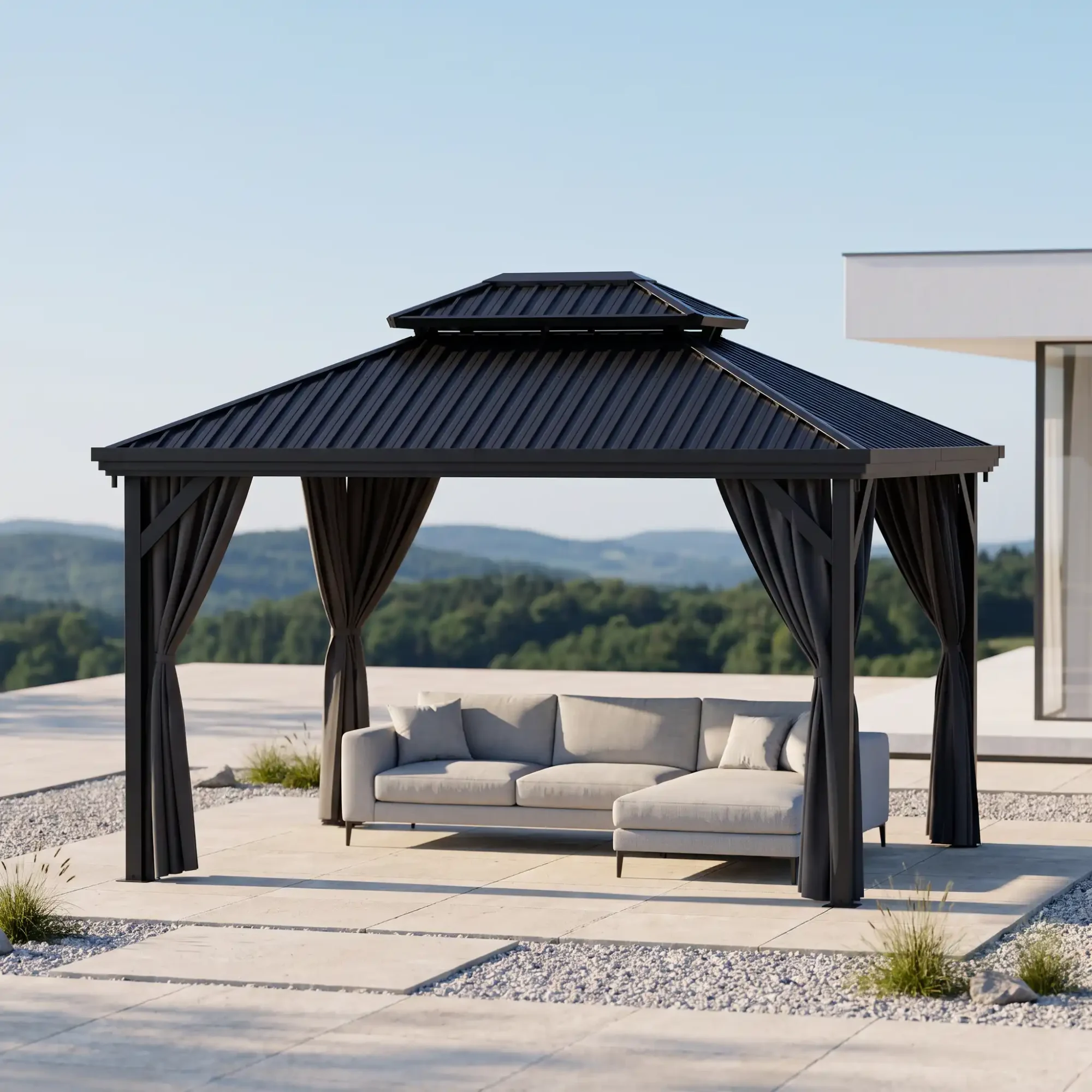
A gazebo generally provides a more continuous roof and a self-contained gathering space.
What Is a Pergola?
A pergola is an outdoor structure supported by posts or columns and topped with horizontal beams, rafters, or louvers. Traditional pergolas have open, slatted roofs that filter sunlight rather than completely block it. They are often rectangular or square, although custom shapes are possible.
Pergolas can be freestanding in a garden or attached to a house to extend a patio or terrace. Their open design creates a sense of separation without making the space feel enclosed.
Common pergola uses include:
- Creating shade over a patio dining table or outdoor sofa.
- Framing a walkway or garden seating area.
- Supporting climbing plants such as wisteria or grapevines.
- Defining a poolside lounge or outdoor kitchen.
- Adding an adjustable roof or retractable canopy for flexible coverage.
A modern louvered pergola can close its roof panels to provide substantially better protection from sun and rain than a traditional open-rafter model. However, performance depends on the product’s drainage system, installation, and weather rating.
What Is a Gazebo?
A gazebo is a freestanding outdoor shelter with a complete overhead roof. Traditional gazebos are often hexagonal or octagonal, but contemporary models can be rectangular or square. Their defining characteristic is a covered roof, typically supported by posts with mostly open sides.
Many permanent gazebos feature a raised platform, railings, benches, or optional screens, although these are not mandatory. Gazebos can also be lightweight, temporary structures with fabric roofs, so durability varies considerably between models.
Gazebos work particularly well for:
- Sheltered outdoor dining and family gatherings.
- Creating a focal point in a landscaped garden.
- Protecting seating from direct sun and ordinary rainfall.
- Adding insect screens or curtains for comfort and privacy.
- Establishing a dedicated space for reading or relaxation.
If you want a backyard destination that feels like a separate outdoor room, a permanent gazebo may be a natural fit.
Pergola vs. Gazebo: Key Differences at a Glance
| Feature | Pergola | Gazebo |
|---|---|---|
| Roof | Traditionally open beams or slats; some have adjustable louvers | Continuous, solid or fabric-covered roof |
| Shade | Partial to full, depending on canopy or louvers | Usually more consistent overhead shade |
| Rain protection | Limited on open-roof models; improved with suitable roofing | Generally better overhead rain protection |
| Typical shape | Square or rectangular | Often octagonal, hexagonal, square, or rectangular |
| Sides | Usually open | Open, screened, curtained, or partly enclosed |
| Placement | Freestanding or attached to a home | Usually freestanding |
| Appearance | Airy, architectural, often contemporary | Pavilion-like, traditional or modern |
| Installation | Simple kits can be relatively straightforward | Permanent roofed models often require more work |
| Typical cost | Often lower for comparable basic structures | Often higher for comparable permanent structures |
| Best for | Patios, climbing plants, flexible outdoor areas | Sheltered seating, dining, and garden focal points |
The biggest difference between a pergola and a gazebo is the roof. Most other differences—including weather protection, visual weight, and cost—follow from that design choice.
Pergola vs. Gazebo: Which Provides Better Shade and Rain Protection?
Shade and sunlight
A traditional pergola lets some sunlight pass through gaps between its rafters. This creates attractive patterns of light and shadow but may not offer enough protection during intensely sunny afternoons. Shade sails, retractable fabric covers, and climbing plants can increase coverage.
A gazebo generally provides more continuous shade because its roof covers the entire seating area. However, low-angle sun can still enter through the open sides, so curtains or screens may be useful.
Winner for consistent overhead shade: gazebo. A closed-louver pergola can be a strong alternative when adjustable light is important.
Rain and changing weather
A standard open pergola does not keep rain off furniture or guests. A purpose-built waterproof canopy or properly installed louvered roof changes that, but it is important to review the manufacturer’s rain and wind specifications.
A gazebo’s roof usually diverts rain away from the center of the structure. Wind-driven rain can still enter from the sides, and a portable fabric gazebo should not be treated as equivalent to a permanent engineered structure.
Winner for routine rain protection: gazebo. Neither option guarantees safety during severe winds, lightning, or storms.
Pergola vs. Gazebo Cost: Which Is More Affordable?
Cost depends on dimensions, materials, foundation preparation, roofing, customization, and local labor rates. Comparing a basic pergola kit with a custom timber gazebo can be misleading, just as comparing a motorized luxury pergola with a pop-up gazebo would be.
For a broad U.S. planning reference, Angi’s 2026 guide estimates about $2,200–$6,400 for a pergola and $2,700–$10,000 for a gazebo. These are indicative project ranges, not universal quotes; individual designs may fall well outside them.
Source: Angi — Pergola vs. Gazebo (updated July 2026).
What influences the final price?
- Materials: Pressure-treated wood, cedar, aluminum, vinyl, and steel have different material and upkeep costs.
- Roof system: Adjustable louvers, waterproof panels, and premium roofing increase complexity and price.
- Size and design: Larger spans and custom detailing require more material and engineering.
- Site conditions: Uneven terrain, drainage, footings, and access can increase installation costs.
- Extras: Screens, lighting, fans, privacy panels, and electrical work add to the budget.
A simple open-roof pergola is often the more economical permanent option. Nevertheless, a high-end motorized pergola may cost more than a modest gazebo. Request itemized estimates for both the structure and site work before making a decision.
Materials and Durability: Wood, Aluminum, Vinyl, or Steel?
The label “pergola” or “gazebo” alone does not determine longevity. Material quality, local weather exposure, anchoring, construction details, and maintenance matter more.
Wood
Wood offers warmth and a classic garden appearance. Cedar and other naturally durable species are popular choices, while treated lumber can be budget-friendly. Wood needs periodic inspection for moisture damage, fastener issues, and finish deterioration. Depending on the finish and climate, staining or sealing may be necessary.
Aluminum
Powder-coated aluminum is widely used for contemporary pergolas and gazebos. It is lightweight, resistant to rust, and generally low-maintenance. It is especially appealing if you prefer clean lines and do not want regular painting or staining. Always assess structural ratings rather than assuming all aluminum frames perform alike.
Vinyl
Vinyl is easy to clean and does not require traditional wood staining. Its appearance and strength depend on the product, and some systems use structural reinforcement inside the visible components. Check manufacturer warranties and temperature limitations.
Steel
Steel can support robust designs but needs appropriate corrosion protection, particularly in humid or coastal environments. Galvanized or well-coated components and proper drainage help reduce maintenance concerns.
For either structure, check the rated wind and snow loads, foundation requirements, and anchor details before buying. A well-engineered, properly installed pergola can outperform a poorly constructed gazebo, despite the latter having a solid roof.
Installation and Maintenance: Which Is Easier?
Many standard pergola kits have relatively simple post-and-beam assemblies, making them approachable for experienced DIY homeowners. Even so, accurate layout, structural anchoring, and safe lifting are essential. Attached pergolas also require careful consideration of the connection to the house.
A permanent gazebo commonly adds roof framing, roofing materials, and potentially flooring or screening. That can mean more steps, specialized tools, and additional labor. A temporary pop-up gazebo is much easier to set up, but it serves a different purpose from a permanent backyard installation.
For ongoing care, clear leaves and debris, inspect joints and anchors, clean roof surfaces, and repair damaged finishes promptly. A gazebo’s solid roof introduces gutters, roof panels, or shingles to maintain. A louvered pergola may have moving parts and drainage channels that require attention.
Winner for straightforward basic DIY installation: pergola. For both options, hire a qualified installer when foundations, complex roofing, electrical accessories, or engineered loads are involved.
Pergola vs. Gazebo for Different Backyard Needs
Best for a small patio: Pergola
A slender pergola can define a compact patio without visually dominating it. An attached model may also help create a natural transition between indoor and outdoor living. Measure posts, circulation paths, and furniture clearance rather than relying only on the advertised roof dimensions.
Best for outdoor dining in rainy climates: Gazebo
A fixed roof lets you plan meals with less concern about light rain. Curtains or screens may add comfort, although adequate ventilation remains important. A waterproof louvered pergola can work too, particularly if you want to control the amount of sunshine reaching your table.
Best for a modern backyard: Pergola
Rectangular aluminum pergolas pair naturally with contemporary architecture, minimalist landscaping, and modular furniture. Integrated lighting and adjustable louvers can create a polished outdoor entertaining area.
Best for a classic garden focal point: Gazebo
An octagonal timber gazebo surrounded by flowers, shrubs, or a pathway creates a distinct destination. It can become the visual centerpiece of a landscaped yard rather than simply covering an existing patio.
Best for climbing plants: Pergola
Open beams provide a framework for flowering vines and greenery. Choose plant species suited to your local climate and ensure the structure can handle the mature weight of the plants. Leave access for pruning and inspection.
Best for mosquitoes and privacy: Gazebo
Gazebos often accommodate fitted mesh screens, doors, and curtains more easily. Pergolas can also use privacy panels and drapes, but a screened gazebo typically provides a more defined enclosure.
Can a Pergola Have a Roof Like a Gazebo?
Yes. The distinction is no longer absolute. Modern pergolas can feature retractable fabric canopies, fixed roof panels, or motorized adjustable louvers. When the louvers close, a properly designed system can shed rain while preserving the option to reopen the roof in good weather.
This flexibility makes a louvered pergola attractive for homeowners who want both sunshine and shelter. However, not every closed-roof pergola is fully weatherproof. Check the system’s drainage capacity, side exposure, operating instructions, and warranty exclusions.
If rain protection is your main priority and adjustability is unimportant, a conventional gazebo may provide a simpler solution.
Do You Need a Permit for a Pergola or Gazebo?
Possibly. Building permit and planning requirements vary by city, county, country, structure size, height, permanence, and proximity to property boundaries. Attached structures may also be reviewed differently from freestanding ones. Homeowners associations or conservation rules can impose additional restrictions.
Before purchasing, contact your local building or planning authority about:
- Required permits and zoning setbacks.
- Height and footprint limitations.
- Footing depth, anchoring, and structural load standards.
- Electrical approvals for lights, fans, and outlets.
- Special restrictions for protected buildings or neighborhoods.
Do not assume a pergola is exempt merely because it has an open roof, or that a prefabricated gazebo is automatically approved.
Which Is Better: Pergola or Gazebo?
The best choice comes down to how you want to use the space most days, not simply which design looks better in photographs.
Choose a pergola if you:
- Prefer an airy structure that visually connects to the garden.
- Want a stylish patio extension or support for climbing plants.
- Value adjustable sunlight and may add a canopy or louvers.
- Have a simpler installation in mind or a limited initial budget.
Choose a gazebo if you:
- Need more consistent overhead shade and rain cover.
- Want a dedicated, sheltered place for dining or entertaining.
- Prefer a classic garden pavilion or enclosed-room feeling.
- Plan to add screens, curtains, or built-in seating.
For many homeowners, a traditional pergola offers the best balance of flexibility, appearance, and basic cost. A gazebo wins when reliable overhead shelter is the deciding factor. If budget allows and weather flexibility matters, a well-specified louvered pergola offers a compelling middle ground.
Frequently Asked Questions
Is a pergola cheaper than a gazebo?
Usually, a basic permanent pergola costs less than a comparable permanent gazebo because it has a simpler roof structure. However, premium louvered pergolas can be more expensive than basic gazebos. Compare similarly sized products and include foundations, installation, and accessories in your calculations.
Does a pergola add value to a home?
A thoughtfully designed pergola may improve curb appeal and the usability of outdoor space, which can attract buyers. Financial return is not guaranteed and depends on local market preferences, build quality, and overall landscaping. Treat it primarily as a lifestyle improvement rather than a guaranteed investment.
Can a gazebo withstand heavy rain and wind?
A properly engineered permanent gazebo can provide useful shelter, but its weather resistance depends on the model’s rated loads, roofing, anchoring, and installation. Temporary pop-up gazebos generally have lower weather tolerance. Follow manufacturer instructions and never remain under an outdoor structure during dangerous storms.
What lasts longer, a pergola or a gazebo?
Neither type automatically lasts longer. Durable materials, sound construction, drainage, local climate, and regular maintenance are the biggest factors. Compare product warranties and environmental ratings rather than relying on the category name.
Is a pergola better than a gazebo for a hot tub?
A pergola provides an open feel and can offer adjustable shade, making it appealing over a hot tub. A gazebo can deliver more overhead weather protection and privacy. Either structure requires appropriate ventilation, moisture-resistant materials, safe electrical clearances, and sufficient access for servicing the hot tub.
Can you put a fire pit under a pergola or gazebo?
Do not assume it is safe. Open flames can create serious fire and carbon monoxide hazards beneath roofed or partially roofed structures. Check the fire pit and structure manufacturers’ clearance requirements, local fire codes, and fuel-specific ventilation rules. If the setup is not expressly permitted, keep the fire pit in an appropriately clear, open area.
Final Thoughts
When comparing pergola vs. gazebo, start with the roof and work backward from your needs. A pergola suits homeowners who want filtered sunlight, climbing greenery, and a versatile outdoor design. A gazebo is better for those who prioritize fixed overhead protection and a dedicated gathering space.
Before you buy, measure the installation area, compare total project costs, check wind and snow ratings, and confirm local permits. The right choice is the structure that matches your climate, complements your home, and makes your backyard more enjoyable year after year.